Wanderlust

Luana Perilli

21.09.2022 – 18.11.2022

Exhibition views
Works

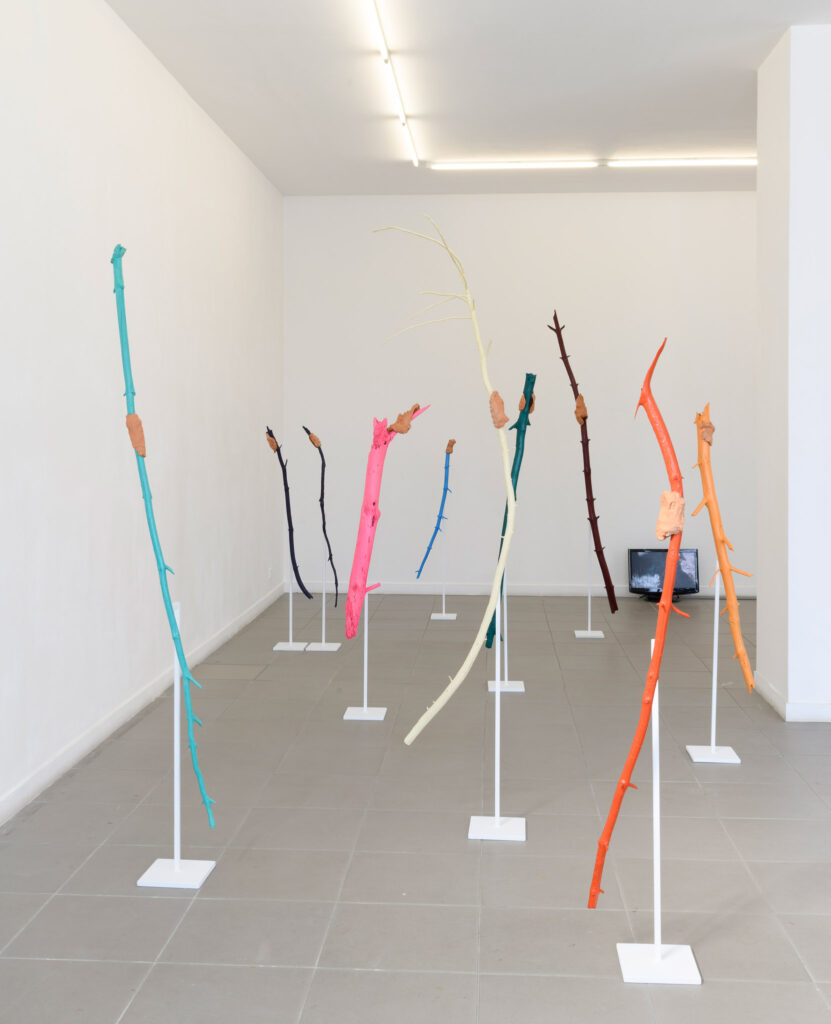
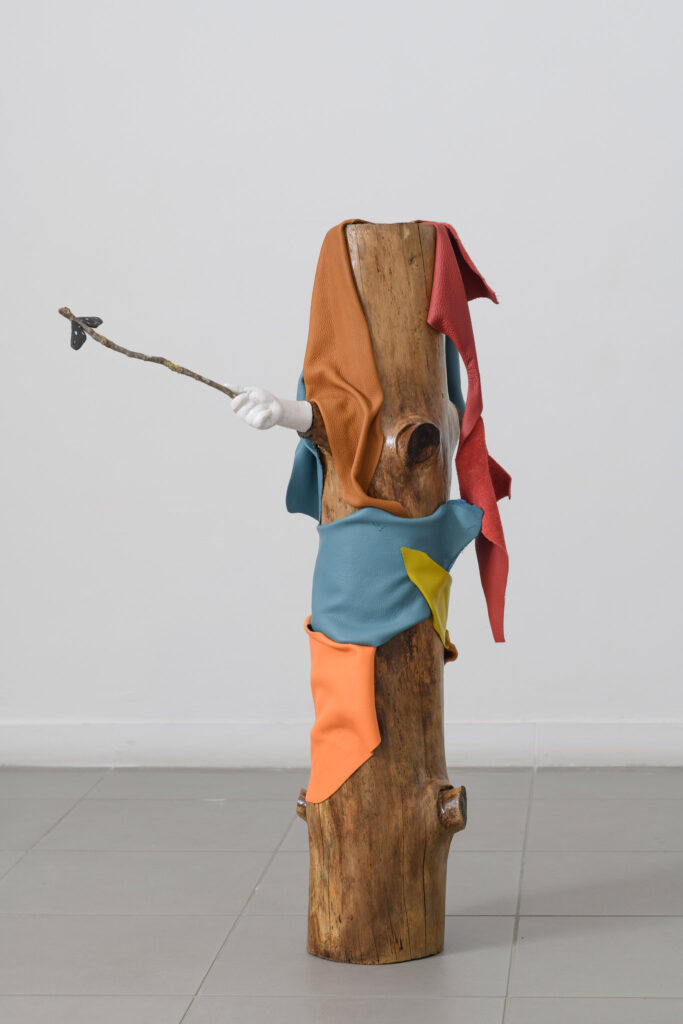
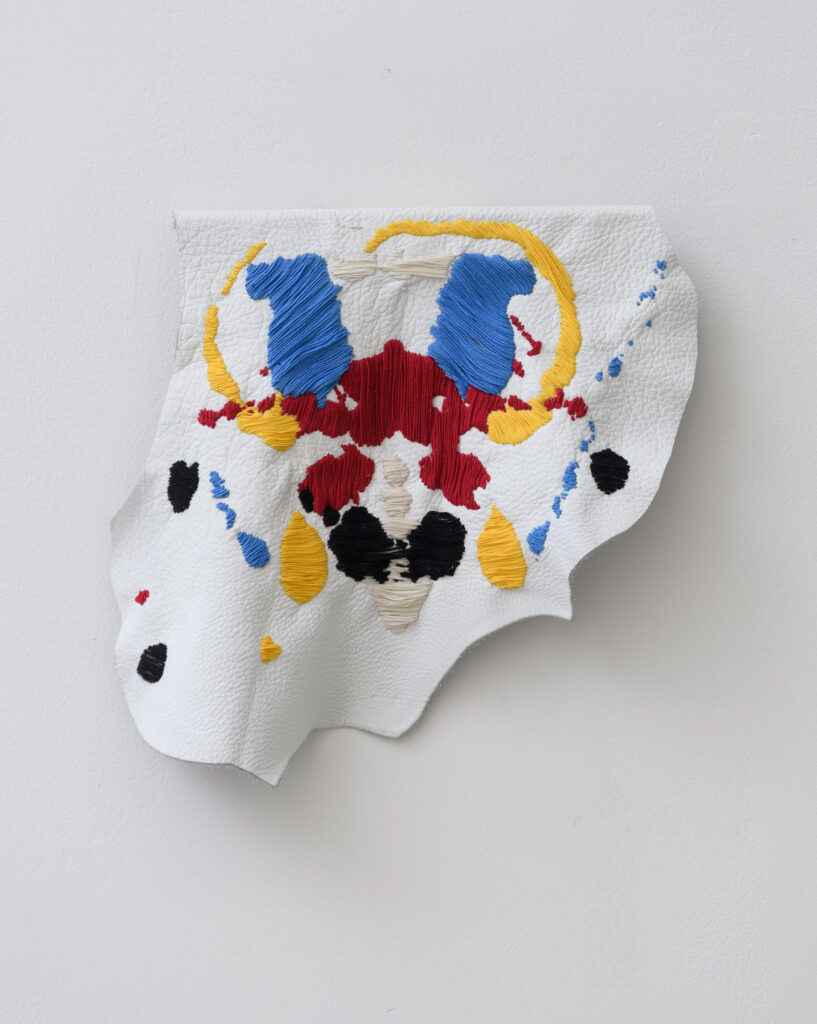
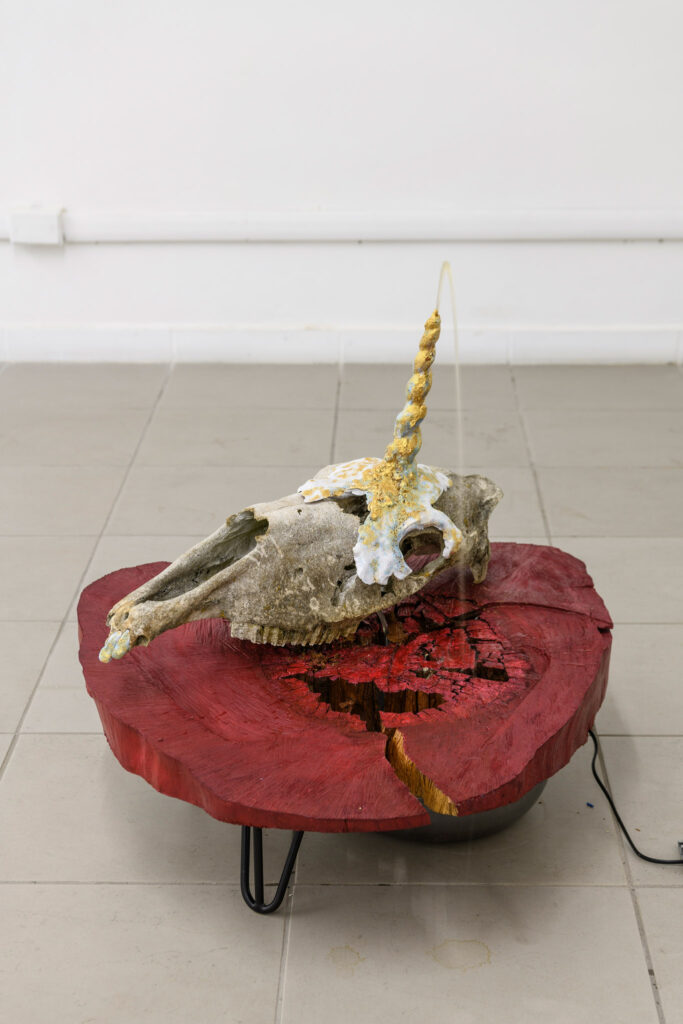
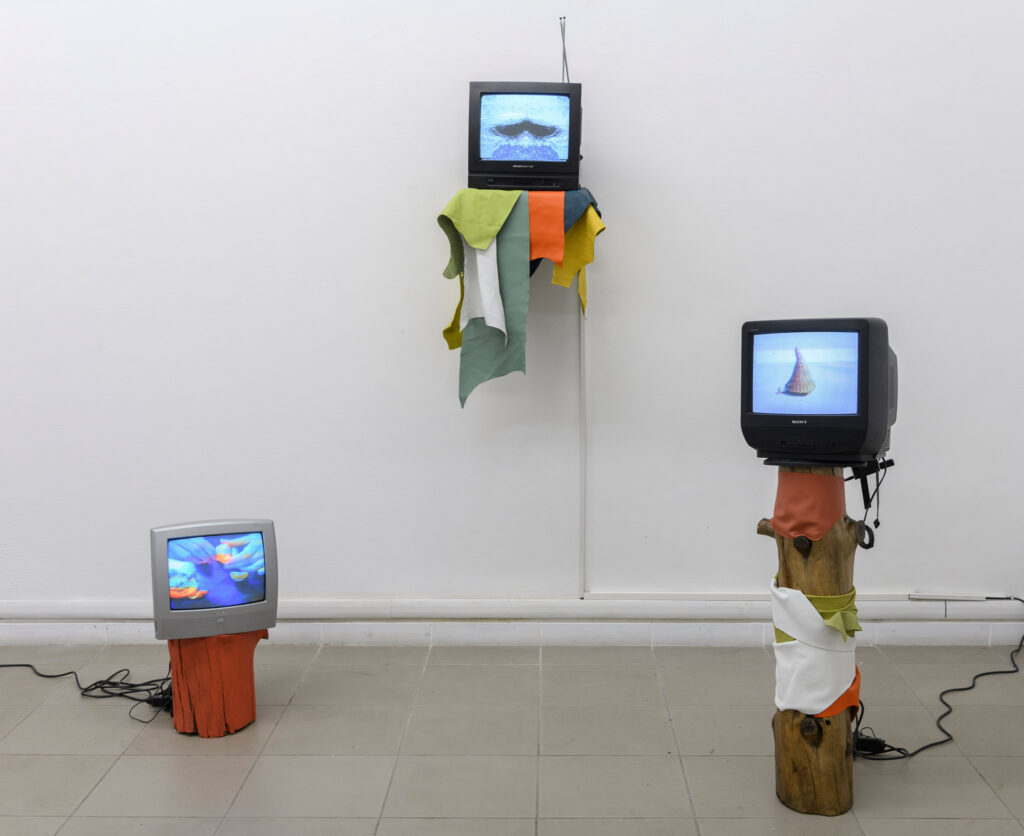
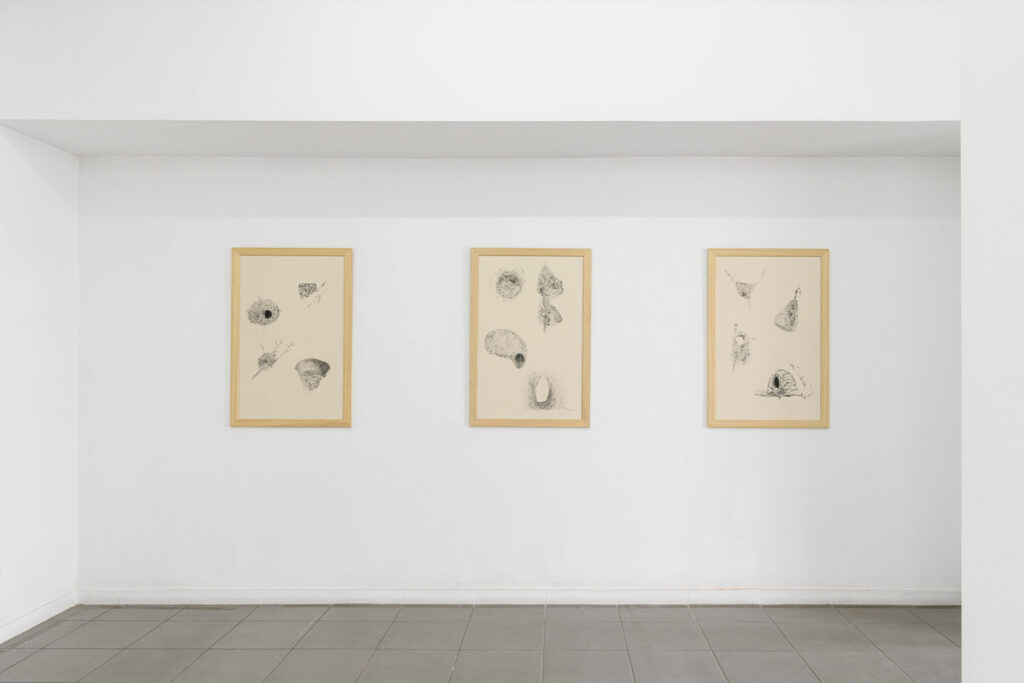
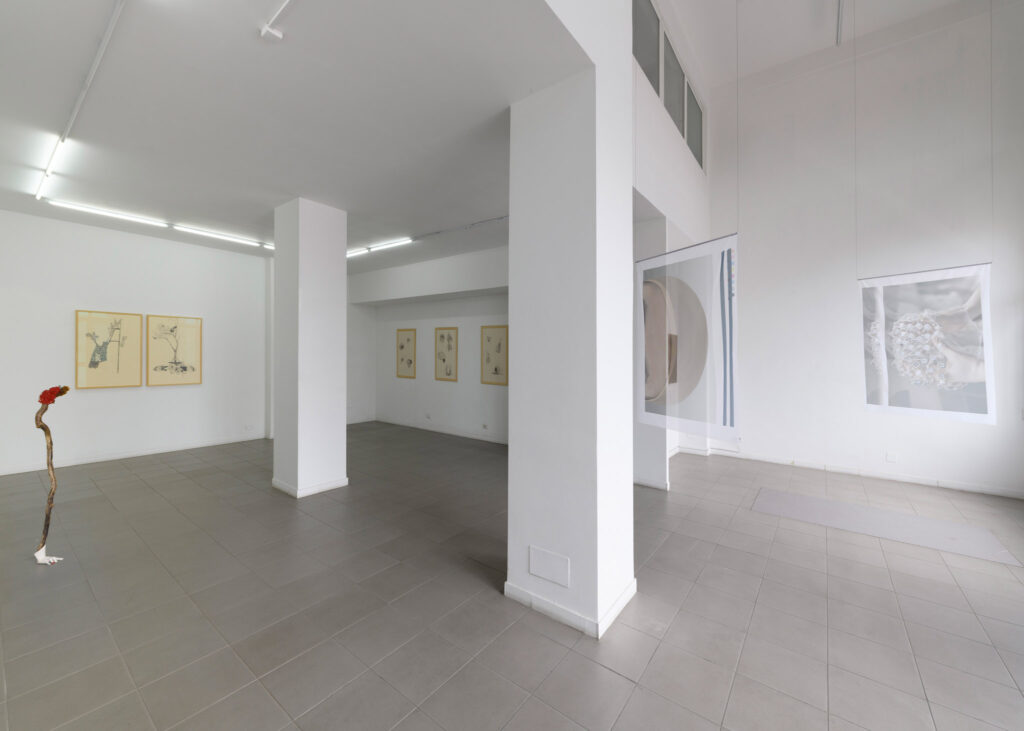
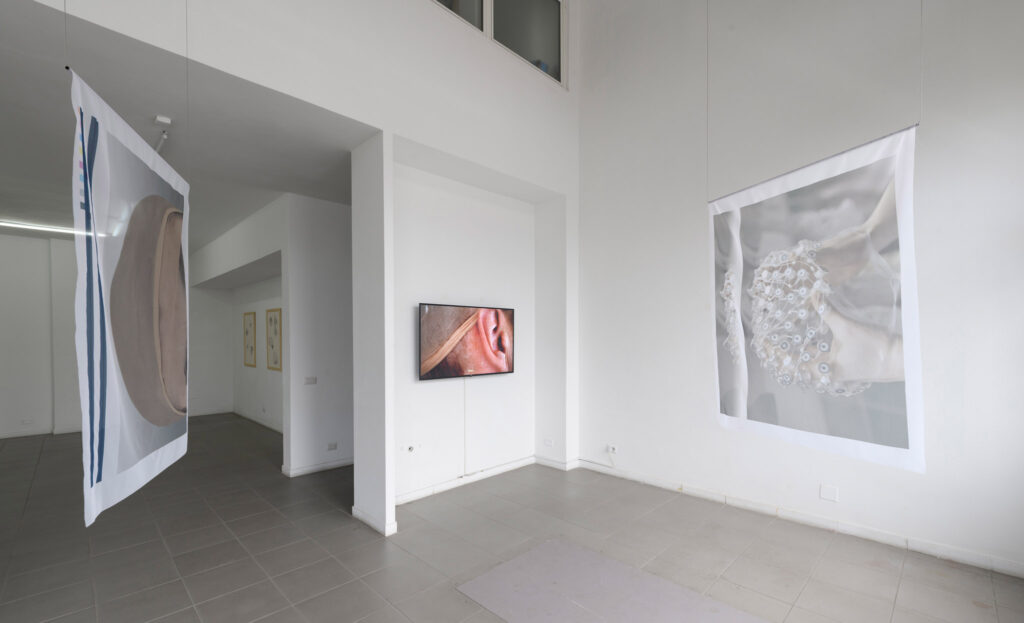
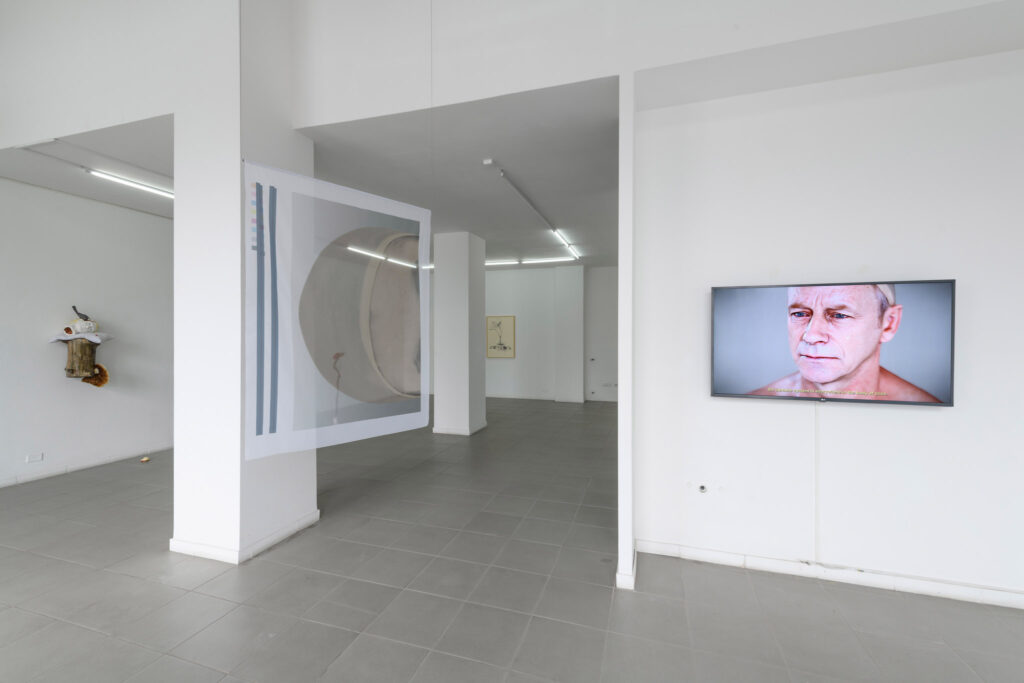
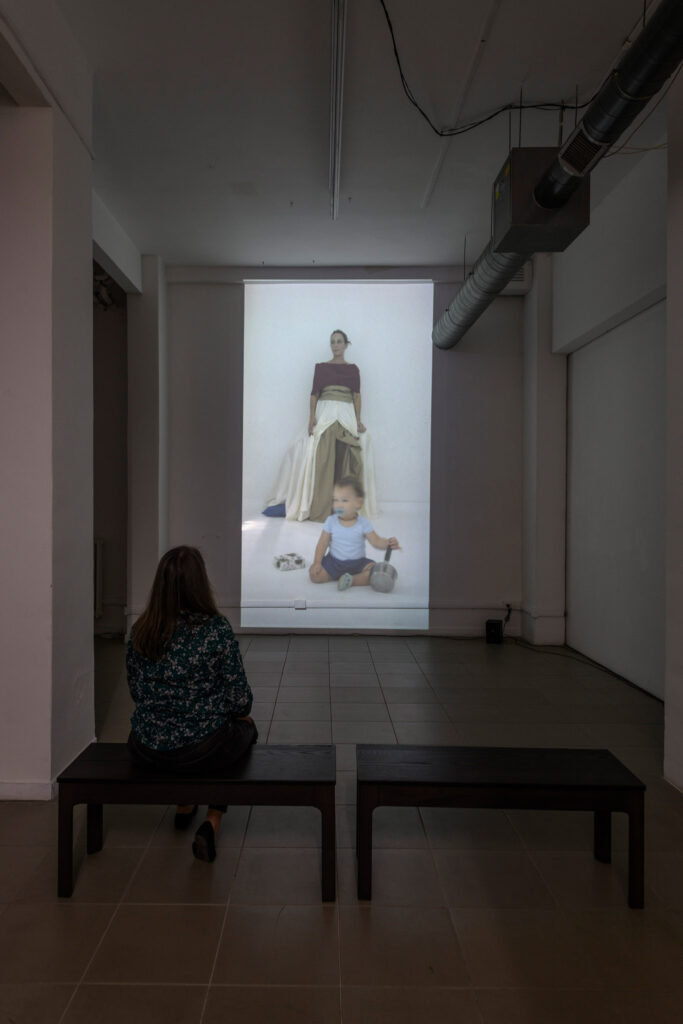
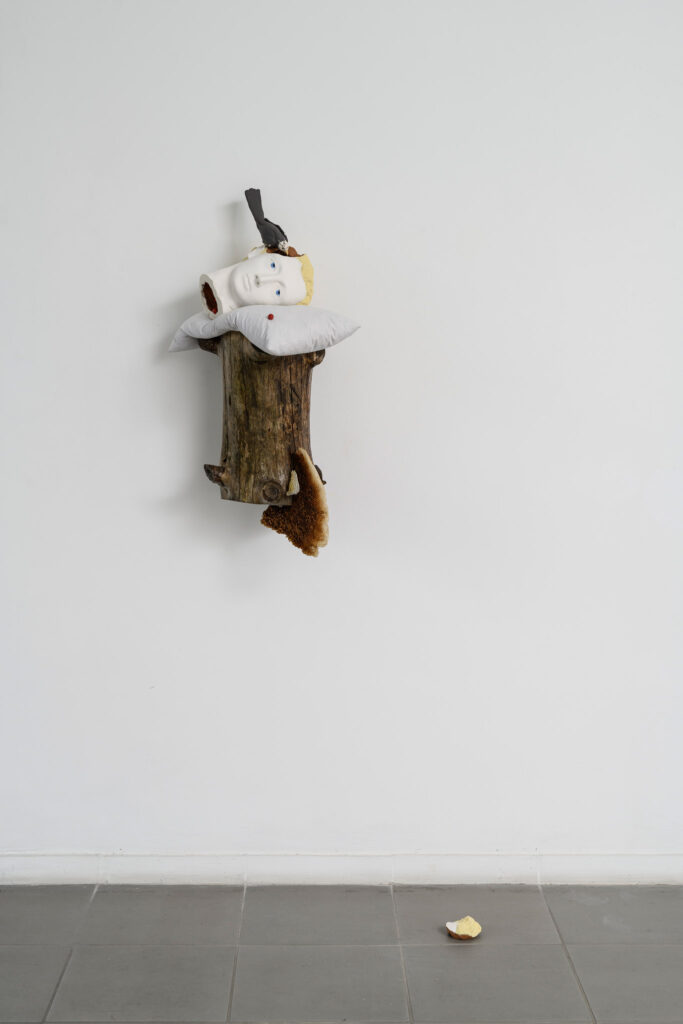
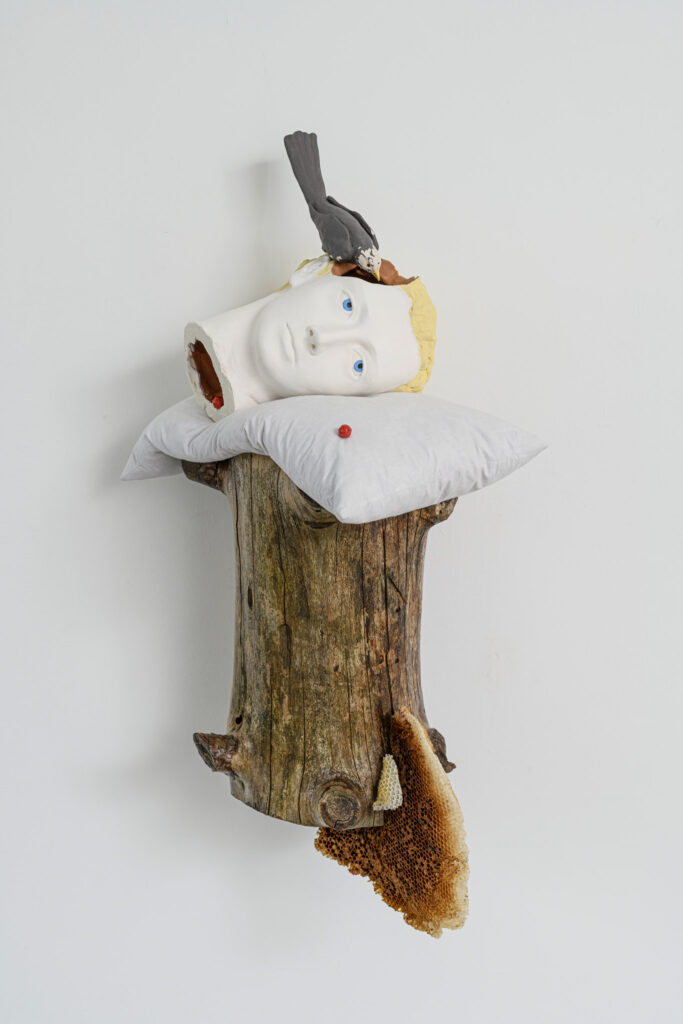
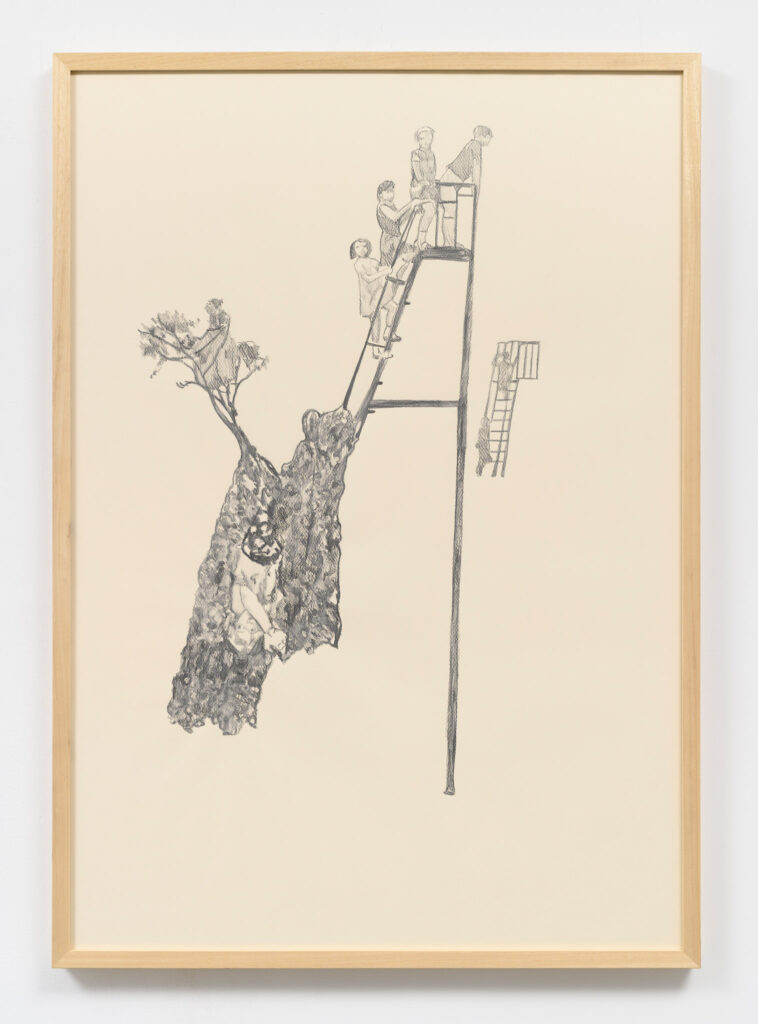
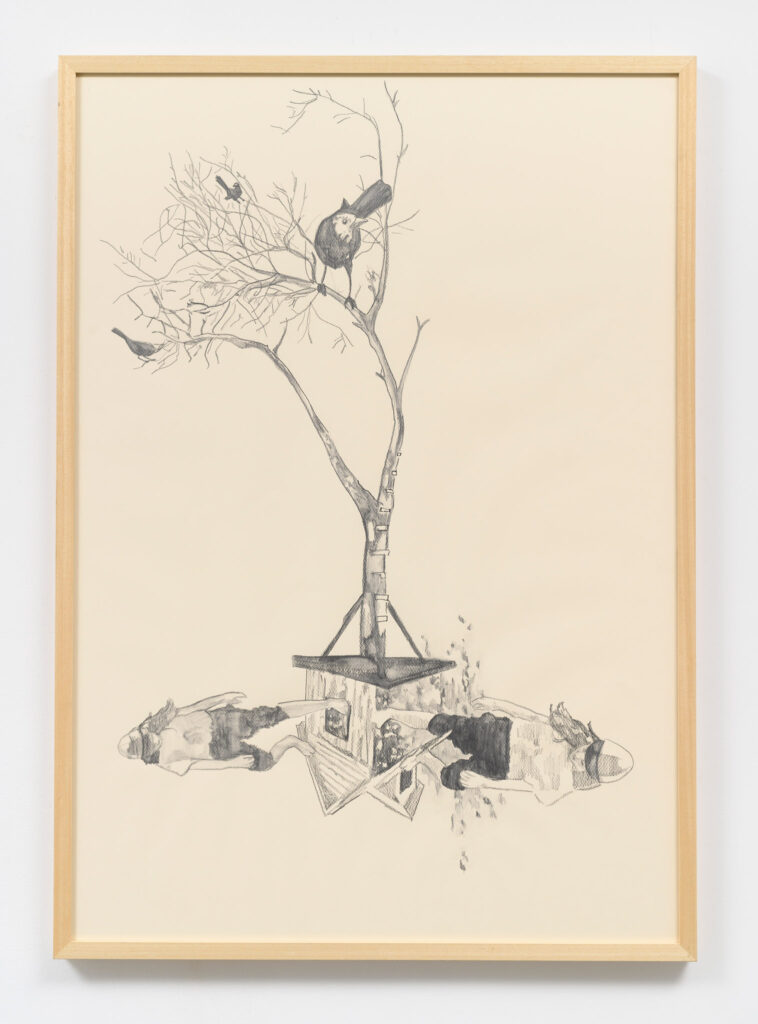
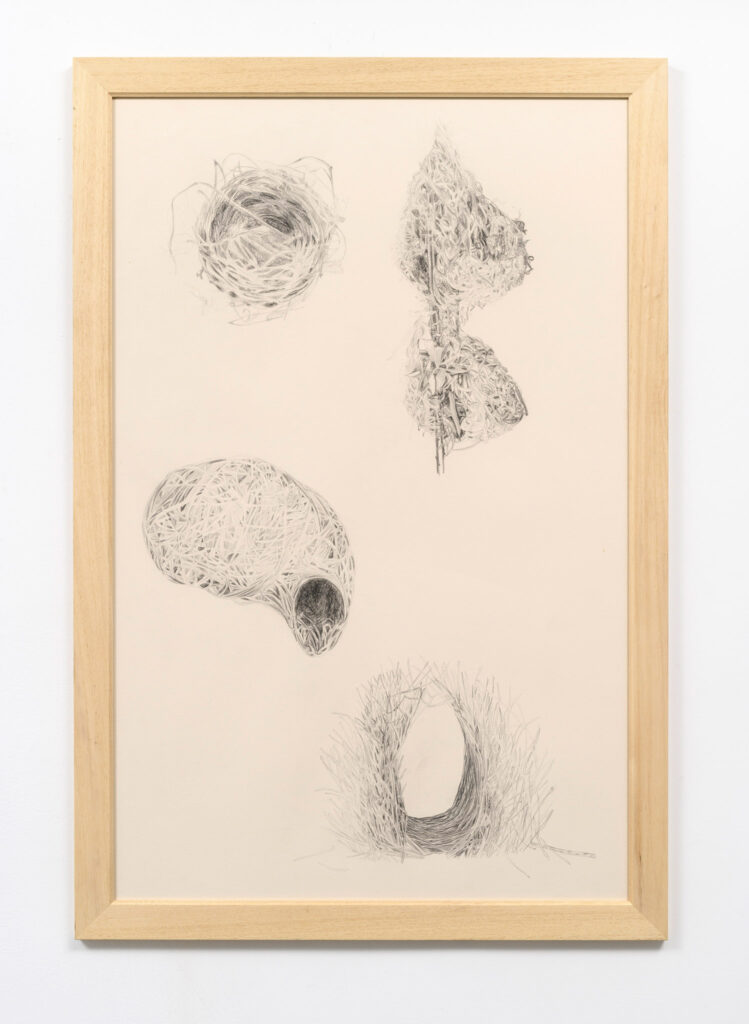
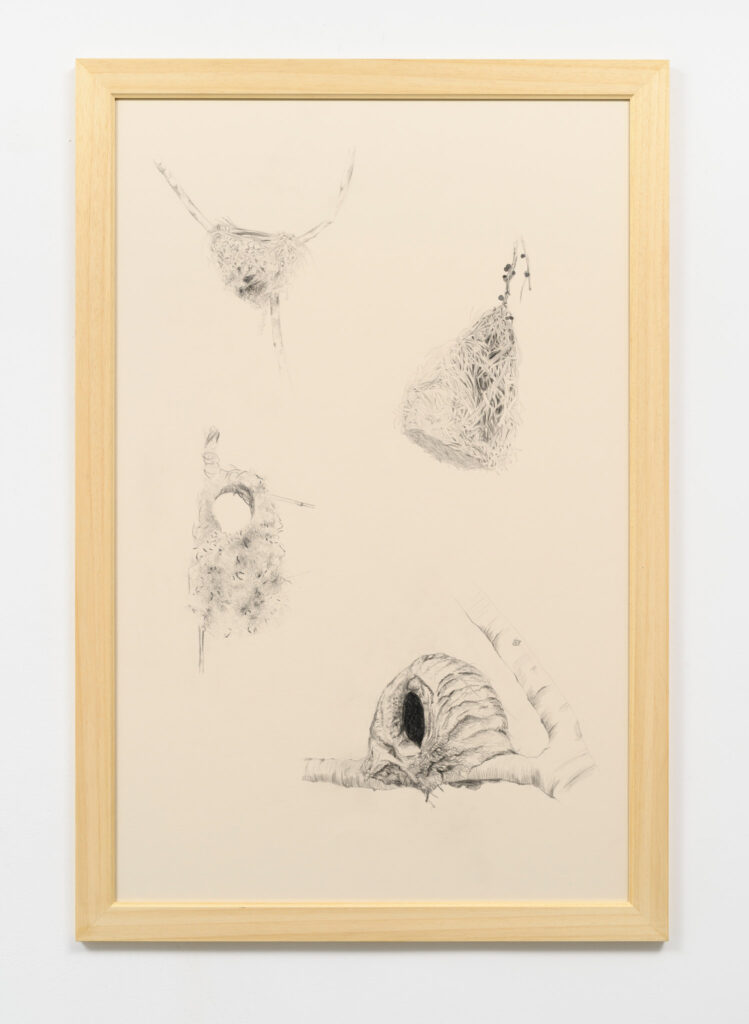
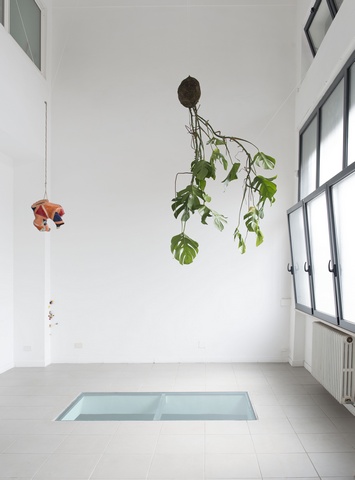
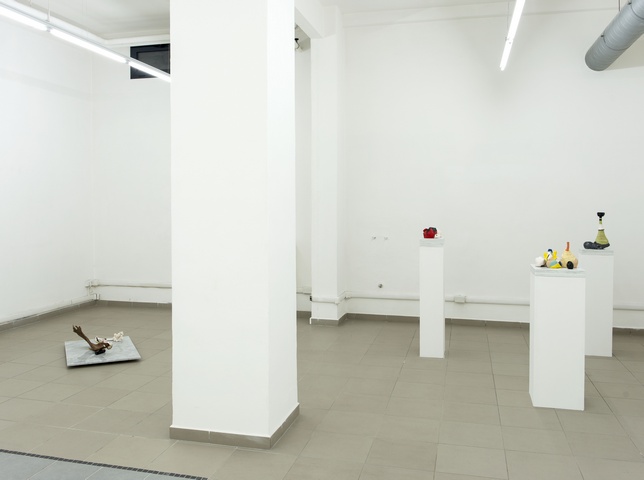
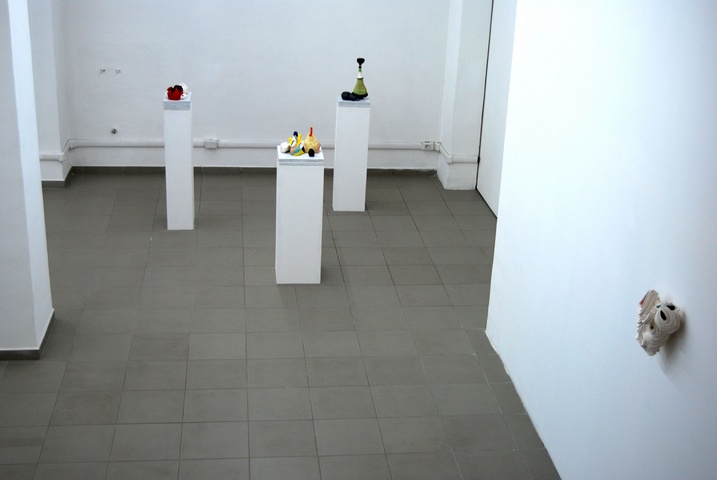
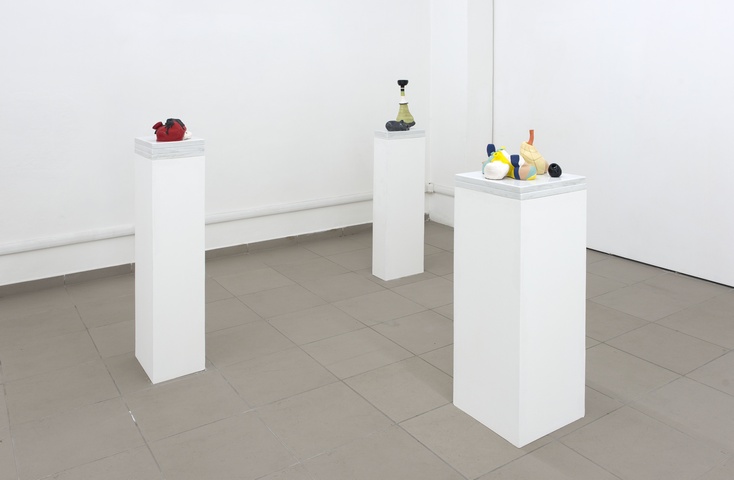
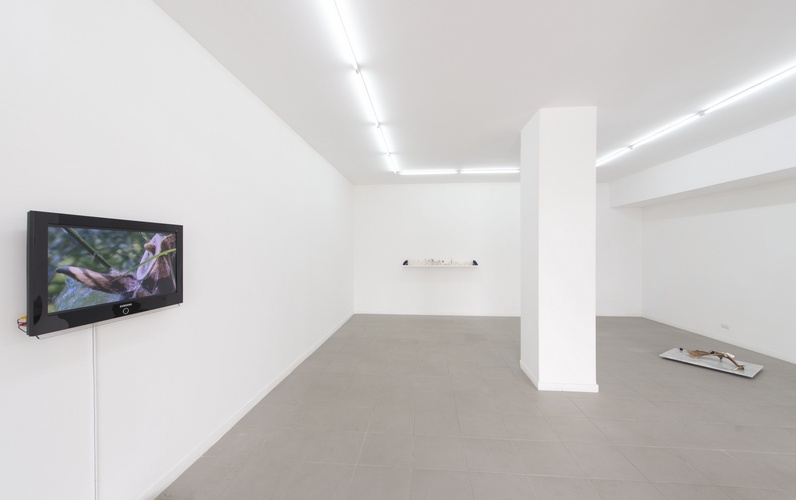
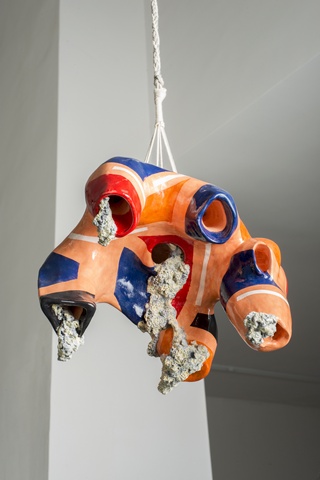
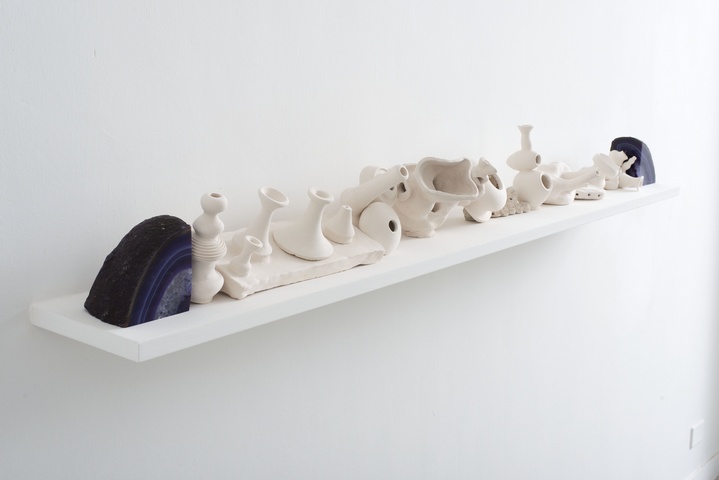
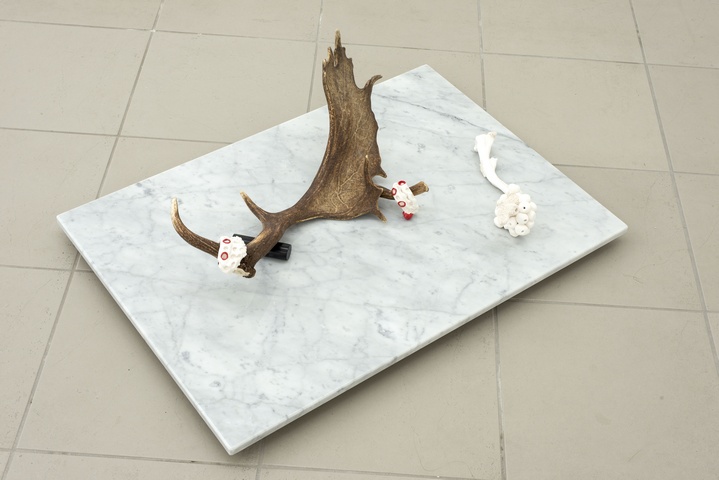
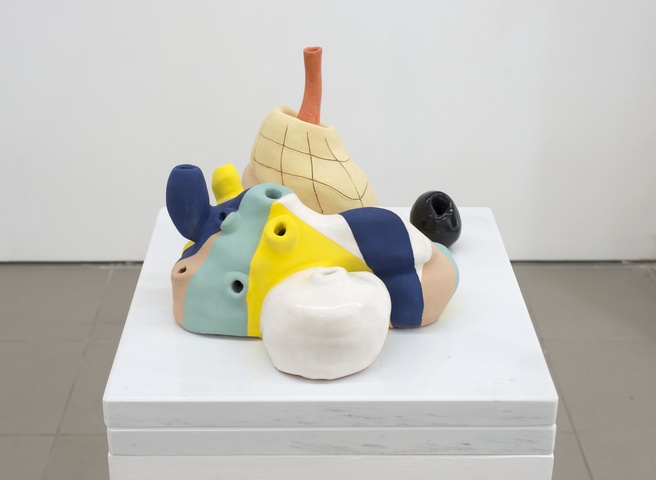
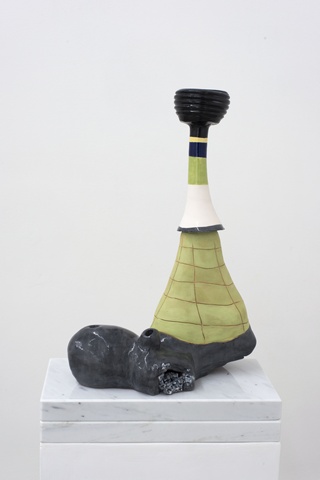
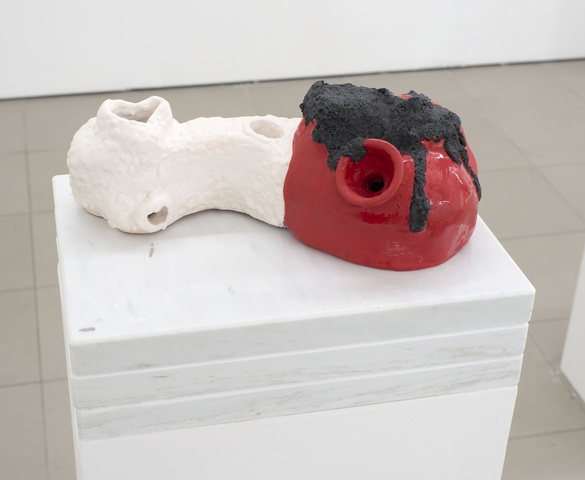
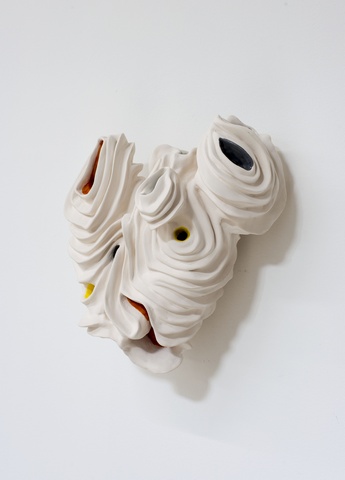
The Gallery Apart is proud to announce Wanderlust, the new solo exhibition by Luana Perilli in the gallery’s spaces.

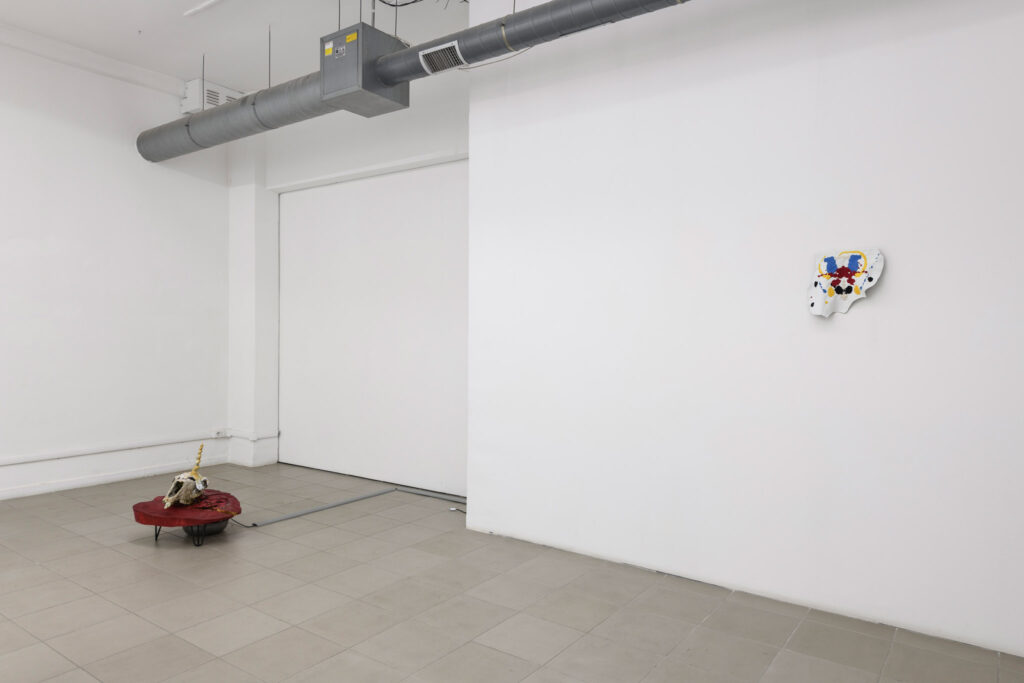
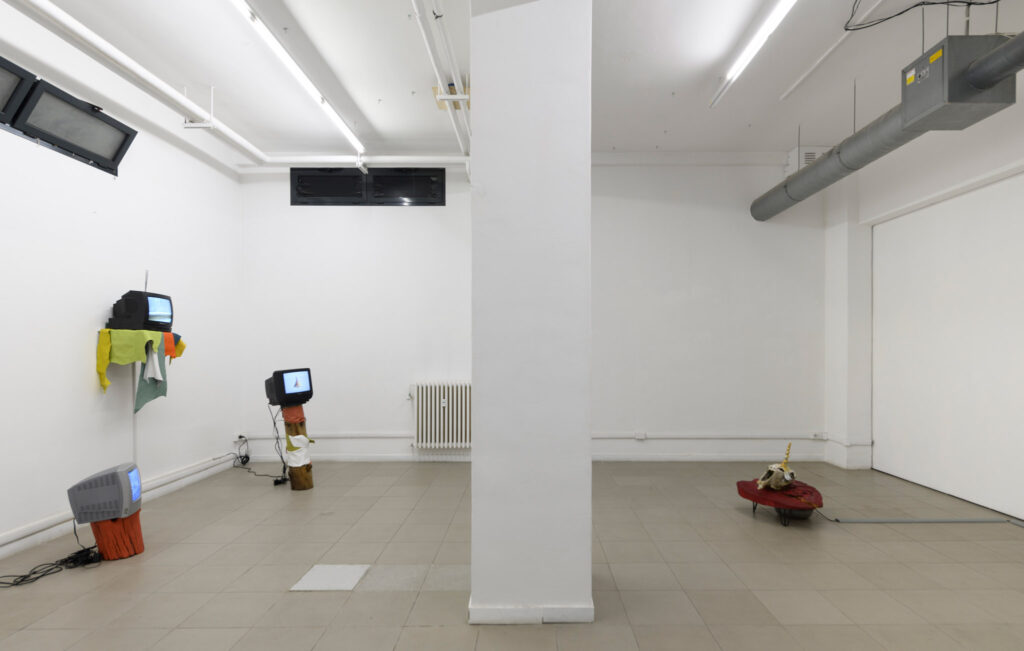
The artist has been long investigating non-human intelligence, the ecological, biological, and semantic collective systems, and she has an interest in all those places of the imagination and in the production of meaning where the perimeter of the individual is forced and moved. Wanderlust is one of those untranslatable words that indicate with a single term a complex state of mind: the strong and overwhelming desire to wander and push beyond a physical or imaginary boundary.     

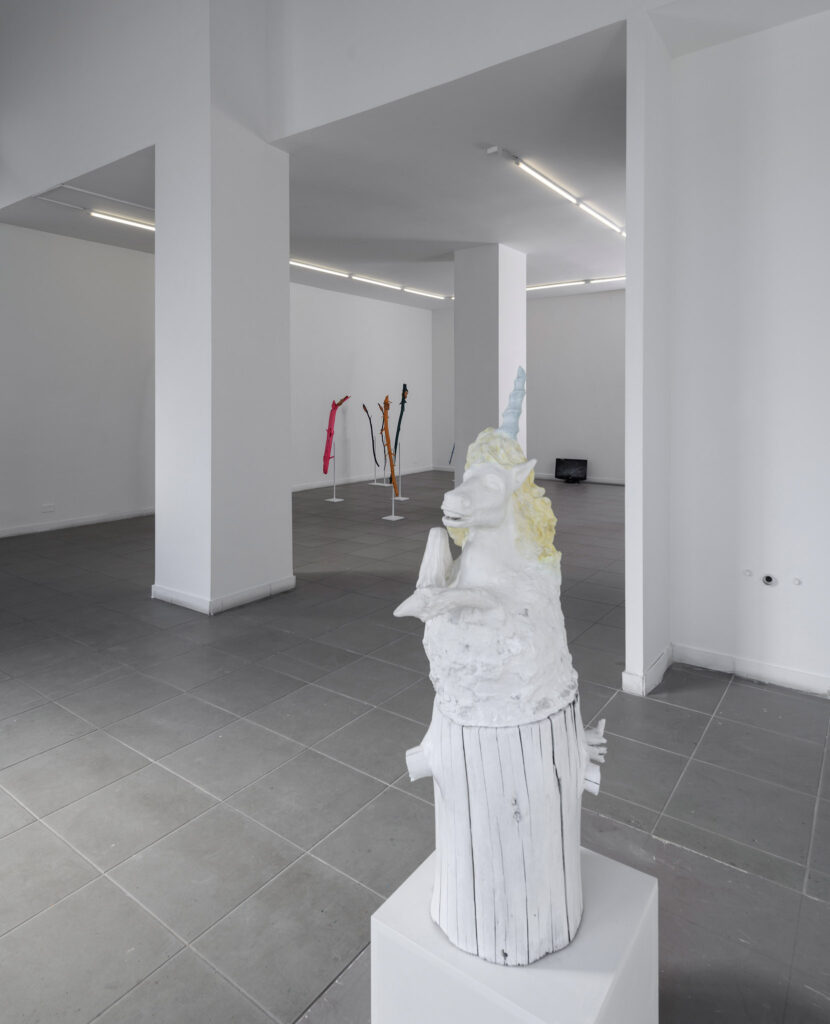
The encounter with non-human intelligence takes place in the reinterpretation of icons such as the virgin and the unicorn or in mythologies related to mutual transformation, such as that of Ts’an Nü enveloped in horse leather and then transformed into a silkworm; or in the reinterpretation of visual fragments and archives of the artist with a view to a narration that does not unfold linearly but through pareidolias, evocations, cross references to the oneiric world and to a sort of anthropology that does no longer place the Vitruvian man at the centre of the narration.

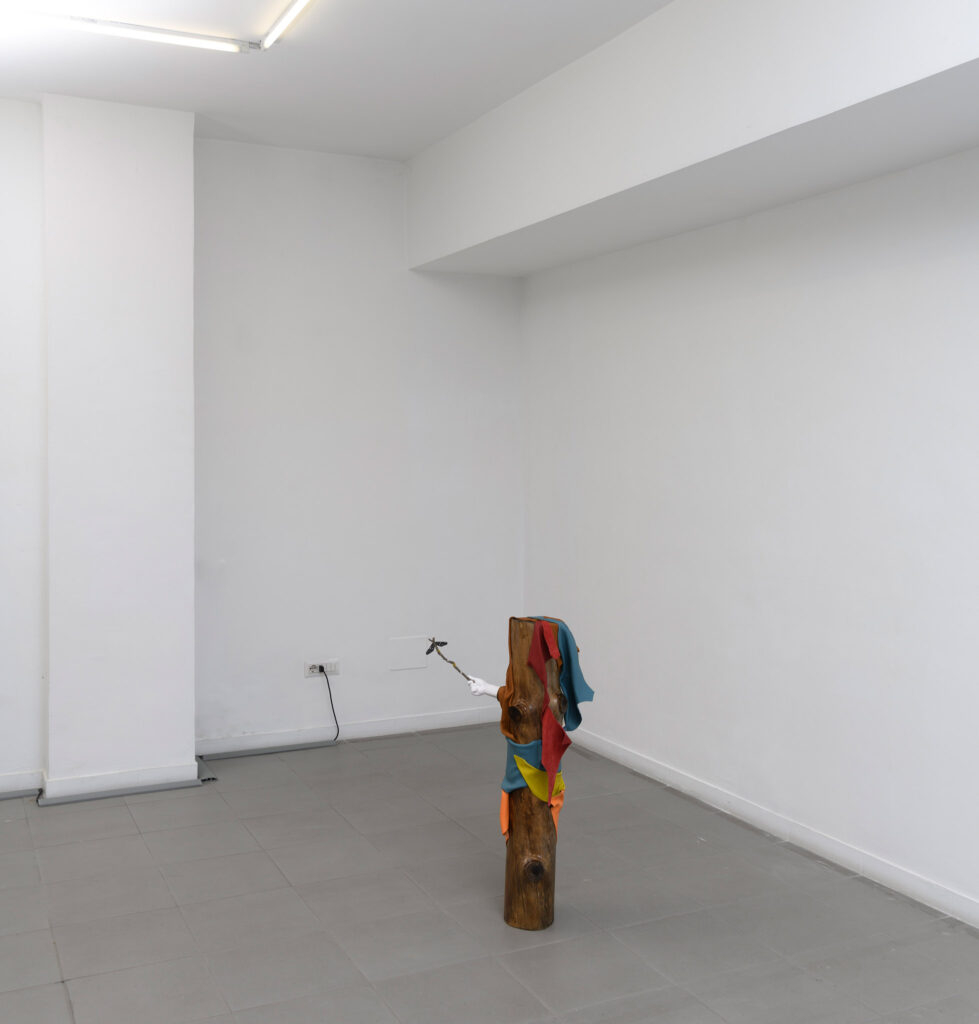
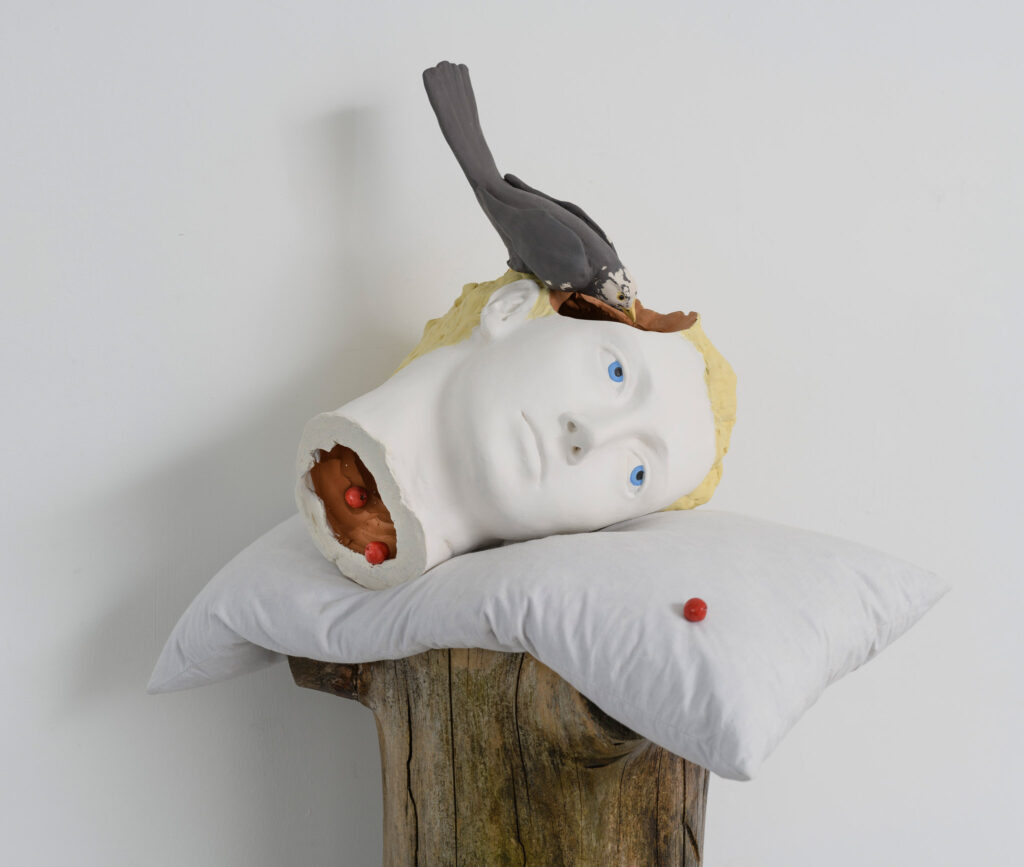
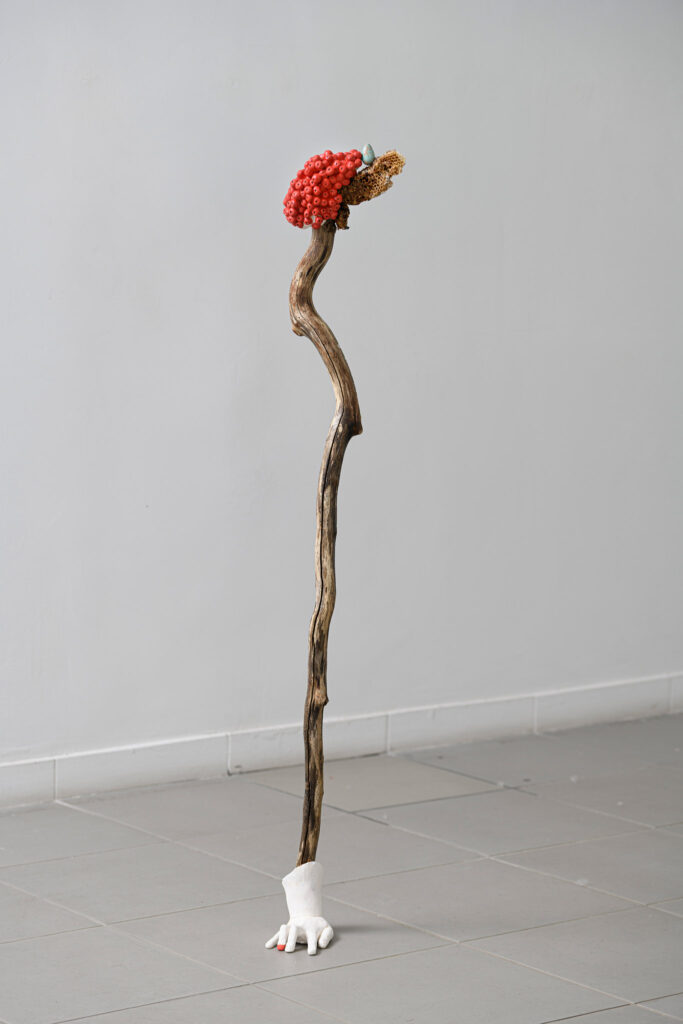
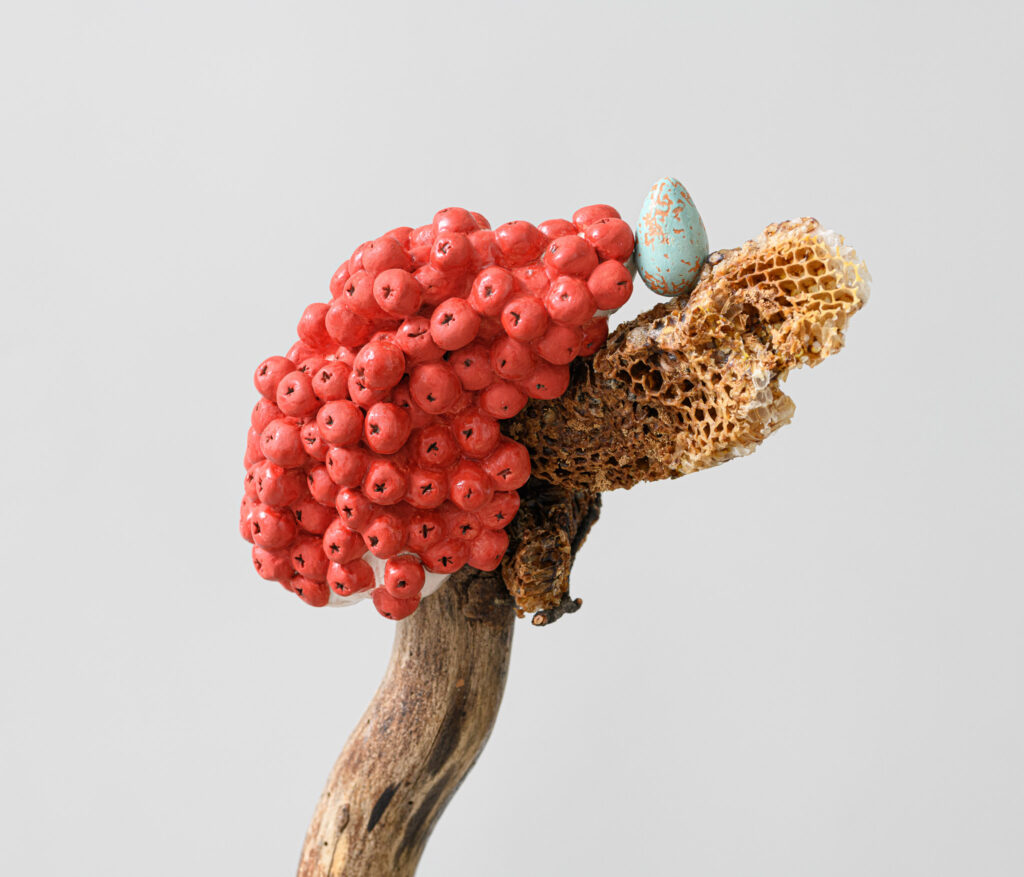
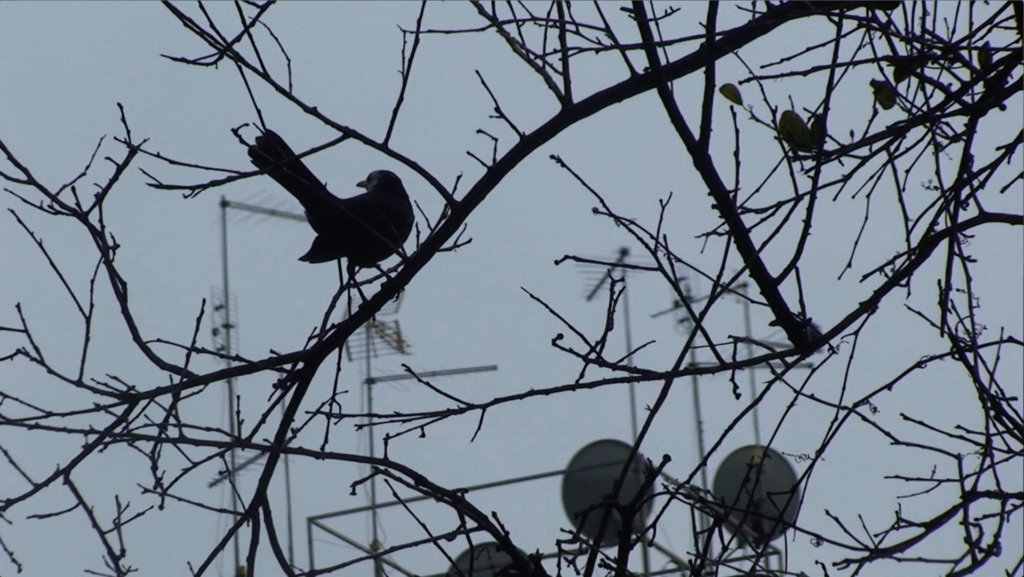
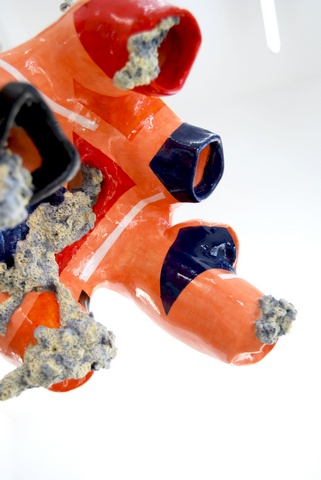
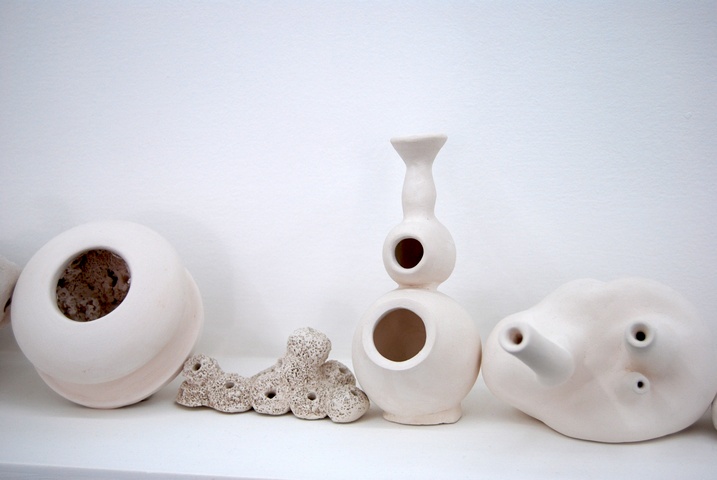
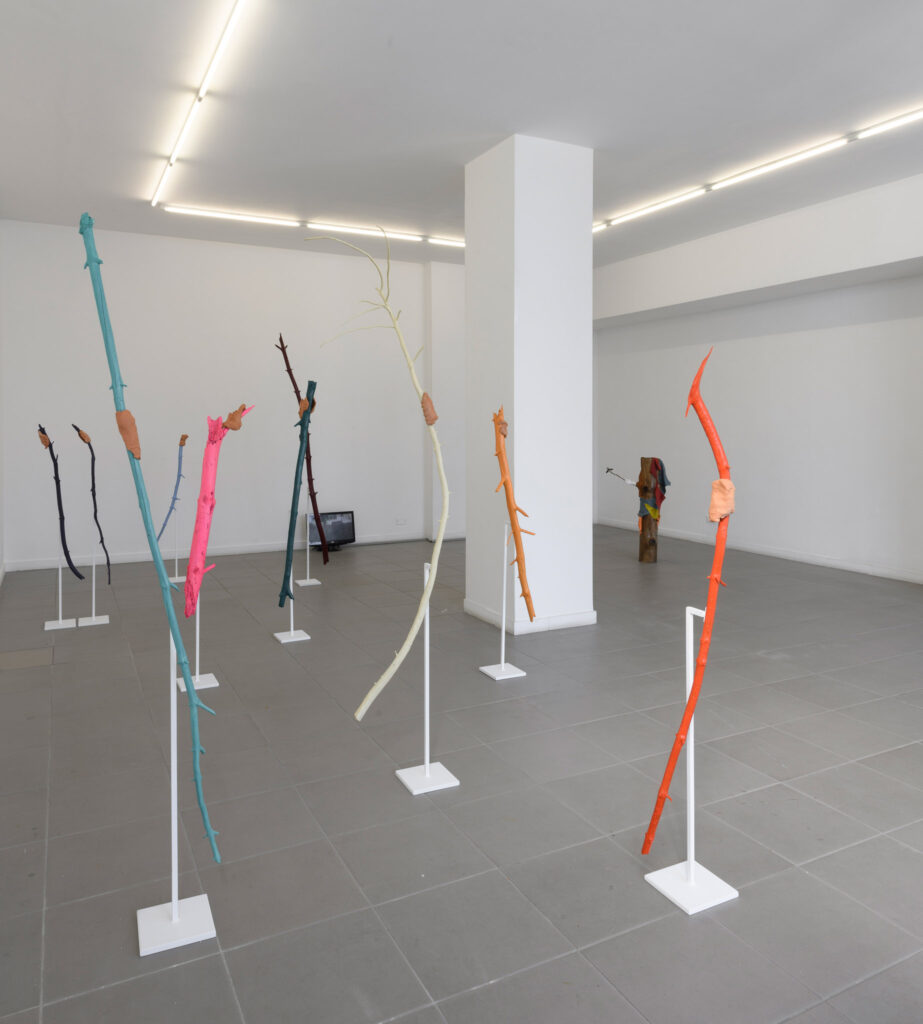
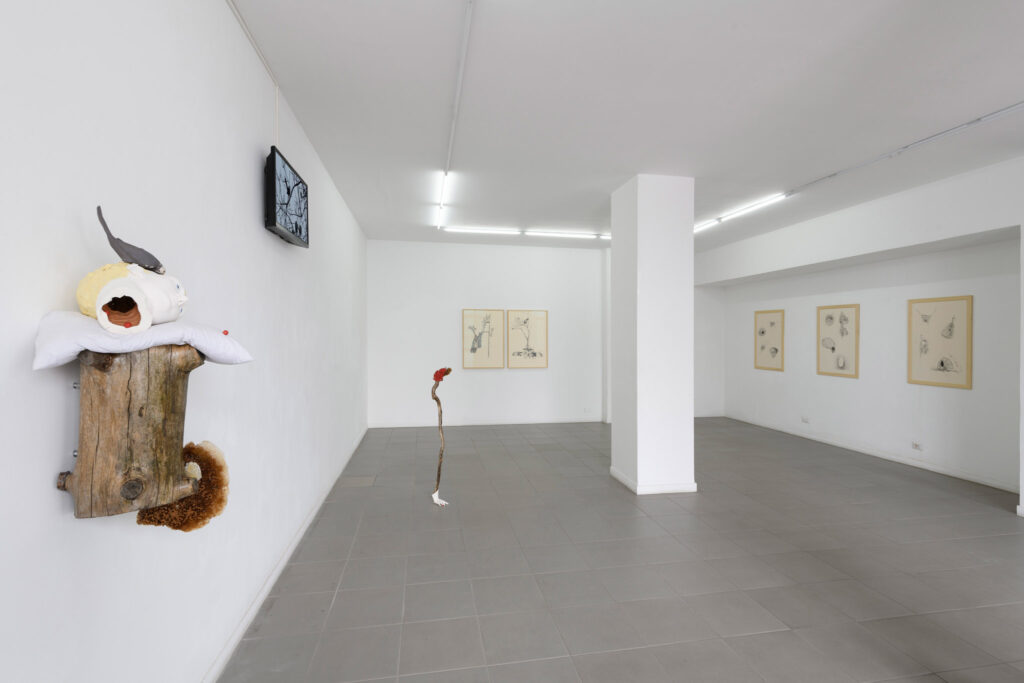
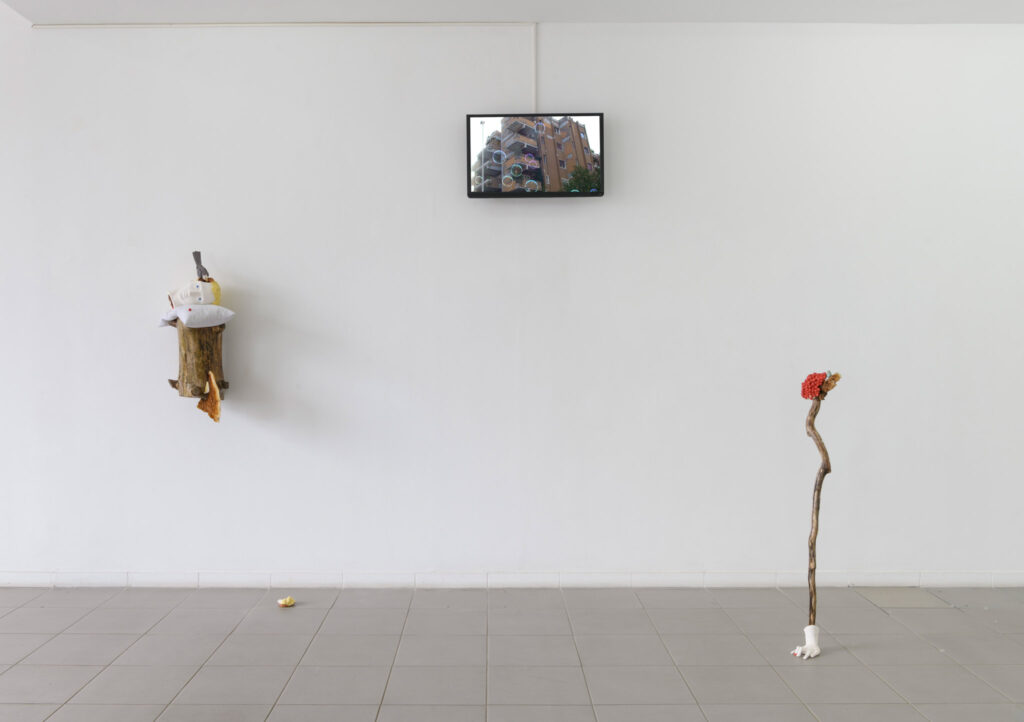
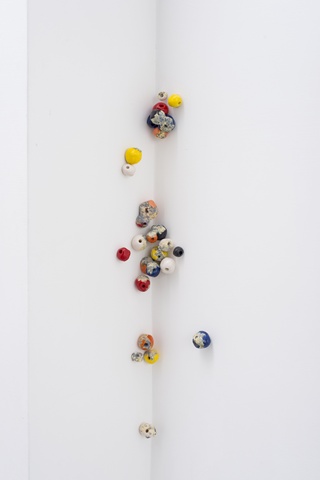
The forest is a biological, ecological system of interpenetration of the signified and signifiers in constant evolution and reciprocity, where the crystallization into forms and their abstraction is incessant. The new series of works on display echoes this idea finding inspiration from the materials found in the forest, with a focus on all those transformative crossroads of the human experience such as childhood, adolescence, motherhood, and with all those forms that precede the structured and crystallized construction of language.  The wood represents a form of collective, vegetal, structured, and interdependent intelligence. Traversing a path in a woodland implies activating some areas of the brain that speak deeply to our animal essence, such as the amygdala.

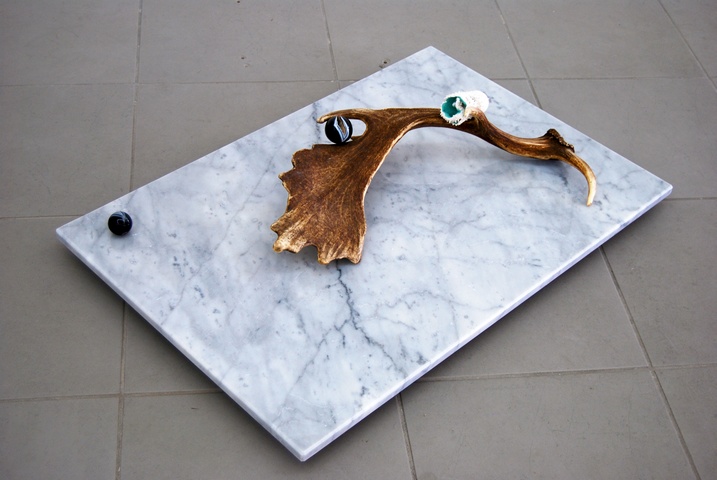
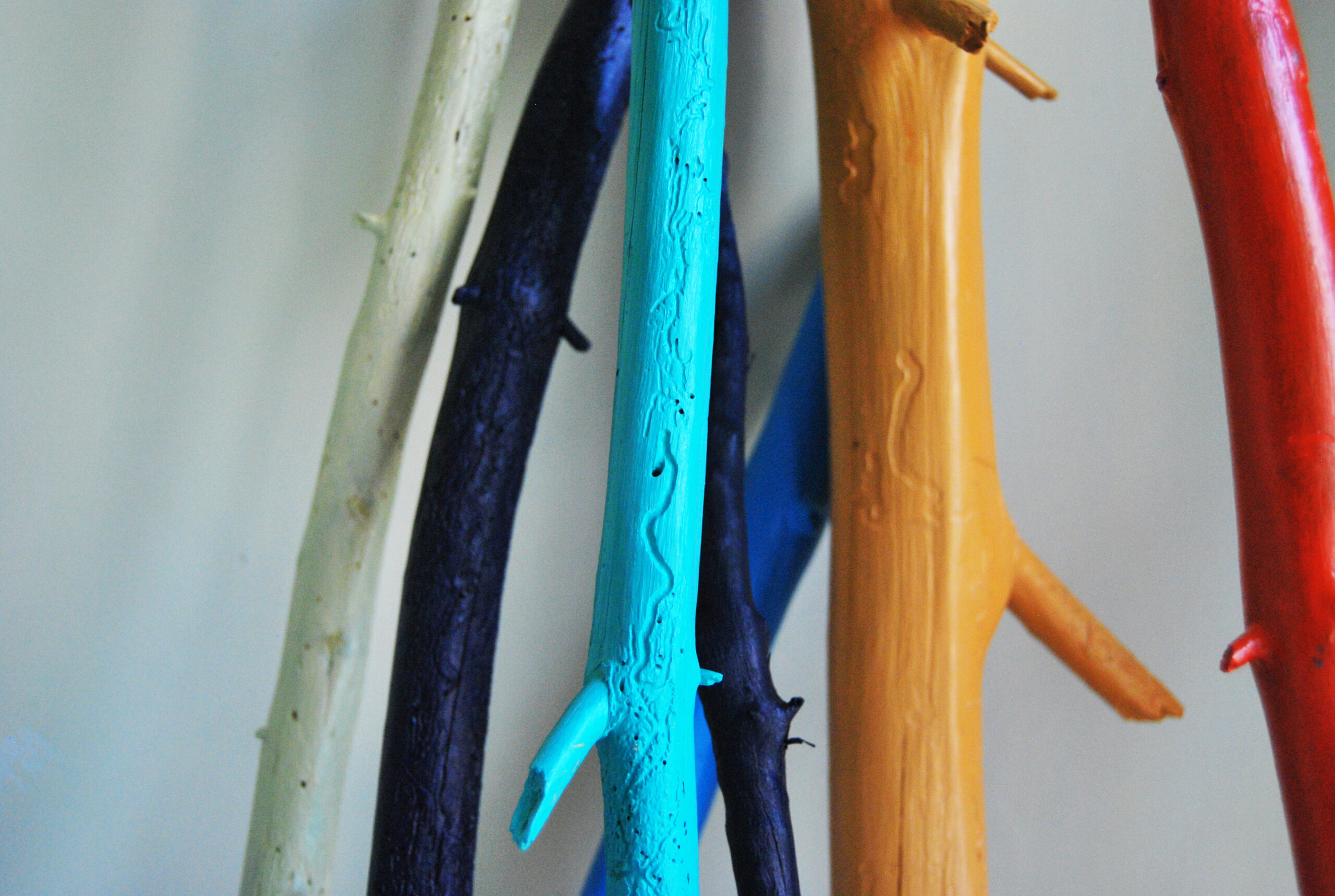
The physical need to remediate the instability of our bipedal posture on uneven drops and grounds requires us to integrate our body with a prosthetic item: the stick. Crossing some wood with a stick whose weight and structure are appropriate to our body size, height and posture is an old and simple, yet meaningful, gesture that implies welcoming and integrating the surrounding natural environment into the human body to recreate a new human/animal/vegetal   structure more apt to cross the space with a different and improved cognitive and sentient capacity. Like in the riddle of the sphinx, the human by multiplying their paws over the different seasons of life meets their animal dimension and of interdependence with the living thought that incorporates and surrounds them.

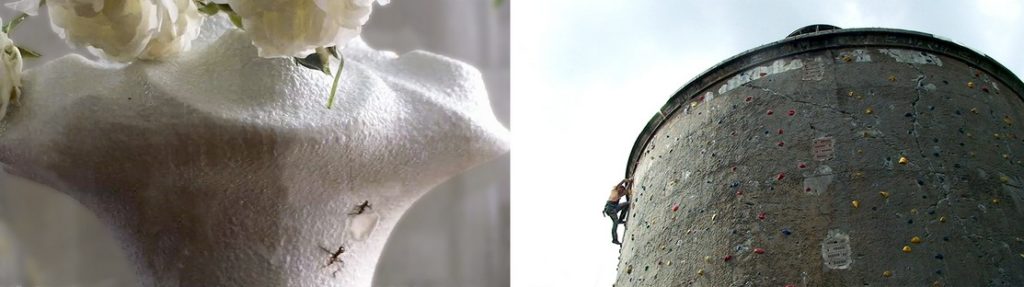
The exhibition is designed around two pillar concepts related to hybridisation, to transcending the human perimeter in a view close to the anthropology of the overman and more specifically to the research linked to previous experiences lived by Luana Perilli as she investigated the places where the perimeter of the individual is broken and reconfigures itself physically and semantically in the encounter with the multitude and the possible alterities. In her previous works of the 2011 “superorganism” series, she investigated the collective intelligence of the insects as a paradox and a cognitive, political, linguistic and perceptive limit; similarly, in the 2014 pottery collection “solitary shelters“, Perilli reinterpreted the look on nature through craftsmanship; finally, in the works “leopold-o” the artist dealt with the topic of how collective intelligence reinterprets and hybridizes the language and the architecture through the simplified Pidgin language and changes of use.

Part of the works has been produced with the Academy of Fine Arts of Catanzaro with which the artist has carried out various workshops starting from the collective crossing of a natural space, the wood. We would like to thank those who took part in the stroll and the related visual work: the teachers Simona Caramia, Giuseppe Guerrisi and Roberto Privitera and the students Michela Teresa Intrieri, Maria Gilda Perri, Debora Giovene, Ilaria Notaro, Giada Pugliese, Gabriele Pirrò, Paola Naika Mascaro, Vincenzo Azzariti, Nicoletta Petruzza.
The Gallery Apart è orgogliosa di annunciare Wanderlust, la nuova mostra personale di Luana Perilli negli spazi della galleria.

Da tempo l’artista indaga le intelligenze non umane, i sistemi collettivi ecologici, biologici e semantici e si interessa a tutti quei luoghi dell’immaginazione e della produzione di senso in cui il perimetro dell’individuo viene forzato e spostato. Wanderlust è una di quelle parole intraducibili che indicano con un solo termine uno stato d’animo complesso: il desiderio forte e irrefrenabile di vagare e spingersi oltre un limite fisico o immaginario.

L’incontro con l’intelligenza non umana avviene nella reinterpretazione di icone come la vergine e l’unicorno o in mitologie legate alla trasformazione reciproca, come quella di Ts’an Nü avvolta da una pelle di cavallo e trasformata nel baco da seta; o, ancora, nella rielaborazione di frammenti e archivi visivi dell’artista nell’ottica di una narrazione che non avanza linearmente ma per pareidolie, evocazioni, rimandi all’onirico e ad un’antropologia che non metta più l’uomo di Vitruvio al centro della misura e della narrazione.

La foresta è un sistema biologico, ecologico e di compenetrazione di significati e significanti in evoluzione e reciprocità continua, dove la cristallizzazione in forme e la loro astrazione procede incessantemente. Ai materiali trovati nella foresta e in risonanza con questa idea si ispira la nuova serie di lavori presentati in mostra con una tensione verso tutti quei crocevia trasformativi dell’esperienza umana come l’infanzia, l’adolescenza, la maternità e con tutte quelle forme che precedono la costruzione strutturata e cristallizzata del linguaggio. Il bosco rappresenta una forma di intelligenza collettiva vegetale strutturata ed interdipendente. Attraversare un sentiero in una zona boschiva implica attivare delle aree del cervello che parlano profondamente alla nostra essenza animale, come l’amigdala.

Fisicamente la necessità di sopperire all’instabilità della nostra postura bipede su dislivelli e terreni irregolari ci chiede di integrare il nostro corpo con un elemento prostetico: il bastone. Attraversare un bosco scegliendo un bastone che per peso e struttura sia adeguato alla nostra stazza, statura e postura è un gesto antico e semplice ma di grande significato che implica accogliere e integrare l’ambiente vegetale circostante nel corpo umano così da ricomporre nell’ibrido una nuova struttura umana/animale/vegetale più idonea ad attraversare lo spazio con una diversa ed aumentata capacità cognitiva e senziente. Come nell’ interrogativo della sfinge, l’umano moltiplicando le sue zampe nelle diverse stagioni della vita incontra la sua dimensione animale e di interdipendenza con il pensiero vivente che lo incorpora e lo circonda.

La mostra si compone di due nuclei progettuali legati all’ibridazione, all’ uscita dal perimetro dell’umano in una visione vicina all’antropologia dell’oltreumano e più nello specifico ad una ricerca che si ricollega alle precedenti esperienze che Luana Perilli ha conosciuto investigando i luoghi dove il perimetro dell’individuo si rompe e si riconfigura fisicamente e semanticamente nell’ incontro con la moltitudine e le alterità possibili. Già nei lavori della serie “superorganism“, a partire dal 2011, l’artista indagava l’intelligenza collettiva degli insetti come paradosso e limite cognitivo, politico, linguistico e percettivo; analogamente nella serie di ceramiche del 2014 “solitary shelters” Perilli rielaborava lo sguardo sulla natura attraverso la sua citazione nell’ artigianato; infine, nei lavori “leopold-o” l’artista affrontava il tema di come l’intelligenza collettiva rielabora e ibrida il linguaggio e l’architettura attraverso la lingua semplificata Pidgin e cambi d’uso.

Parte delle opere è prodotta con l’Accademia di Belle Arti di Catanzaro con cui l’artista ha svolto vari workshop a partire dall’attraversamento collettivo di uno spazio naturale, il bosco. Si ringraziano le persone coinvolte nella passeggiata e nel relativo lavoro: i docenti Simona Caramia, Giuseppe Guerrisi e Roberto Privitera e gli studenti Michela Teresa Intrieri, Maria Gilda Perri, Debora Giovene, Ilaria Notaro, Giada Pugliese, Gabriele Pirrò, Paola Naika Mascaro, Vincenzo Azzariti, Nicoletta Petruzza.
DIMORE

Mariana Ferratto, Rowena Harris, Luana Perilli

10.05.2021 – 12.06.2021

Exhibition Views

Works

Each era presents new junctions that capture attention, polarise opinion, and call for intellectual effort in influence over them, for better or for worse. These junctions arrive when, after a long incubation, great themes of humanity reach the point of maturation, or as sudden urgencies felt in the effects of technological revolution. In their unpredicted arrival such intersections produce a scenario where clashes and entanglements become the mode to explore until either a route is found for humanity to progress, or equally where it will be overwhelmed and undone.

Amongst those which qualify in these terms for our current historical phase at the global level, it may be migration, the pandemic, and climate change as the three key issues that assume maximum importance. Each of these themes is a world in its own right, with infinite facets, implications and consequences – each of strong influence over human and planetary relations, and each determinative of rules, modalities, and qualities of living in the world. Gathered into intersection within the DIMORE exhibition, the works of Mariana Ferratto, Rowena Harris and Luana Perilli offer three partial perspectives as keys to reading this way of living, shown through the diversity of their respective researches, choice of media, and thematics conveyed.

The three artists explore the shape of living through different angles, and where these trajectories converge through their shared approached in circumnavigating the intimate and domestic, in pursuit of the relationship between self and the inhabited environment. Housing can be considered more broadly as the inhabitation of environment – the making of space for the human needs we have to deal – and where the environment is present to this space even if, and indeed when, there will no longer be humanity. Home is the affective, spiritual dimension, of the people closest to us and with whom we share physical and mental space, be they our dearest affections or strangers that we welcome as the gesture of friendship to be built. It is a welcome that starts from the inadequacy of the very concept of migrant, which implies a free will that does not really exist. To be home within one’s own skin, is to speak of the human body as seemingly closed and perfect mechanism that we imagine provide us with a sense of total reliability and protection, when it may instead be a porous home by definition, due to the innate openings of the skin and intrinsic relationality of the human immune system with the environment. 

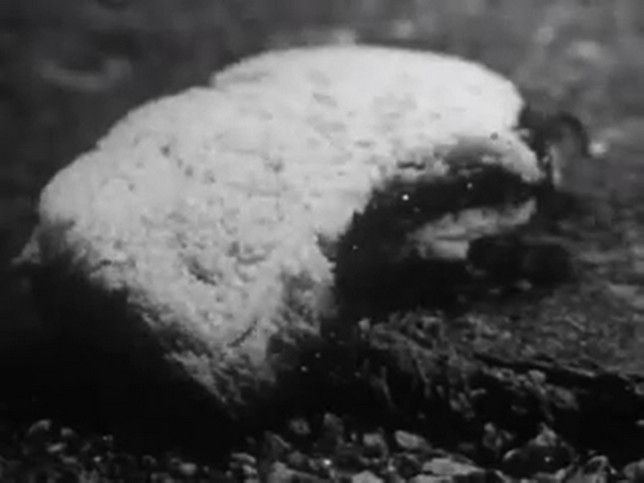
Luana Perilli takes a multidisciplinary approach by presenting a set of works ranging from ceramics and video. Inspired by the poem “The Treehouse” by James A. Emanuel, the artist identifies the treehouse as a physical and mental refuge, a return to childhood and adolescent gestations and transformations, a time of waiting. “To every man His house below And his house above With perilous stairs Between”: this is how Emanuel’s poetry ends, and Perilli wanted to walk those stairs, dialoguing with rare creatures such as the leucistic blackbeest, a natural anomaly bringing changes and magic that the artist has made the protagonist as well as other imaginary/real creatures of the forest that populate his multimedia intervention. The treehouse is also a reminder of that particular moment in adolescence when everything is a potential adamantine ready to exceed itself or give way to the squalor of the ordinary, at that moment of threshold that contains the concentration before the jump. It is reflecting on this that Perilli conceives the installation “Narcissus (portrait of the archangel Michael as a boy)”, inspired by the “Portrait of a Young Man” by Luca della Robbia and “Narcissus and Boccadoro” by Herman Hesse.

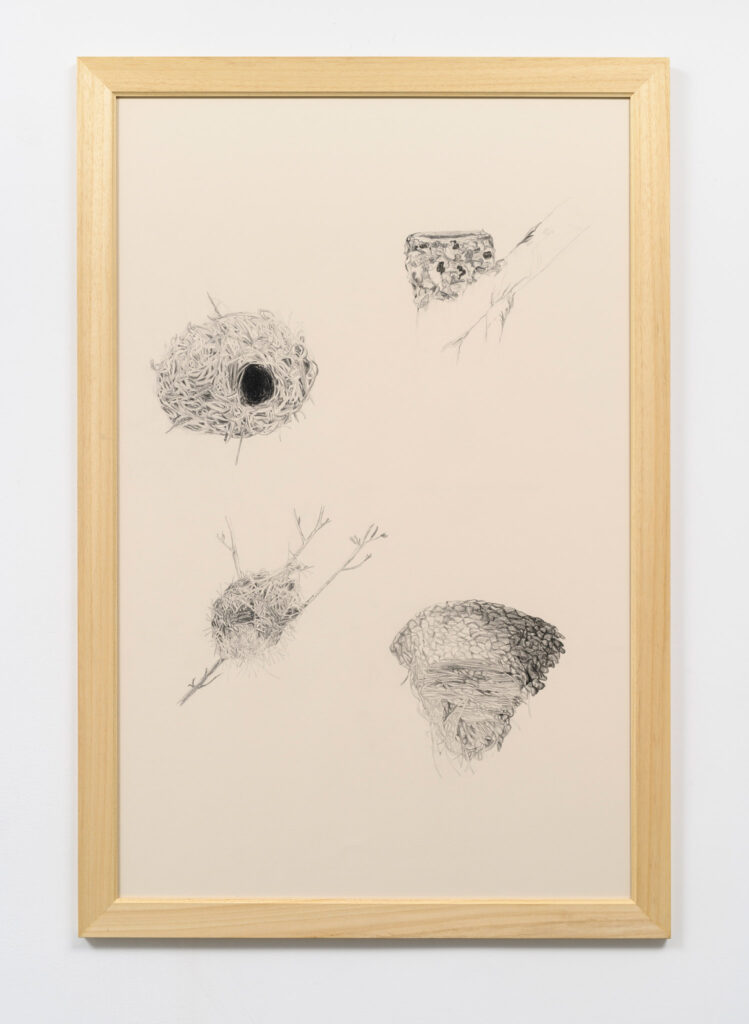
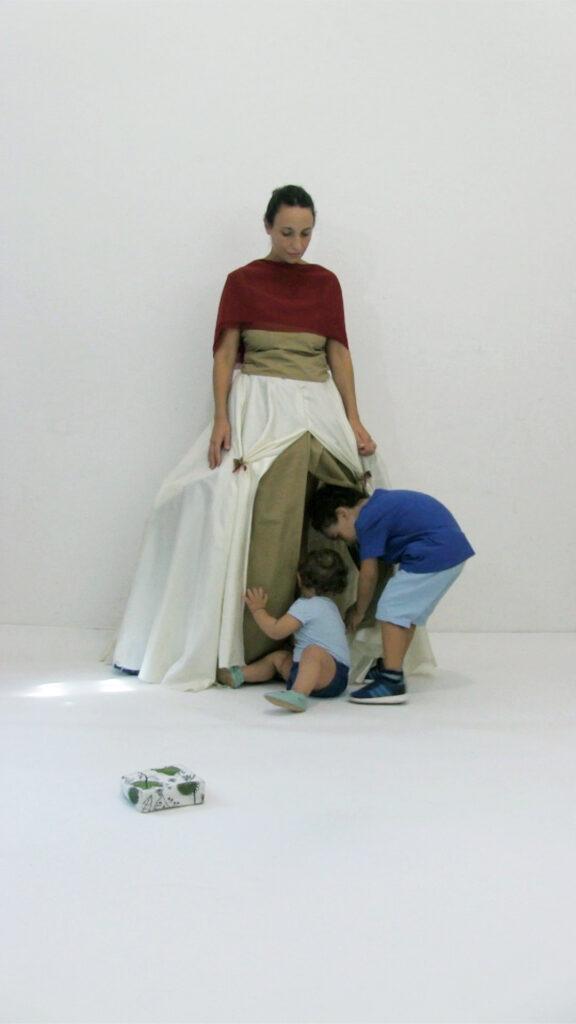
More aimed at the cultivation and protection of feelings is the interpretation of the living offered by Mariana Ferratto. The artist seems to provide a map of the places where spirituality is in, be they meticulously drawn small nests or a huge mother who becomes home for her cubs. In the video “Madame Maison” the installation dimension is functional to the use of the message: a gigantic woman interacting with children the size of adults, a woman motionless to denounce the paralyzing condition of women, even more so in the current pandemic situation. The imposing figure (the lady of the house) is clothed as an ancient lady and offers the central opening of her large skirt to the availability of two children who live there playing and simulating acts such as cooking, eating, sleeping, cleaning. In the choice of games, all projections of typically domestic activities, children elect their mother to the place of habitation. “Archive. An attempt to understand how to build a nest” is the title of the drawings that the artist has grouped on large sheets. These are meticulous designs, which reproduce leaves, small branches and mud with which each volatile species has built its own shelter. A slow and detailed work that the artist defines as a kind of mantra, to emphasise its dimension of welcome and refuge for one’s feelings.

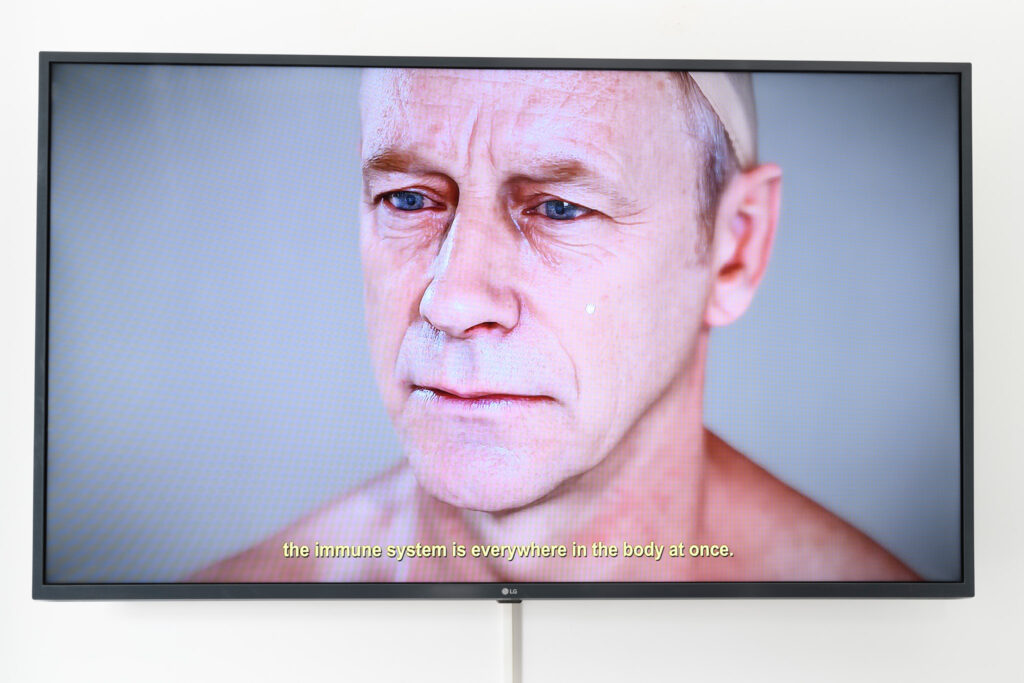
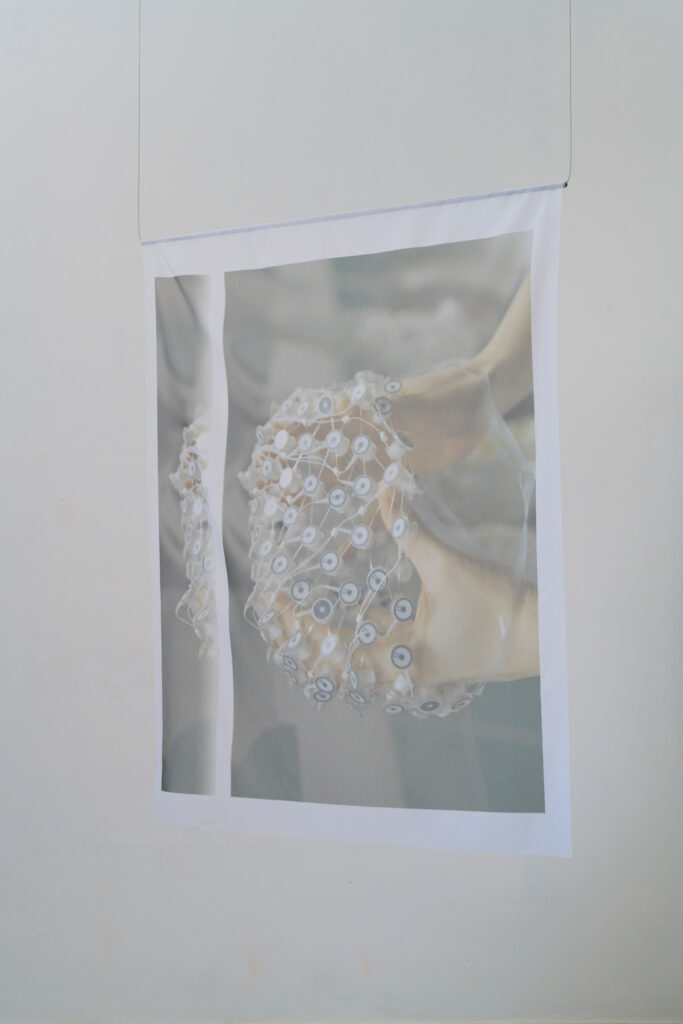
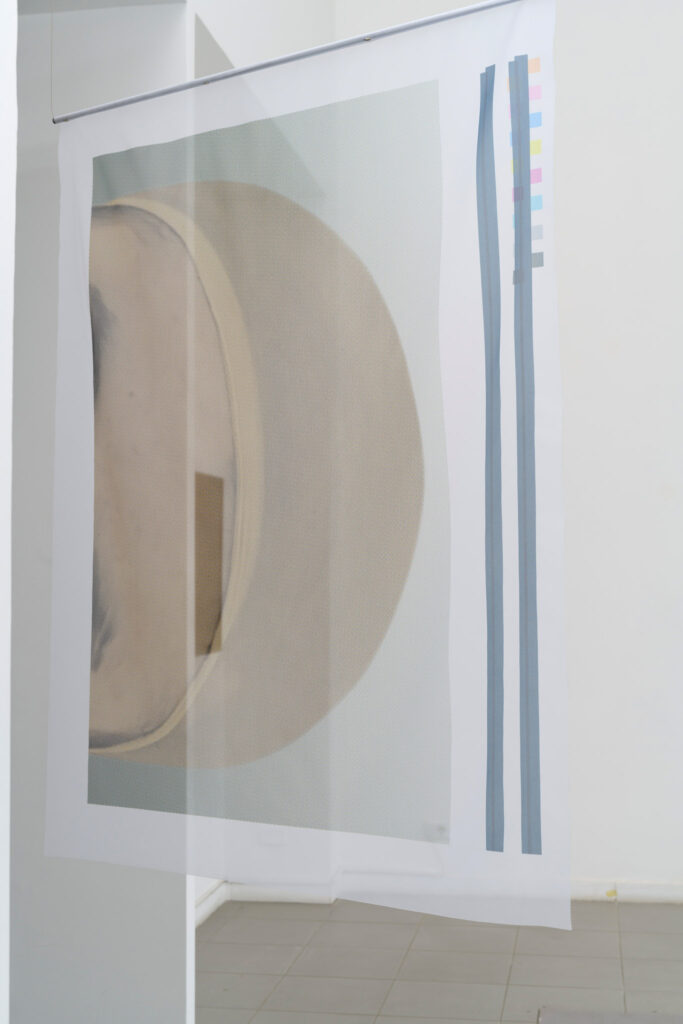
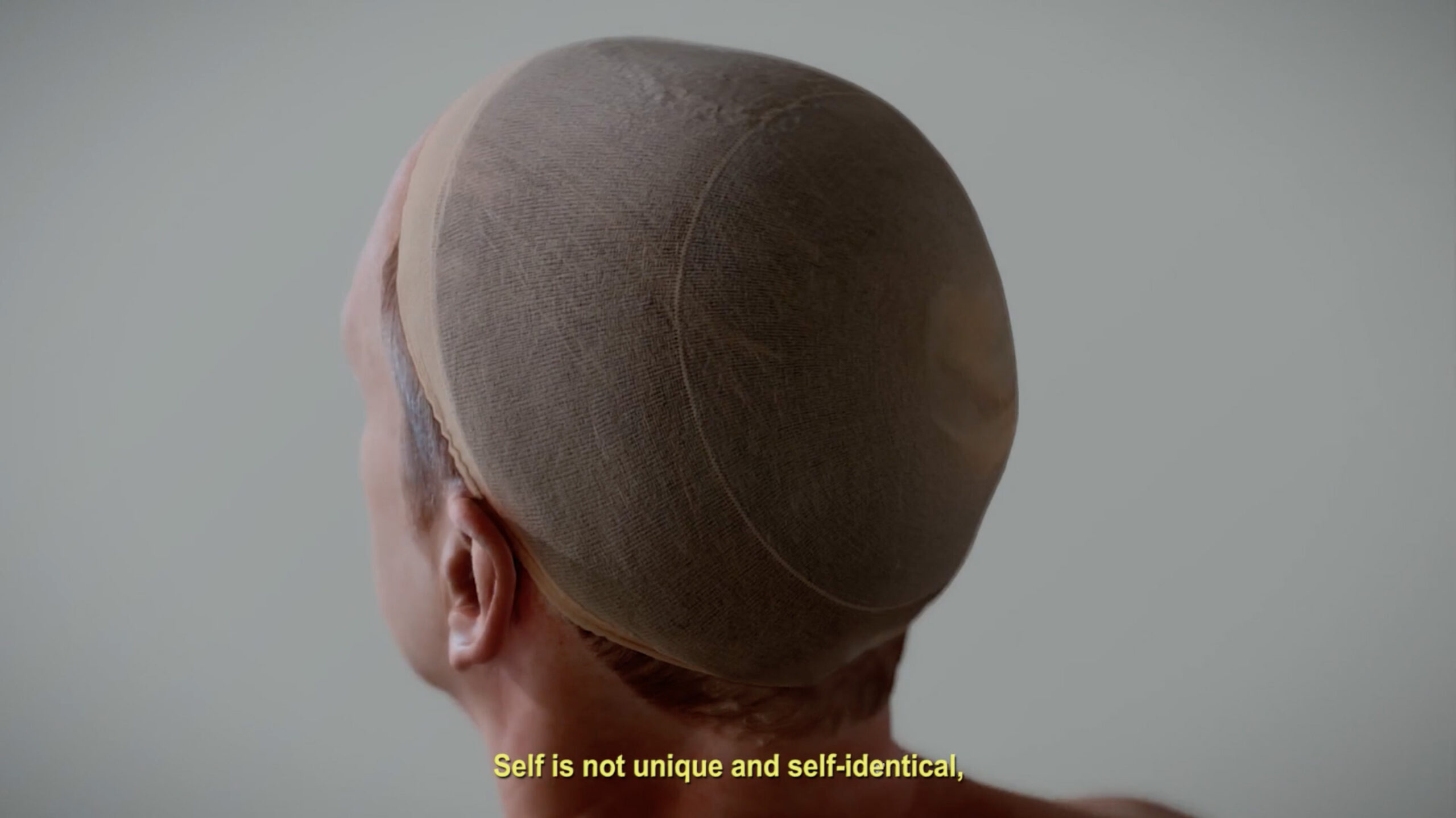
Finally, Rowena Harris offers her interpretation of living in terms of the human body, as that inhabited, situated and interactive with the material, social and political environment. The film “Molecular Multiplicities” is an inspection of the human as a body of visual, social and scientific construction. It playfully partners a realistic 3D scan of a middle-aged white man as a problematic ‘non-identity’ tied closely to dominant concepts of the human. A scientific narrative partners describing and troubling the self / other logic of the human immune system, and, though accounting its orifices, reveals the promise of the skin’s protection as a visual mirage. If the video provokes a problematised image of the body as a protective container from external agents, the installation “Waves and Waves” jostles the viewer into invisible interaction with the work. Viewing takes place with the flow of air and movement of other bodies, as the two silk images gently dance a dialogue about their invisible relation in space and in life – of the medical technology that comes to understand a mind and vice versa, in ways that maybe ineffable and of a knowledge that is embodied.

Ogni epoca storica presenta snodi capaci di polarizzare l’attenzione dell’opinione pubblica e lo sforzo intellettuale di chi è chiamato, nel bene o nel male, ad influenzarla. Sono grandi temi che arrivano a maturazione dopo lunga incubazione o che si manifestano in tutta la loro repentina urgenza quali effetti dell’uso virtuoso o scellerato delle nuove tecnologie. Scenari più o meno inaspettati rispetto ai quali ci si scontra, ci si arrovella, ci si aggroviglia fino a che si trovano soluzioni che consentono all’umanità di progredire o viceversa di esserne travolta.

Fra le tematiche che qualificano l’attuale fase storica a livello planetario, tre assumono oggettivamente il rilievo massimo: le migrazioni, la pandemia, i cambiamenti climatici. Ciascuno di questi temi è un mondo a sé, con infinite sfaccettature, implicazioni e conseguenze. Sono questioni che influenzano fortemente il rapporto tra l’umanità e il pianeta che la accoglie, determinando regole, modalità e qualità dell’abitare il mondo. I lavori di Mariana Ferratto, Rowena Harris e Luana Perilli riuniti nella mostra DIMORE ne propongono una chiave di lettura parziale ma omogenea seppure nella diversità delle rispettive ricerche, della scelta dei media e dei contenuti trasmessi.

Le tre artiste scandagliano la dimensione del dimorare da angolazioni diverse, non ricercandone i risvolti intimi e domestici, al contrario evidenziando il rapporto tra il sé e l’ambiente che ci circonda e ci contiene. Dimora è quindi l’habitat con cui entriamo, volenti o nolenti, in contatto e con le cui necessità dobbiamo fare i conti, perché la natura ci sarà sempre anche se e quando non ci sarà più l’uomo. Dimora è la dimensione affettiva, spirituale, le persone che ci sono più vicine e con cui condividiamo spazio fisico e mentale, siano esse i nostri affetti più cari o estranei che dobbiamo accogliere in nome di un sentimento tutto da costruire e che ancora non è stato nominato, un’accoglienza che parta dall’inadeguatezza del concetto stesso di migrante, che sottintende un libero arbitrio in realtà inesistente. Abitare la propria pelle significa parlare del corpo umano come meccanismo apparentemente chiuso e perfetto che ci fornisce un senso di totale affidabilità e protezione, pur essendo invece, a diverse scale, poroso per definizione a causa dei suoi numerosi orifizi e delle interazioni del sistema immunitario con l’ambiente

Luana Perilli adotta un approccio multidisciplinare presentando un insieme di lavori che spaziano tra ceramica e video. Ispirandosi alla poesia The Treehouse di James A. Emanuel, l’artista individua nella casa sull’albero un rifugio fisico e mentale, un ritorno alle gestazioni e trasformazioni infantili e adolescenziali, un tempo di attesa. Ad ogni uomo la sua casa sotto e la sua casa sopra, in mezzo scale pericolose: così termina la poesia di Emanuel e Perilli ha voluto percorrere quelle scale, dialogando con creature rare come il merlo leucistico, anomalia naturale portatrice di cambiamenti e magie che l’artista ha reso protagonista al pari di altre creature immaginarie/reali del bosco che popolano il suo intervento multimediale. La casa sull’albero è anche un richiamo a quel particolare momento dell’adolescenza in cui tutto è un potenziale adamantino pronto ad eccedere se stesso o cedere il passo allo squallore dell’ordinario, a quel momento di soglia che contiene la concentrazione prima del salto. E’ riflettendo su questo che Perilli concepisce l’installazione “Narciso (ritratto dell’arcangelo Michele da adolescente), ispirato al “Ritratto di giovinetto” di Luca della Robbia e a “Narciso e Boccadoro” di Herman Hesse.

Più rivolta alla coltivazione e protezione dei sentimenti è l’interpretazione dell’abitare offerta da Mariana Ferratto. L’artista sembra fornire una mappa dei luoghi in cui alberga la spiritualità, siano essi dei piccoli nidi minuziosamente disegnati o una madre enorme che diventa casa per i suoi cuccioli. Nel video “Madame Maison” la dimensione installativa è funzionale alla fruizione del messaggio: una donna gigantesca che interagisce con bambini dalle dimensioni di adulti, una donna immobile a denunciare la paralizzante condizione femminile, ancor più nell’attuale congiuntura pandemica. L’imponente figura (la signora della casa) è abbigliata da antica dama ed offre l’apertura centrale della sua grande gonna alla disponibilità di due bambini che la abitano giocando e simulando atti come cucinare, mangiare, dormire, pulire. Nella scelta dei giochi, tutte proiezioni di attività tipicamente domestiche, i bambini eleggono la loro madre a luogo di abitazione. “Archivio. Tentativo di capire come si costruisce un nido” è il titolo dei disegni che l’artista ha raggruppato su grandi fogli. Si tratta di disegni minuziosi, che riproducono foglie, piccoli rami e fango con cui ciascuna specie volatile ha costruito il proprio rifugio. Un lavoro lento e dettagliato che l’artista definisce come una sorta di mantra, a sottolinearne la dimensione di accoglienza e rifugio per i propri sentimenti.

Infine, Rowena Harris offre la sua interpretazione dell’abitare: un corpo abitato e che abita, un corpo situato e interattivo con l’ambiente materiale, sociale e politico. Il film “Molecular Multiplicities” è un’ispezione dell’umano come costruzione visiva, sociale e scientifica. L’immagine è associata ad una scansione 3D realistica di un uomo bianco di mezza età, una “non identità” problematica strettamente legata a concetti dominanti per l’umano. Un partner narrativo scientifico che descrive e interroga la logica del confronto tra il sé e l’altro propria del sistema immunitario umano e, pur contabilizzando i suoi orifizi, rivela la promessa della protezione della pelle come un semplice miraggio. Se il video provoca un’immagine problematizzata del corpo come contenitore protettivo da agenti esterni, l’installazione “Waves and Waves ” spinge lo spettatore all’interazione con l’opera. La visione è condizionata dal flusso dell’aria e dal movimento di altri corpi, mentre le due immagini stampate su seta danzano delicatamente dialogando sulla loro relazione invisibile nello spazio e nella vita – quella della tecnologia medica che arriva a comprendere una mente e viceversa, in modi forse ineffabili che incarnano la conoscenza.
SONG OF OLIMPIA

Luana Perilli

22.06.2016

Images

The Gallery Apart è orgogliosa di presentare Song of Olimpia, una performance con cui Luana Wojaczek Perilli introduce al pubblico romano, dopo la prima tappa svoltasi a Berlino presso Momentum gallery al Kunstquartier Bethanien, il progetto Leopold-o.

La performance sarà ripetuta alle 19:30 e alle 20:30 e durerà circa 20 minuti.

Il progetto Leopold-o comprenderà anche un workshop per i bambini rifugiati realizzato in collaborazione col collettivo internazionale Nomadic Art e la costruzione di un teatrino pubblico con laboratorio di marionette che li aiuterà ad entrare in contatto con i coetanei tedeschi attraverso narrazioni condivise a dispetto delle limitazioni imposte dalla lingua differente.

In occasione della performance Luana W. Perilli esporrà alcuni lavori preview del progetto Leopold-o che saranno proposti a collezionisti ed appassionati per sostenere la residenza berlinese presso ZK-U e la produzione del progetto stesso. Si tratta di uno still da videoinstallazione in edizione di 10 e di una fotografia in edizione di 3. Nel corso nella serata sarà inoltre possibile acquistare un poster celebrativo della performance.

LA PERFORMANCE

Song of Olimpia è una performance ispirata agli scritti del pioniere dell’ambientalismo americano Aldo Leopold, che si scaglia contro il “Boostering spirit” già alla fine degli anni ’20 con una critica al capitalismo concepita prima ancora che il capitalismo venisse definito tale. La lecture performativa cita il famoso racconto antiborghese “der Sandmann” di E.T.A. Hoffmann di cui è protagonista l’automa Olimpia.
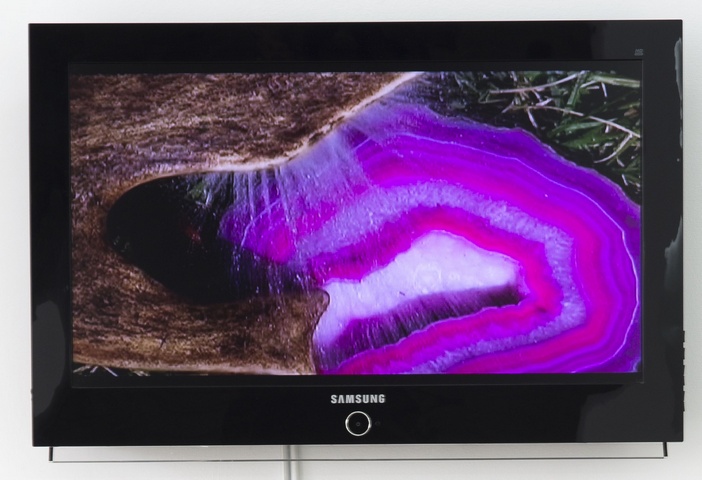
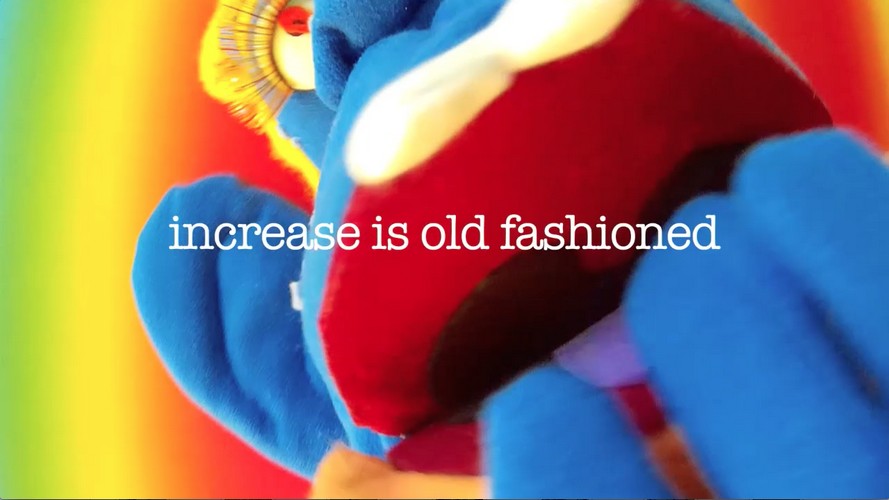
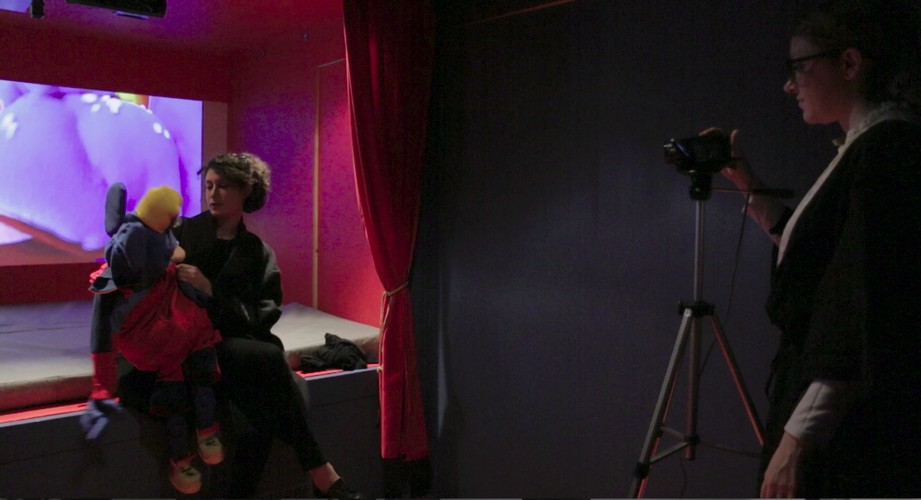
L’evento prenderà la forma di una performance/lecture collegata a racconti, suoni, danze, video e puppet animati. Il pubblico sarà invitato ad interagire con i pupazzi, dando materia e voce al progetto video in progress.
IL PROGETTO

Leopold-o è un progetto sulle eredità storiche difficili e le identità post-belliche in relazione all’attuale crisi economica ed etica del modello capitalista. Il progetto parte dall’osservazione del recupero a Berlino di architetture risalenti alla seconda guerra mondiale (bunkers, etc.) per parlare di intelligenze collettive e identità fluide. Leopold-o vuole indagare come si modifica la percezione degli scenari di guerra e l’identità delle persone e delle generazioni che sono coinvolte nel cambiamento.

Il progetto è partito nel 2015 con la residenza Momentum, grant del premio Terna. Continuerà nel 2016 presso ZK-U centro di ricerca e residenza per arte architettura e urbanistica attivo nell’approfondimento delle pratiche artistiche interdisciplinari relative agli attuali scenari ecologici, sociali ed economici.

Il progetto è realizzato attraverso video e performance partecipative. Il risultato del lavoro sarà una narrazione che emergerà dagli individui coinvolti ed investigherà luoghi e immaginari legati al superamento della crisi e alla conseguente ridefinizione di identità individuali e collettive.

Solitary Shelters

Luana Perilli

23.09.2014 – 22.11.2014

Exhibition Views

Works

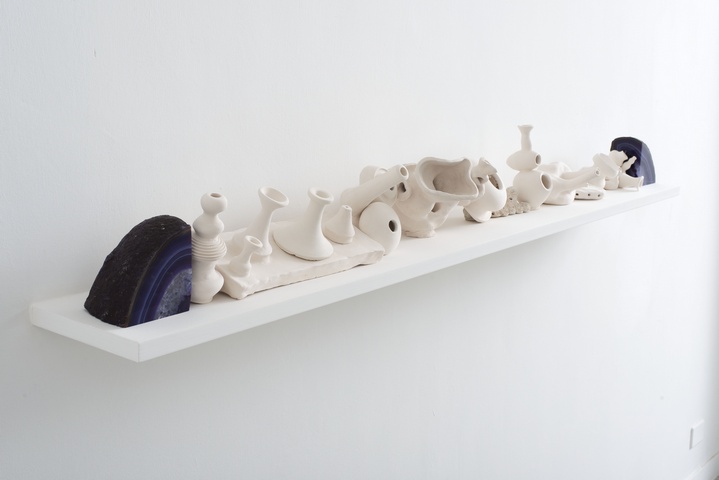
The Gallery Apart is proud to open its new 2014/2015 season with the exhibition Solitary Shelters, the third solo show by Luana Perilli hosted in our gallery. Although the artist’s exploration, this time focused on the relationships between nature and culture, or rather between ideology and ecology, highlights a common thread running through the work carried out over the last few years based on the eusocial animals and the relationships of their social structures with the human societies, the means chosen for this new series of works departs from the previous production and focuses on ceramic sculpture, chosen as an artistic expression hinged on an ancient and intercultural language, compatible with the natural habitats. The typologies and forms, selected, imagined, drawn and personally shaped and sculpted by the artist using the potter’s wheel, create structures that may have the double function of sculptures and of Shelters or nest for the pollinating insects, combining both the ethical and aesthetic functions within the same object. The link between the natural and artifactual world in virtue of the human presence and action in this case is inspired to a particular design style, the organic modern, which drew on the concept of organic architecture introduced by Frank Lloyd Wright in the late 1940s and which has inspired several architects who, over the following decades, have delivered new and brilliant interpretations, such as the renowned Buckminster Fuller. Perilli has then taken as a model  elements of design inspired to nature by delving into the German art pottery from the 1950s and 1960s, in particular those by Sgrafo, Fat Lava and Rosenthal, making the formal suggestion an element that nature can actually embrace.
The reference to the furniture item, which is so recurring in the artist’s poetics, serves both as an evocative factor of a bourgeois lifestyle able to recall values and lifestyles so invasive in their heyday as ephemeral in a historical perspective, and as a prompt to present new combinations of forms and materials. The sculptures thus merge and integrate in the ceramics  other natural elements which are typical of the modern, such as the agate gemstones and some plants.

The Gallery Apart è orgogliosa di inaugurare la stagione 2014/2015 con la mostra Solitary Shelters, terza personale di Luana Perilli in galleria. Se la ricerca dell’artista, questa volta incentrata sui rapporti tra natura e cultura, o meglio tra ideologia ed ecologia, attesta una continuità tematica rispetto al lavoro condotto negli anni scorsi intorno agli animali eusociali e alle relazioni dei loro modelli comunitari con le società umane, il mezzo prescelto per il nuovo ciclo di opere si distacca dalla precedente produzione per concentrarsi sulla scultura in ceramica scelta come modalità espressiva fondata su un linguaggio antico e interculturale, compatibile con gli habitat naturali. Le tipologie e le forme, selezionate, immaginate, disegnate e personalmente realizzate al tornio dall’artista, danno vita a strutture che possono avere la doppia funzione di sculture e di rifugi o nidi per insetti impollinatori in una convivenza di funzioni etiche ed estetiche all’interno dello stesso oggetto.
Il collegamento tra universo naturale e mondo artefatto in virtù della presenza e dell’attività dell’uomo è in questo caso affidato all’ispirazione ad un preciso filone di design, quello stile organic modern che riprese la lezione e la nozione di architettura organica che Frank Lloyd Wright introdusse negli anni 40 e che ha ispirato molti architetti che nei decenni seguenti fornirono nuove e geniali interpretazioni, primo fra tutti Buckminster Fuller. Perilli ha così assunto a modello elementi di design ispirati alla natura studiando approfonditamente le ceramiche tedesche degli anni 50 e 60, in particolare le ceramiche Sgrafo, Fat Lava e Rosenthal, rendendo il suggerimento formale un elemento di cui la natura possa effettivamente appropriarsi.
Il riferimento all’elemento d’arredo, ricorrente nella poetica dell’artista, si afferma sia come fattore evocativo di un quotidiano borghese in grado di richiamare alla memoria valori e stili di vita tanto invasivi all’epoca del loro fulgore quanto effimeri in un’ottica di prospettiva storica, sia come spunto per riproporre forme e materiali in nuove combinazioni. In tal senso le sculture associano e integrano nella ceramica altri elementi naturali tipici del moderno come le pietre d’agata e alcuni vegetali.

108 (SPONTANEOUS COLLECTIVE IN THOUGHTLESS AWARENESS)

Luana Perilli

27.09.2012 – 01.12.2012

Exhibition Views

As the gallery’s opening exhibition for the 2012/2013 season, The Gallery Apart is proud to present 108 (spontaneous collective in thoughtless awareness), the new chapter of the research carried out over the last two years by Luana Perilli on her second solo-show hosted by the gallery. With the usual multidisciplinary approach, for several months Luana Perilli explored the world of the eusocial animals (in particular, ants and wasps), developing the project Superorganism focused on the relationship between the sociobiology applied to the specific nature of such insects and the current crisis of the social and economic growth models.  

Following the production of the first ant’s nest showcased in October 2011 at the Museo della permanente in Milan, the project Superorganism developed through a series of significant works, such as the videos presented during the exhibitions Nuova gestione and Extraspirito, and the huge installation presented at the Macro museum for Re-generation, and concluding now with the exhibit 108 and the presentation of the book of the same name published by cura.books, which goes through  the most significant art projects produced by Luana Perilli during her still short, yet intense, artistic career, also featuring a critique by Mike Watson, independent curator and correspondent for Frieze magazine, and by Claudio Cravero, curator of PAV Parco Arte Vivente – Centro sperimentale d’arte contemporanea di Torino (PAV Living Art Park – Experimental Centre for Contemporary Art in Turin).

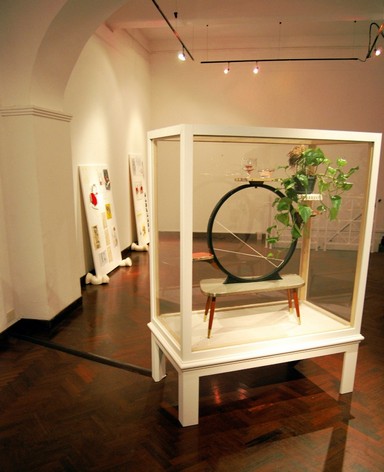
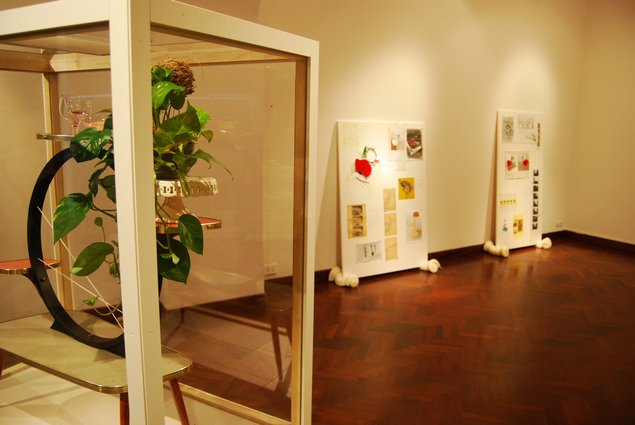
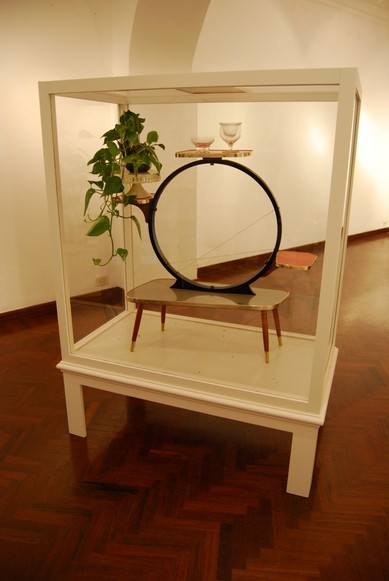
On the occasion of the exhibition, Perilli will be presenting a sculptural installation, a video and a series of bidimensional artworks. The art installation consists of a glass case displaying a vintage 1950s Formica and wooden dining table (Kidney Plant Table Flower Stand Formica Eames Danish Teak), also hosting a big colony of weaver ants as they are constructing their nest using silk up a vine.

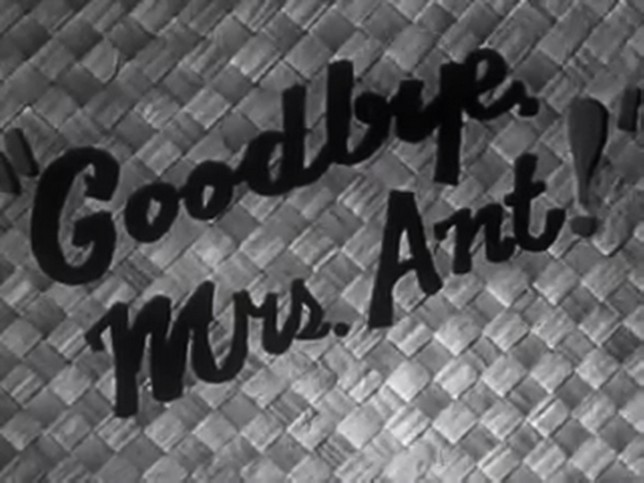
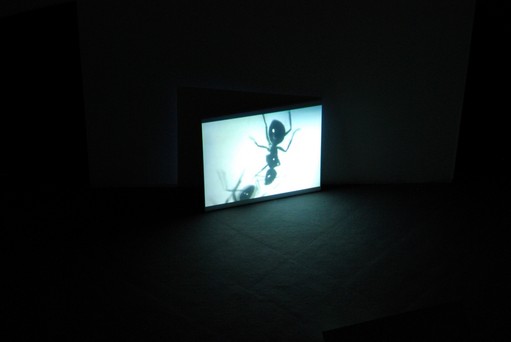
The video features images of raider ants in a flat and of a documentary about ants from 1959, Goodbye Mrs. Ant, partly produced by the Velsicol Chemical Corporation which, though on the one hand, explains and outlines the fascinating complexities and intelligence of these insects, on the other hand, it aims at promoting the use of the household insecticide DDT in order to exterminate them.   

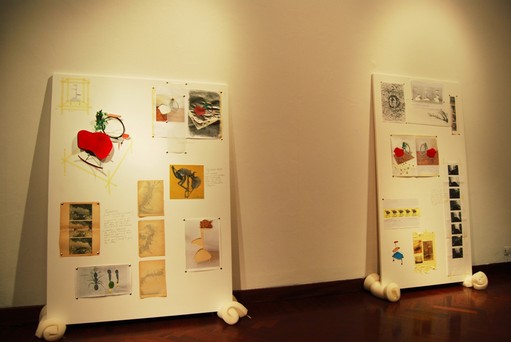
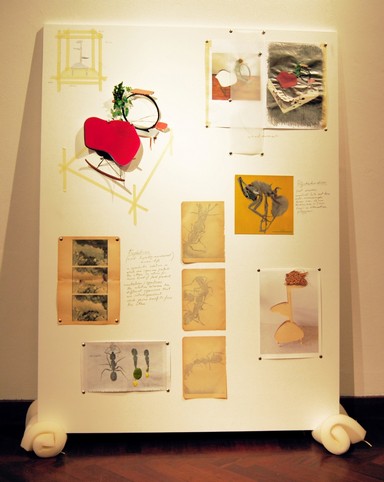
On the wall are a series of studies carried out for the production of the glass cases, depicting household environments turned into artificial anthills. The panels are characterized by a combination of materials and different supports: prints, drawings, paintings done in acrylics mostly on notebooks paper. Such works outline the project development stages, where the main techniques are embroidery, assemblage, cutting-out and erasure, also because they are common both to the men’s and the ant’s everyday activities. The panels feature images from the documentary as well as items from the case, thus linking up the three media used for the exhibition.     

The relationship with the postwar campaign and the hopes for a growth built upon a capitalistic and individualistic economic model interweaves with the omnipresent ant’s invasion, a species that – even before mankind – has built its success and spreading on reciprocity and on a sense of cooperation, which are so deep-rooted to let one suppose that the evolution of these animals lies in the inheritance of altruism. Such “altruism” is a behavioral trait that, not according to an abstract morality but to a natural law, ensures well-being, spread and strength to the eusocial species (ants, bees, wasps, white ants).

The behavioral-ethologic aspect on which these studies are based is the trophobiosis, that is the symbiotic system by which the ants obtain and provide food. In fact, these insect have two stomachs, one of which is for food to be shared with other ants and where, as a store, the ant holds the food that is to be given to the other ants of the same nest. The trophobiosis, along with the chemical exchanges of information released through the pheromones, represents also one of the key factor to investigate and understand the nature of colony as a single organism or Superorganism, where the food goes from an individual to another as if they were cells of the same body.
The Gallery Apart participates at Roma Art2Night.

MANUTENZIONE SENTIMENTALE DELLA MACCHINA CELIBE

Luana Perilli

14.12.2009 – 13.02.2010

Exhibition Views

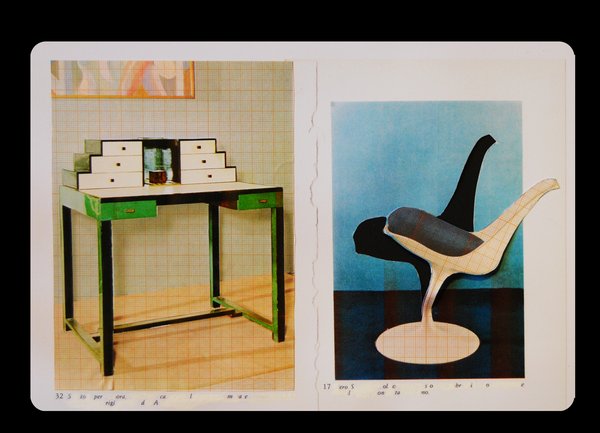
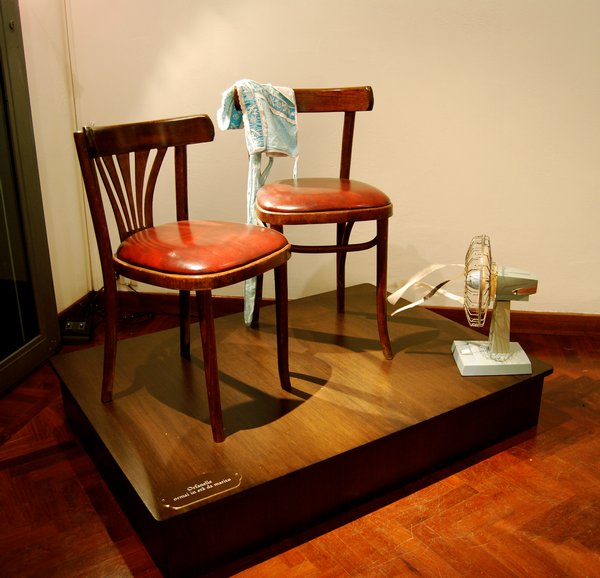
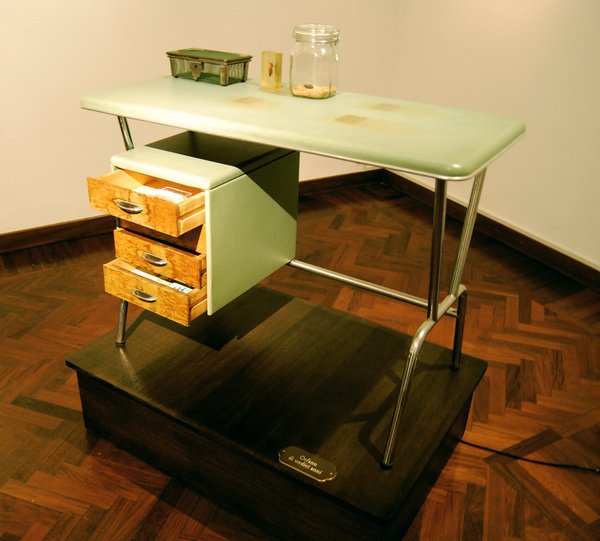
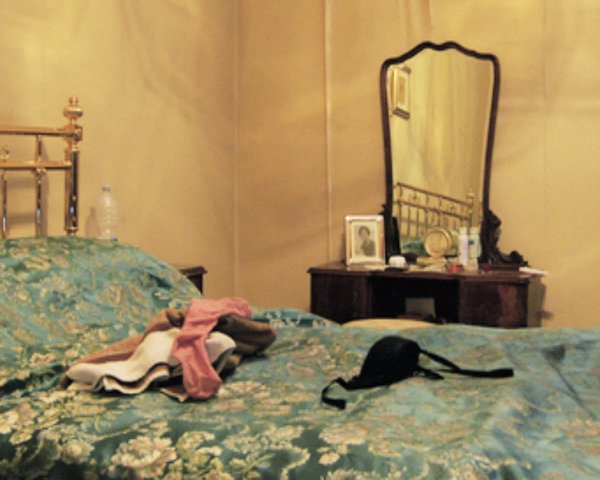
In occasione dell’apertura del nuovo spazio di via di Monserrato 40, The Gallery Apart presenta l’attesa personale di Luana Perilli intitolata Manutenzione sentimentale della macchina celibe, titolo tratto da uno dei tre filoni narrativi che compongono il complesso della mostra. Il progetto si affida a tre diverse modalità espressive, spaziando dal video, alla scultura, al collage. Il corpus delle opere ci immerge in un mondo privo di esplicite presenze umane, un universo di oggetti per una volta non inanimati ma anzi, seppur privati della loro naturale destinazione funzionale e dunque resi celibi nel senso della lezione duchampiana, intrisi della vitalità conseguente alle loro precedenti esperienze e quindi in grado di esprimere e trasmettere sentimenti, ricordi, umori.

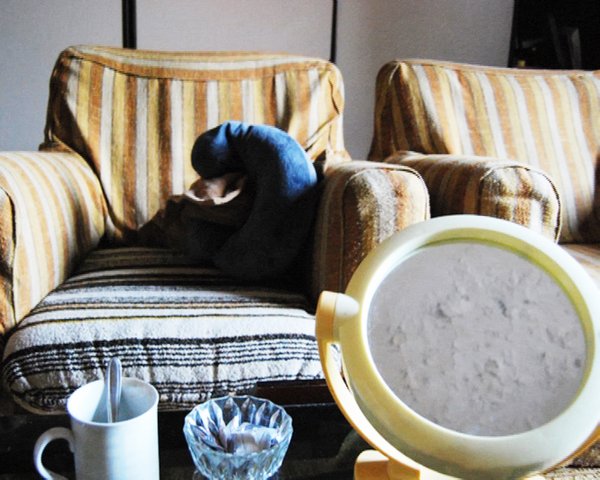
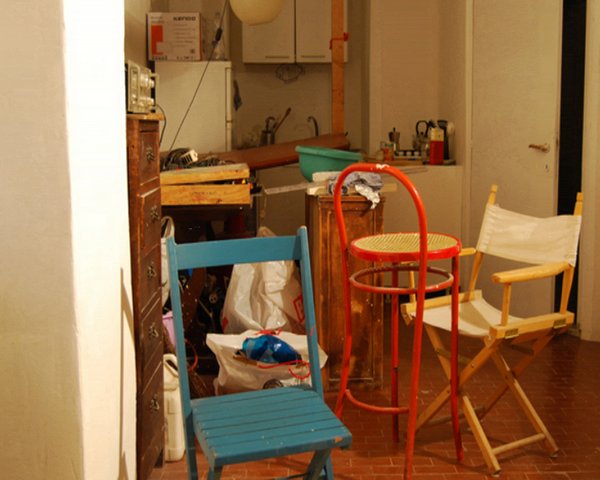
Il video, intitolato Sì dolce è il tormento, è un documentario amatoriale sulla vita segreta e paradossale degli oggetti quando l’abitare è sottoposto ad una ricostruzione, ad un abbandono o ad uno stato di transizione e ristrutturazione. Il trasloco permette una differente dislocazione del senso e del sentimento dell’oggetto, della sua funzione e del suo comportamento. Oggetti d’uso comune e mobili sono carichi di un energia residua, di un desiderio umanizzante irrisolto e spesso cinico. Il video spia questi oggetti mentre si relazionano in maniera passionale, confusa e paradossale come concentrando in un gesto unico le incongruenze, i conflitti e le piccole crudeltà quotidiane di chi li ha abitati. L’audio, un aria di Monteverdi del Seicento pensata per voce di castrato, racconta un idillio basato sul rifiuto e sull’assenza e focalizza la funzione dei castrati, modificati fisiologicamente per diventare veri e propri strumenti-macchina celibi impossibilitati a riprodursi.

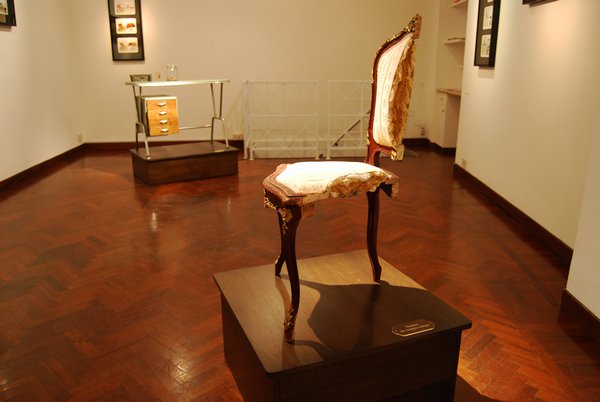
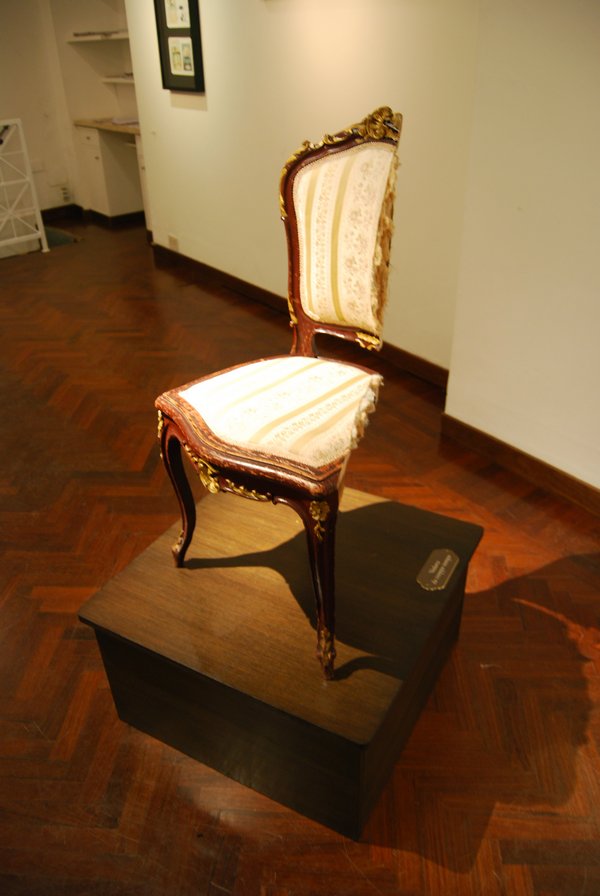
Il lavoro installativo, dal titolo Le vedove e gli orfani, affronta un altro aspetto specifico della privazione domestica: il lutto. Sedie, tavoli, scrivanie e comodini sono modificati, motorizzati o messi in relazione tra loro, assumendo una dimensione antropomorfa che colma l’assenza di chi normalmente abita l’arredo e che li rende altrettante vedove ed orfani. Gli oggetti sono consumati e modificati in modo che per alcuni si veda la trama dei tarli che li svuotano silenziosamente.

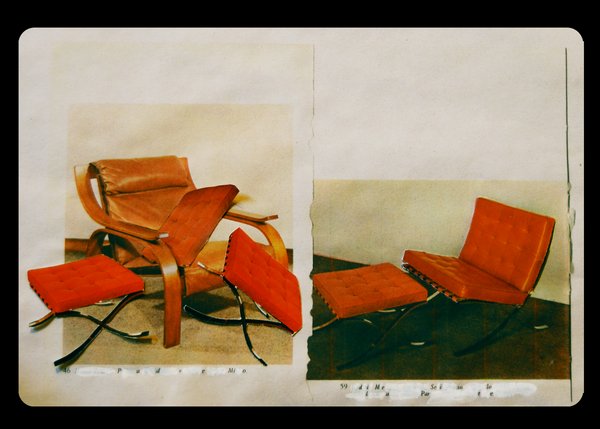
collages, cha danno il titolo alla mostra, presentano storie in cui vecchi oggetti di design interagiscono e dialogano silenziosamente grazie a tagli, spostamenti e sovrapposizioni. Senza manipolazioni digitali, l’artista interviene attraverso meccanismi di taglio e sottrazione ottenendo combinazioni abbinate a didascalie che, mediante un’ulteriore azione di cancellazione, fungono da testi poetici “trovati”. Le sillabe residue compongono nuove frasi che si snodano come una storia possibile lungo le sequenze in cui gli oggetti si relazionano dandosi e negandosi gli uni agli altri.