Etica, Tecnica e Pathos

Marco Strappato

30.11.2022 – 27.01.2023

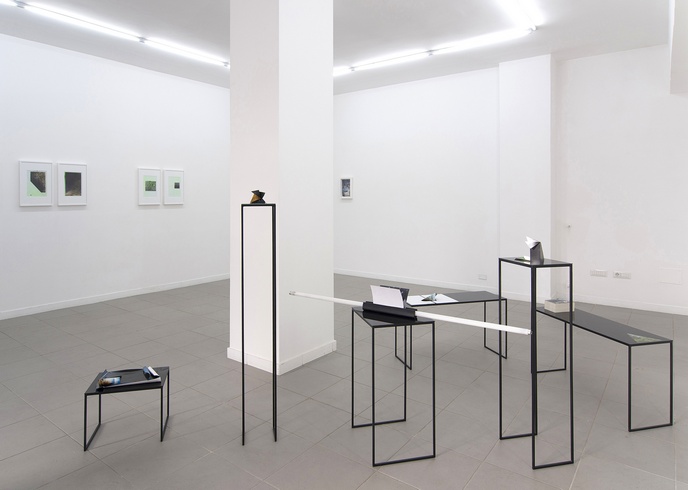
Exhibition views
Works

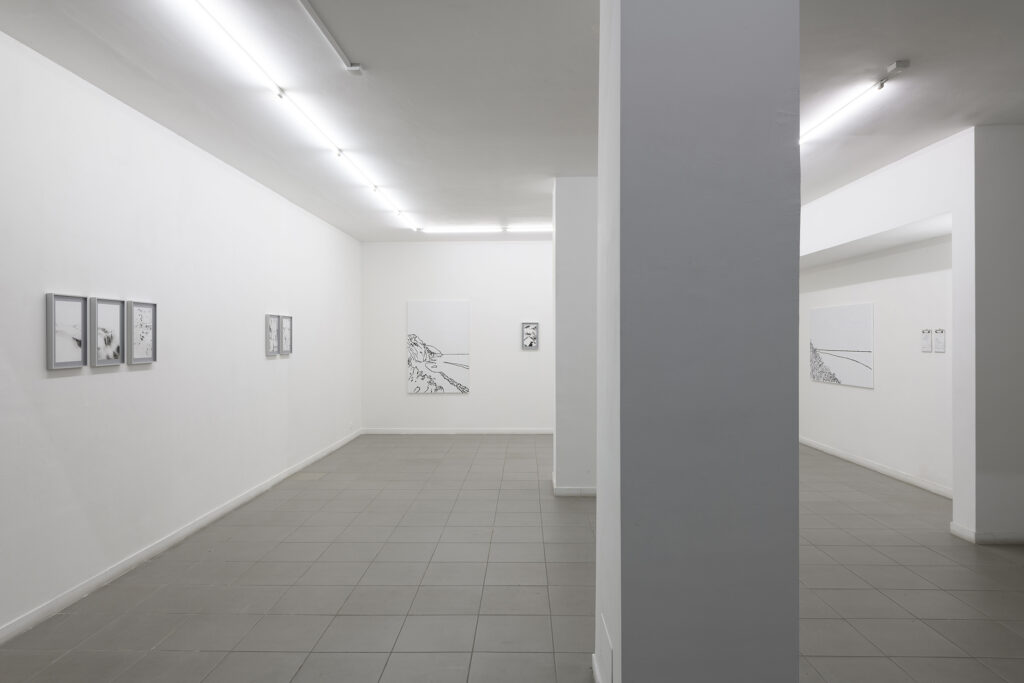
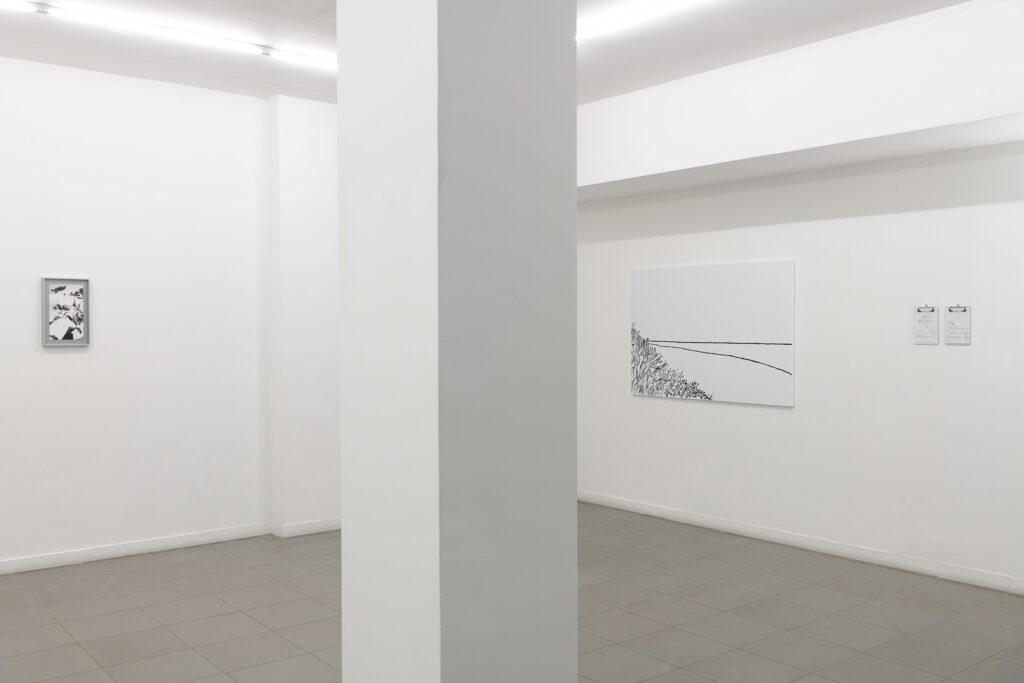
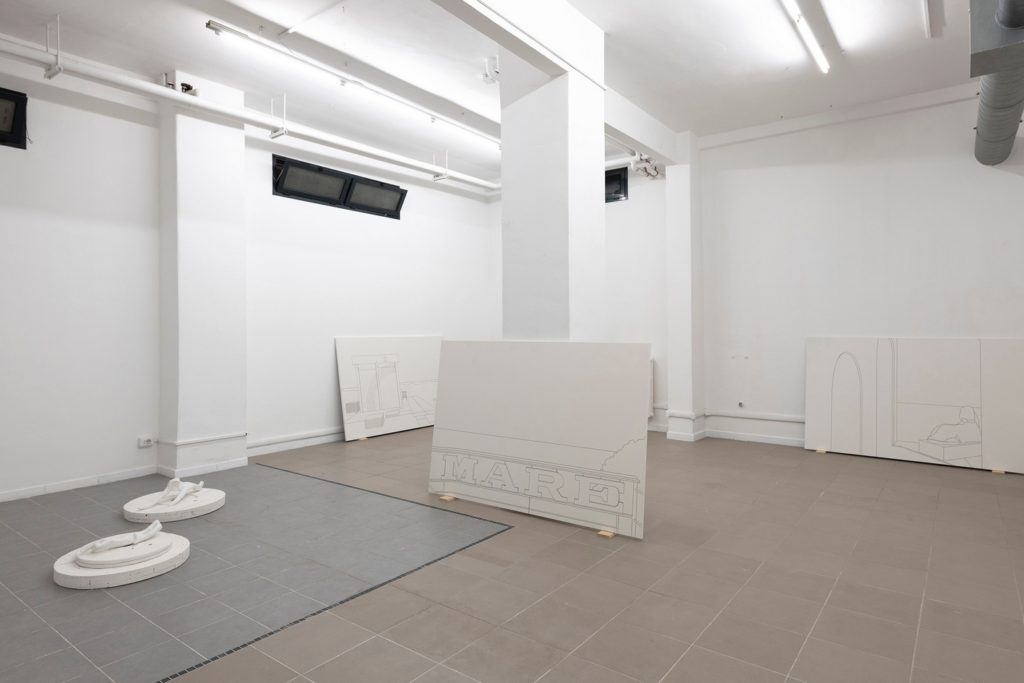
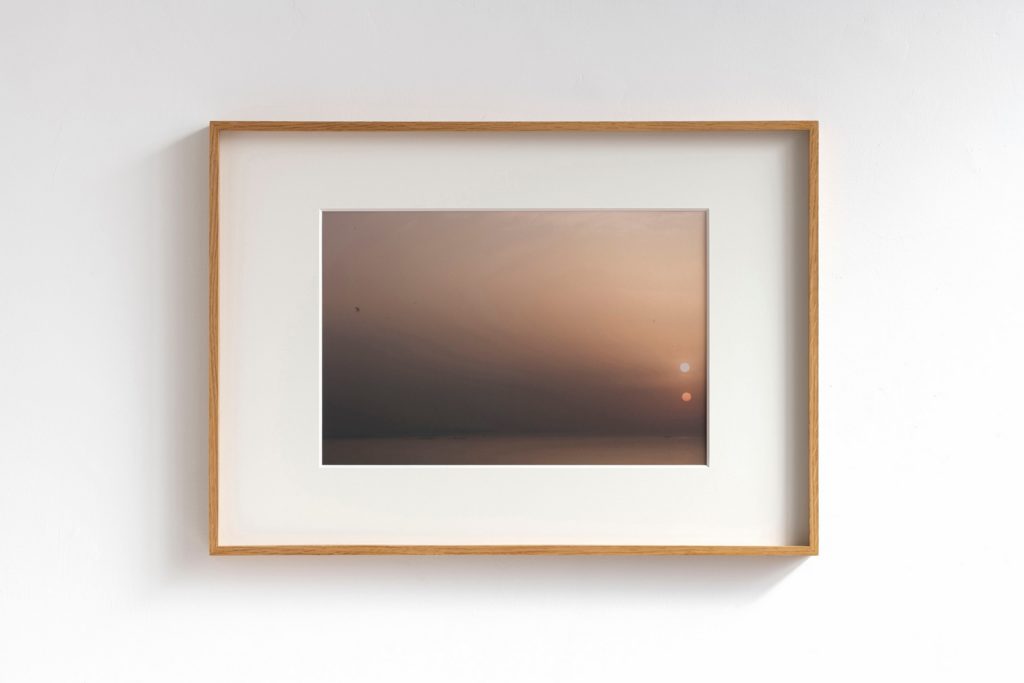
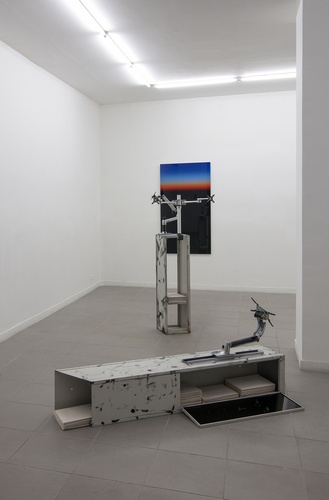
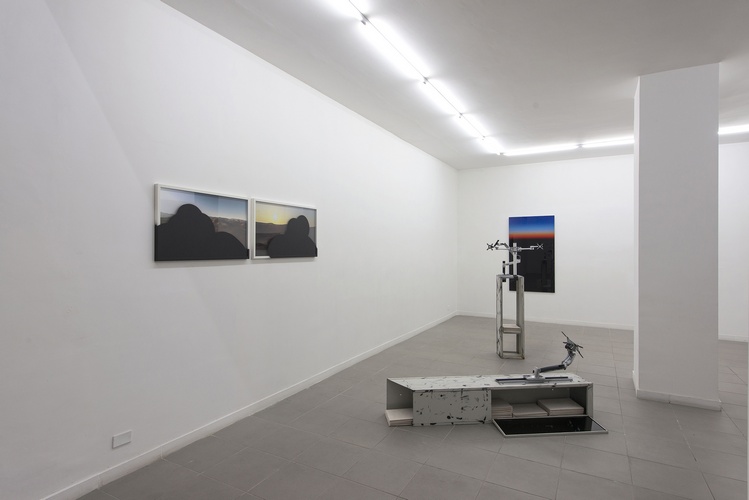
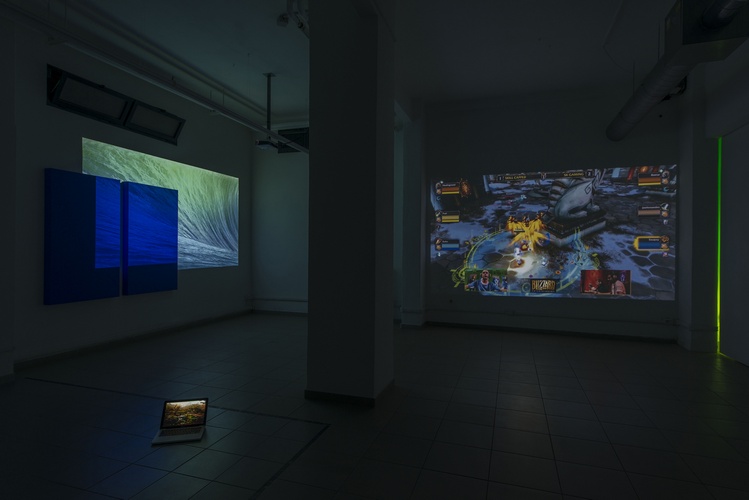
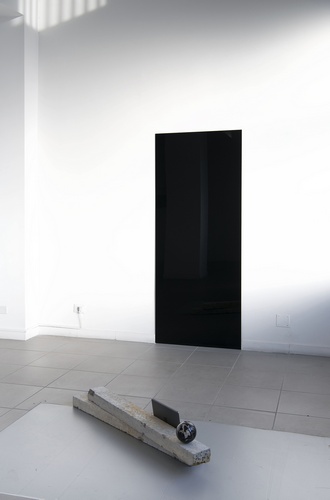
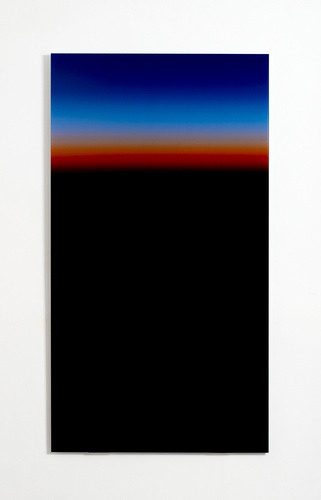
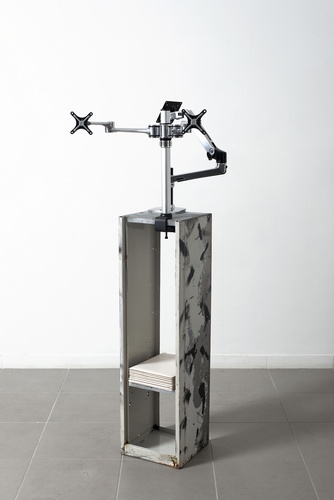
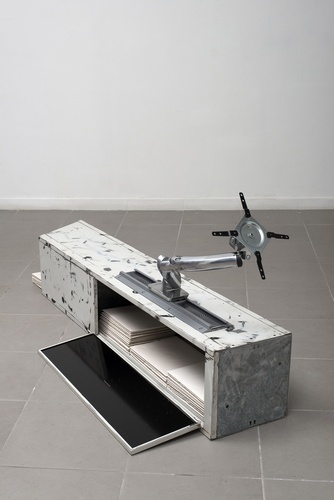
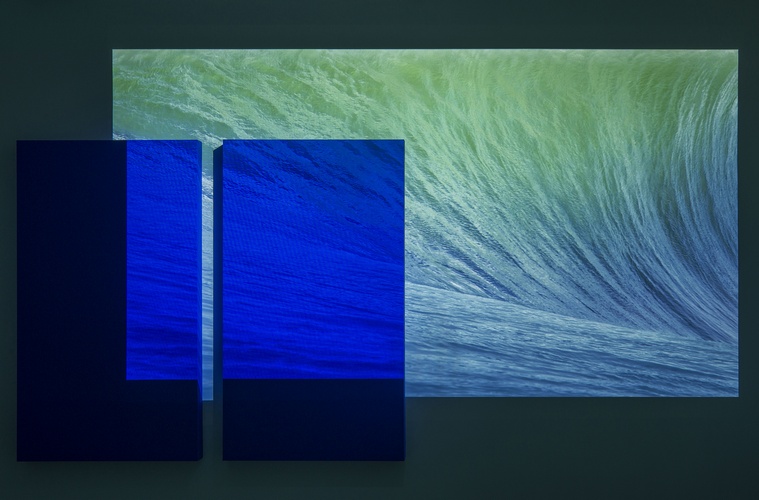
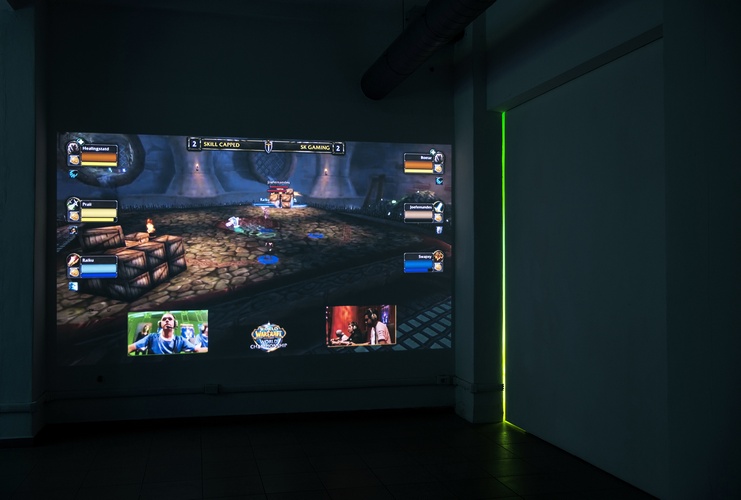
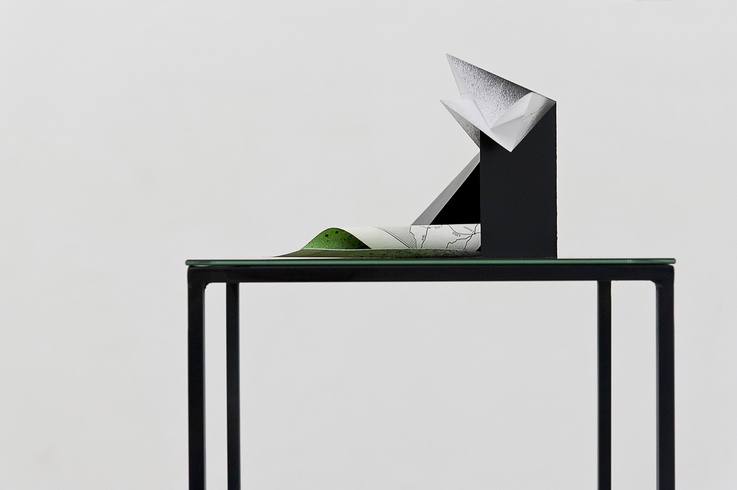
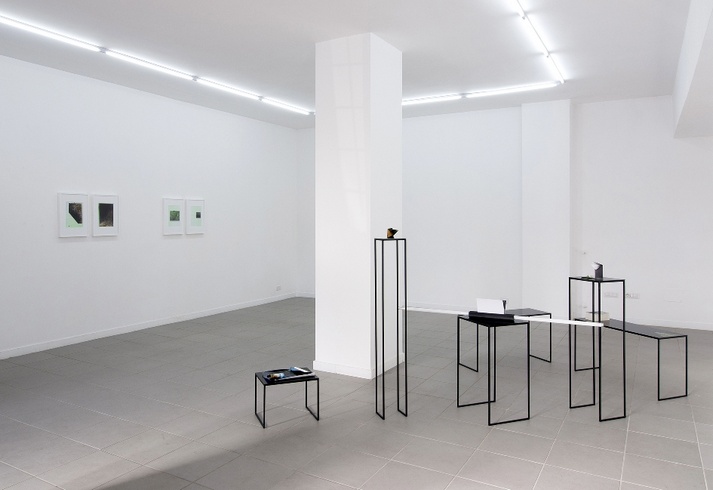
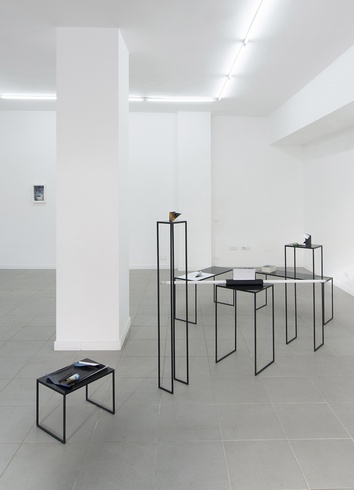
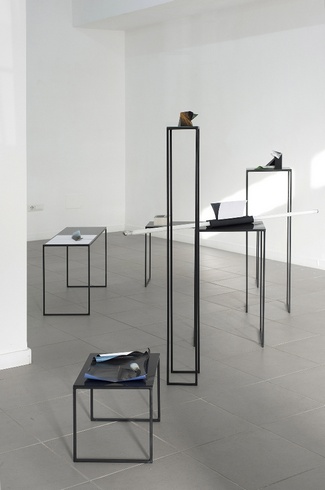
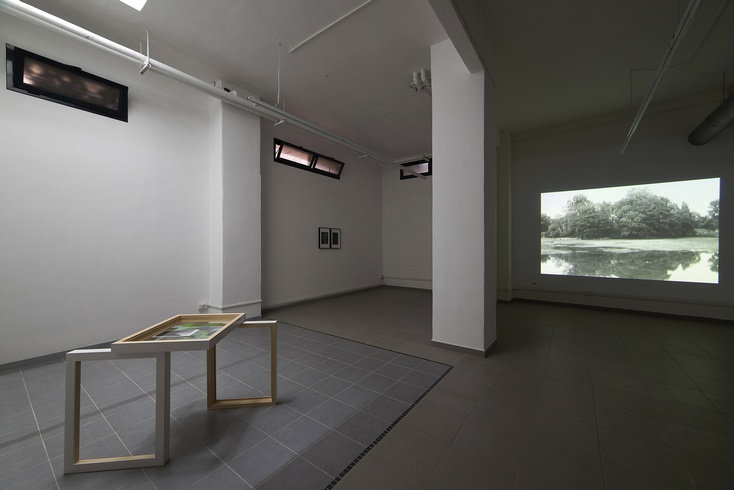
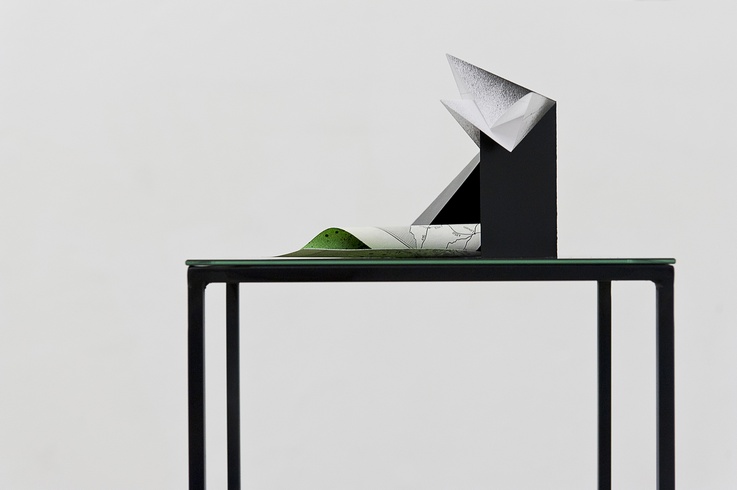
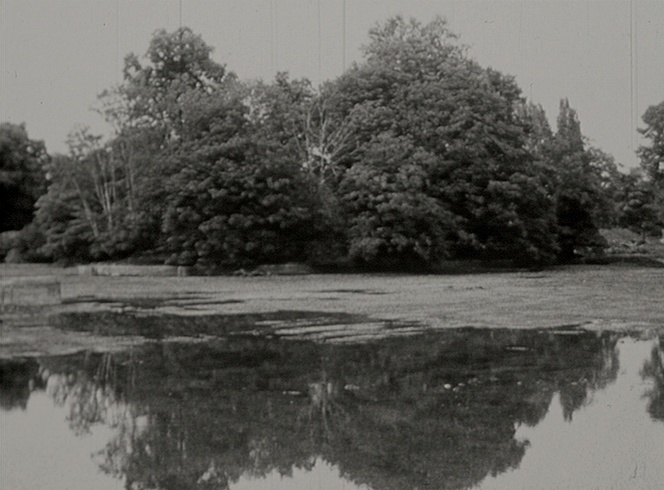
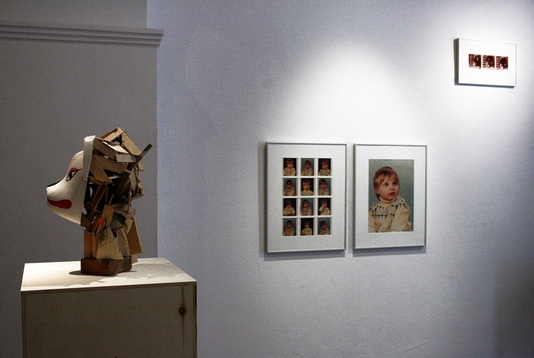
The Gallery Apart is proud to announce Etica, Tecnica e Pathos (Ethics, Technique and Pathos), the new solo show by Marco Strappato in the gallery spaces. True to an idea of art that cannot exclude the environment, the artist enriches his investigation on the landscape with suggestions from the natural world and with the several human interpretations given by the different cultural fields, from art to architecture, from photography to music and technology.

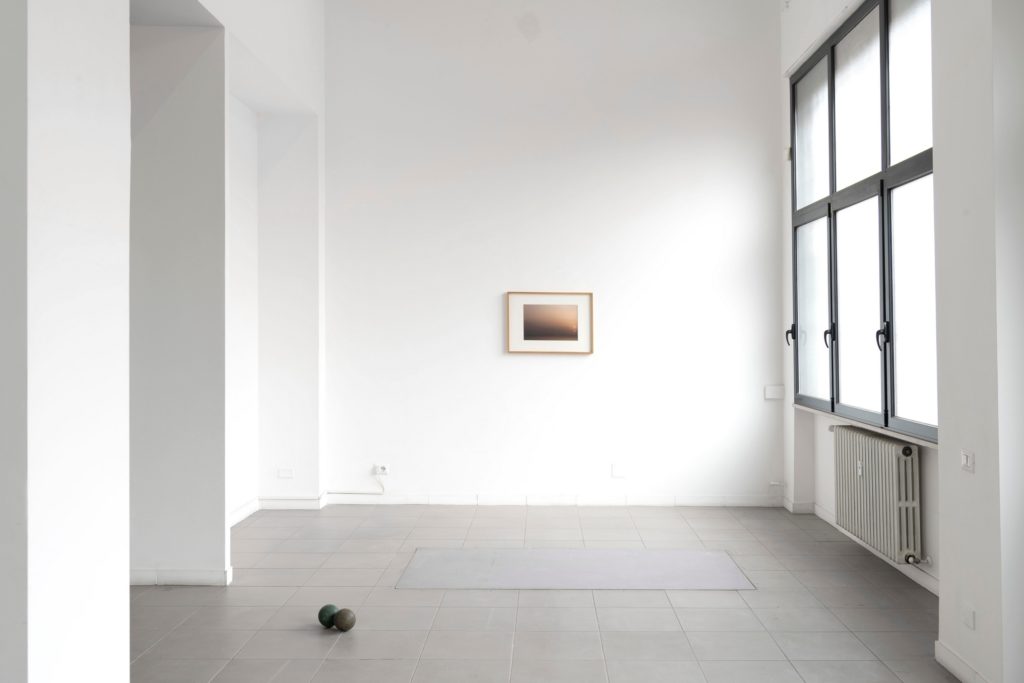
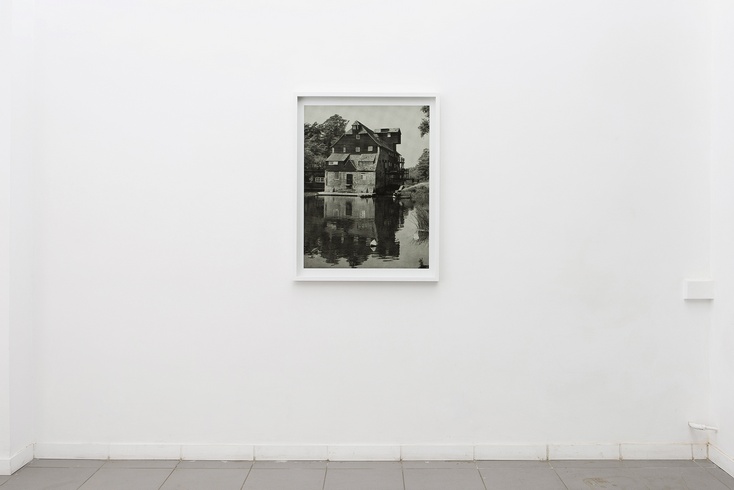
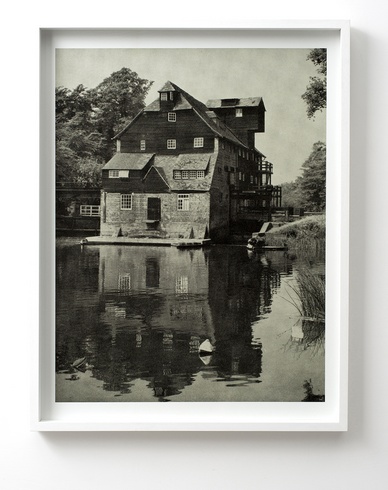
The title of the exhibition pays homage to an album by the Italian band “CCCP – Fedeli alla linea” titled “Epica Etica Etnica Pathos” (Epic Ethics Ethnic Pathos). This is not a coincidental homage, considering the recording modalities and the images accompanying the album. The recording was performed live on an abandoned farmhouse in the countryside of the province of Reggio Emilia. The band took advantage of the natural echo of the domestic environments, and they settled in the villa throughout the recording. This supports the main role played by the landscape, assumption that Strappato places at the basis of his poetics, also in a domestic version and at the service of another form of art, music. The photographs of the album cover, included as numbered copies, were shot by Luigi Ghirri, a reference point for Strappato who has already drawn on his photos for a series of artworks displayed in the gallery for the exhibition Au-delà.

As he gives his personal reinterpretaion of the title, Strappato elides Epic and replaces Ethnic with Technique, in order to adapt the message to his own vision. To the artist, ethics is inextricably linked to the landscape that is so constantly damaged though it is so in need of care to preserve its intact beauty.  The technique corresponds to Strappato’s artistic approach, such a deep-rooted component in his art-making that it soars to an independent line of investigation, in the service of, but often parallel to, that of landscape. For the word Pathos, we can resort to the definition provided by the dictionary: the power to evoke intense feelings and sympathy, aesthetically or emotionally. Nothing could be more in line with the artist’s intentions.  

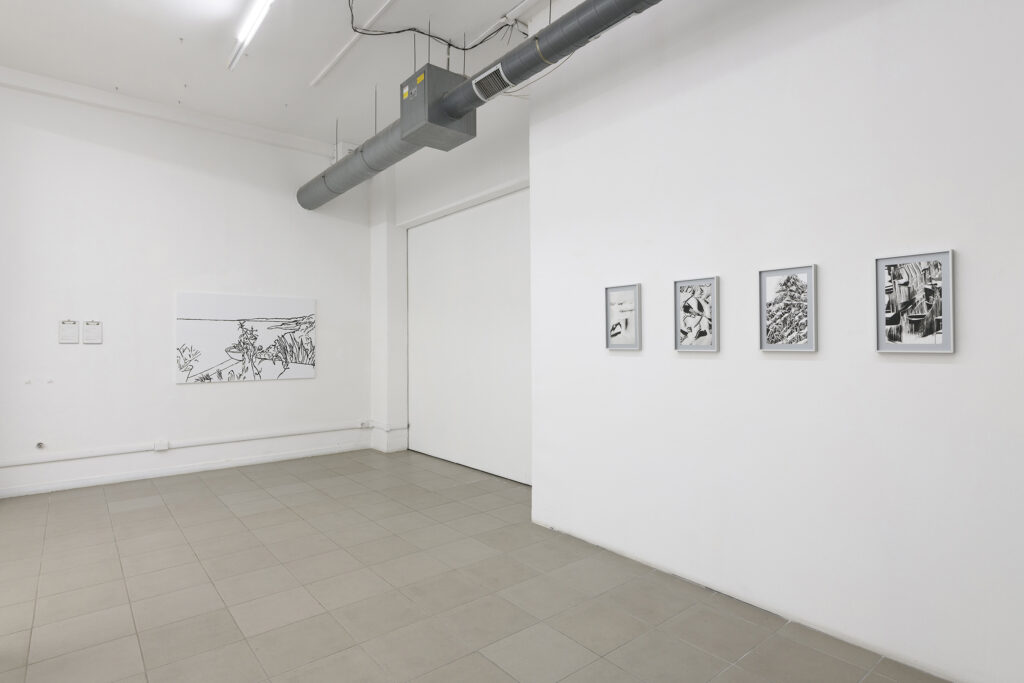
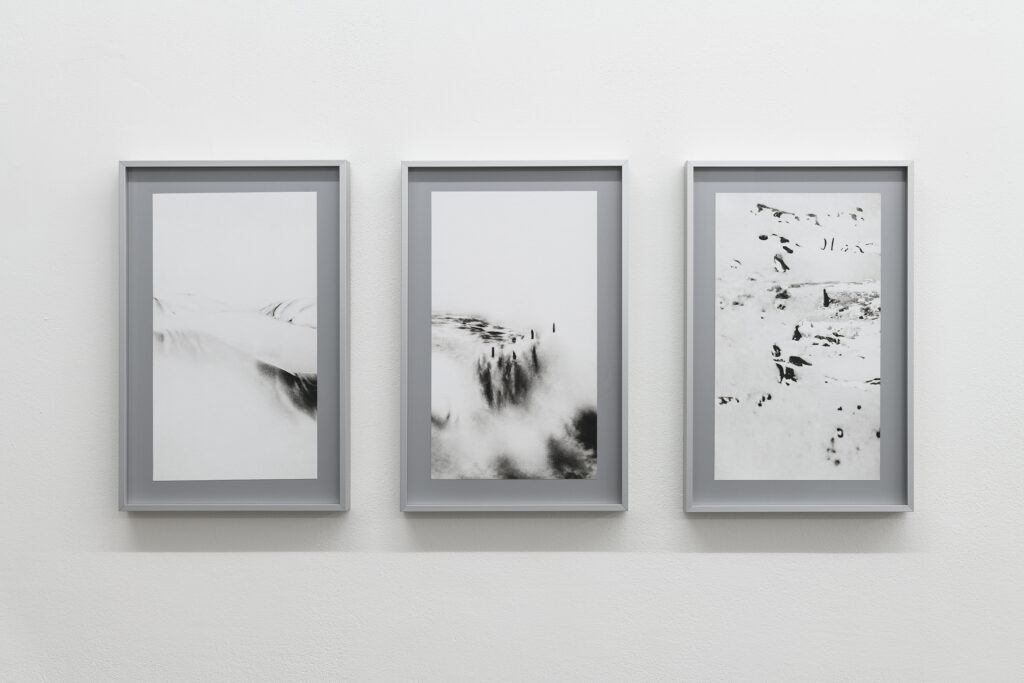
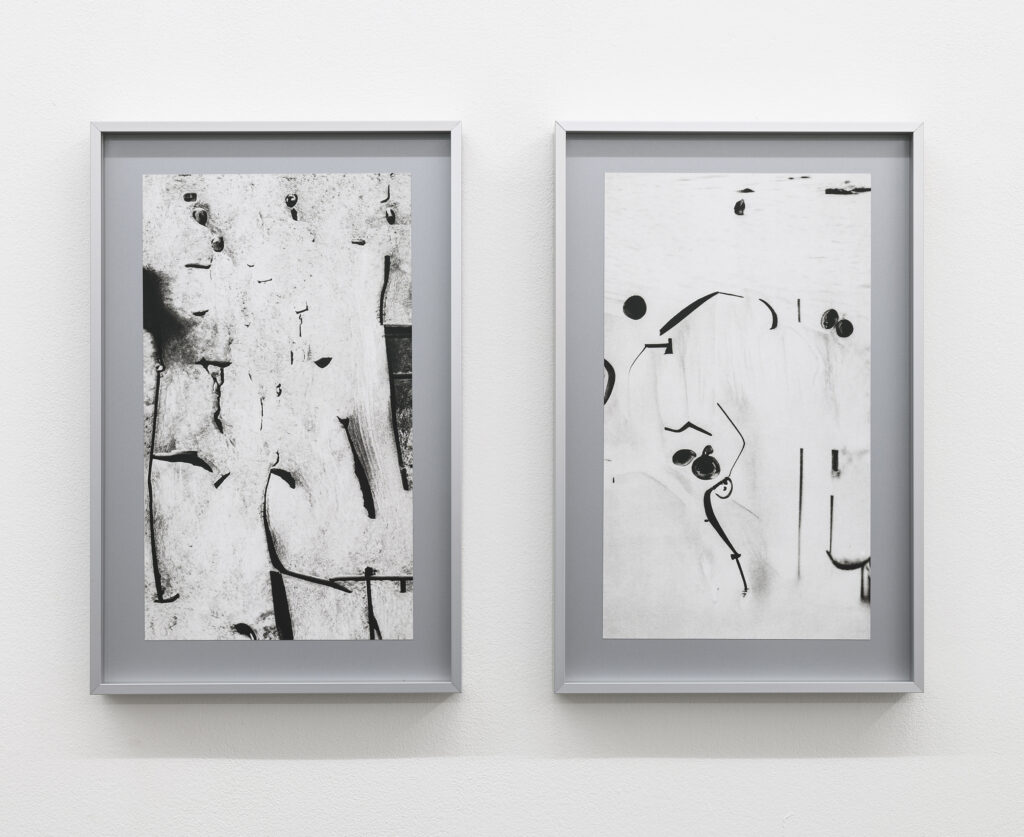
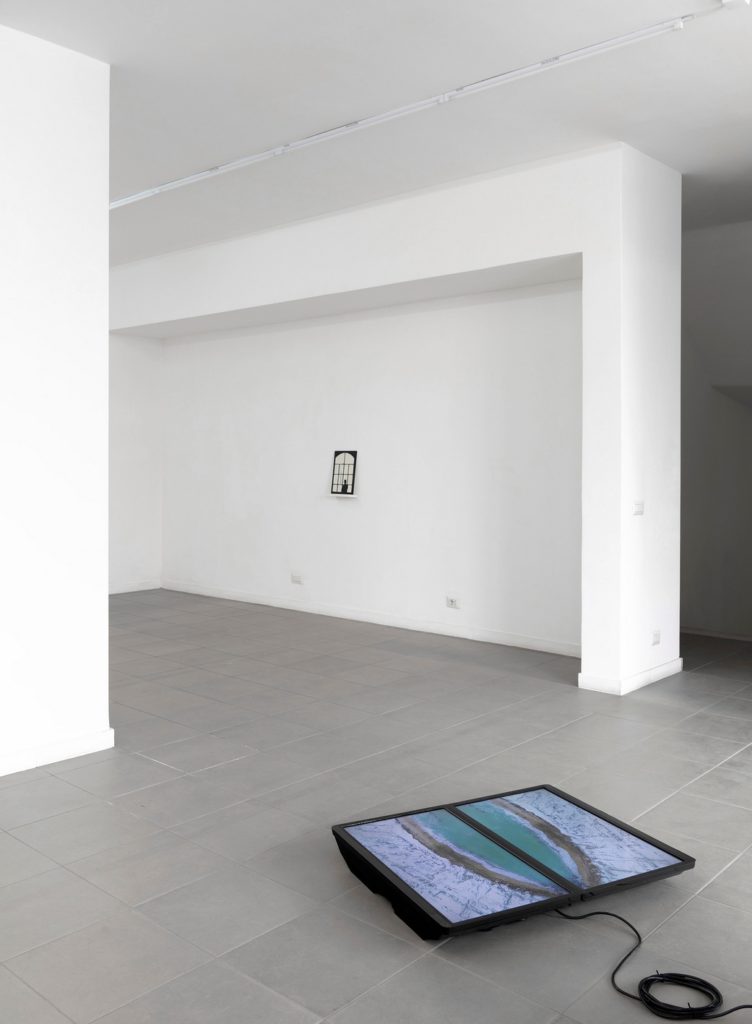
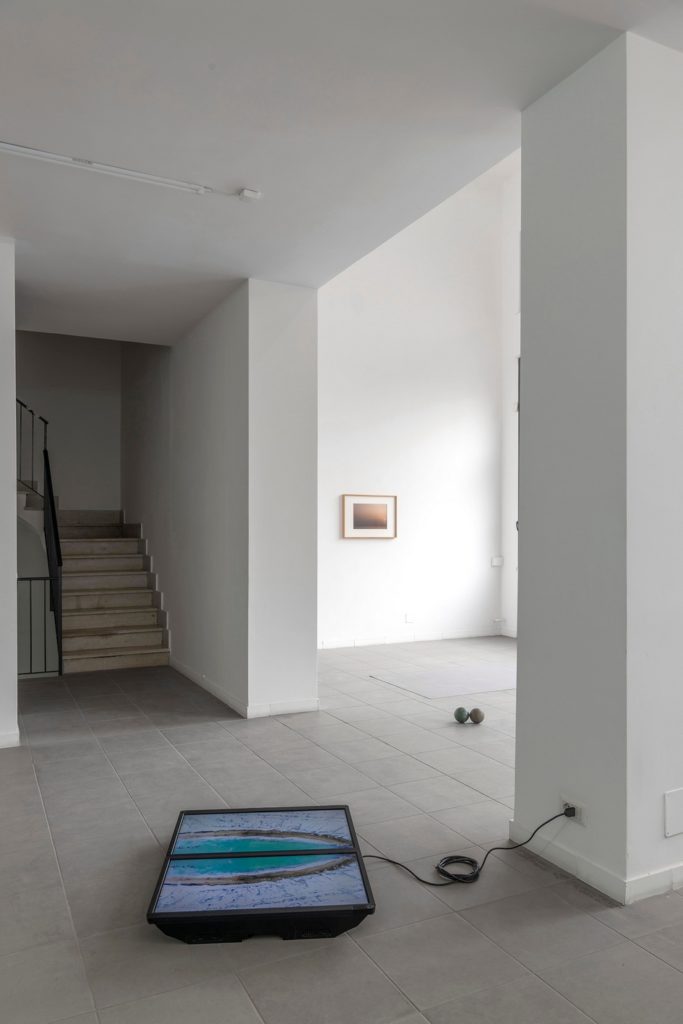
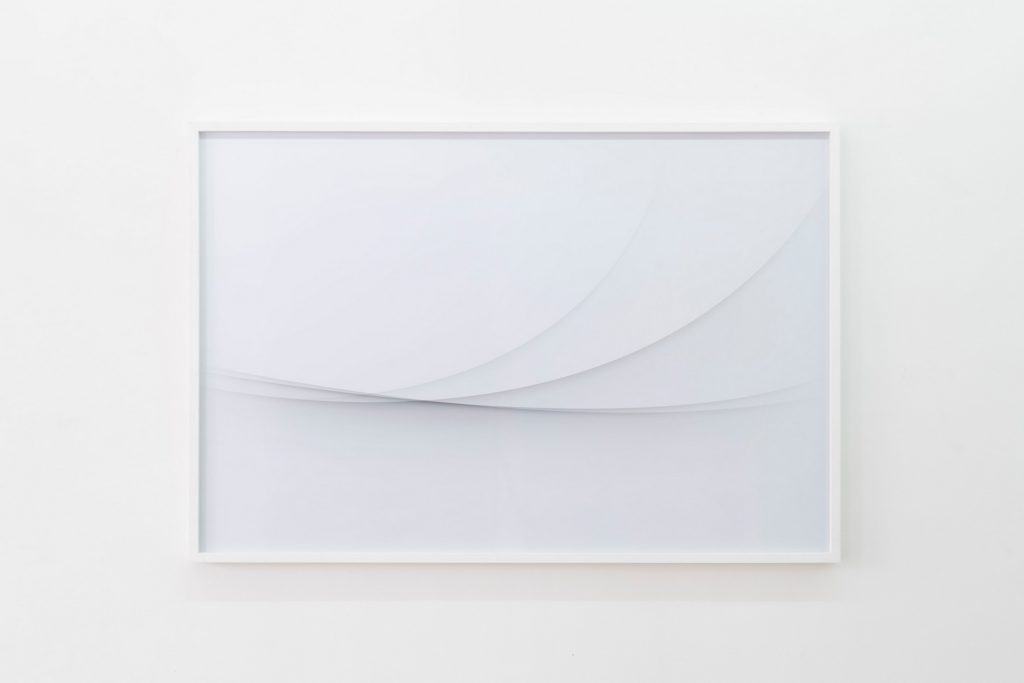
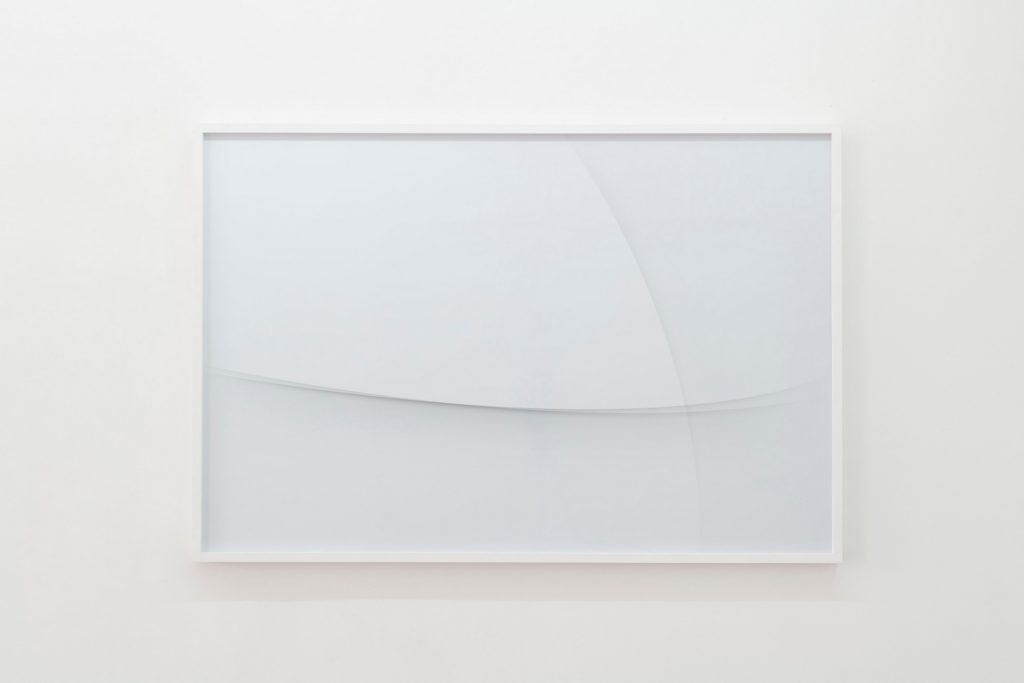
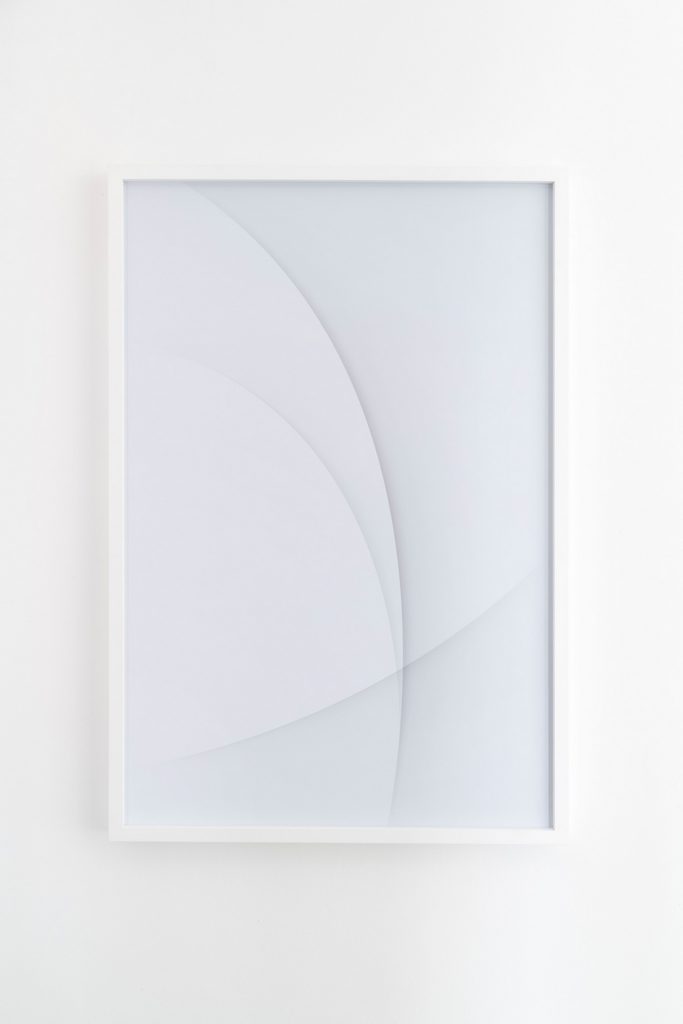
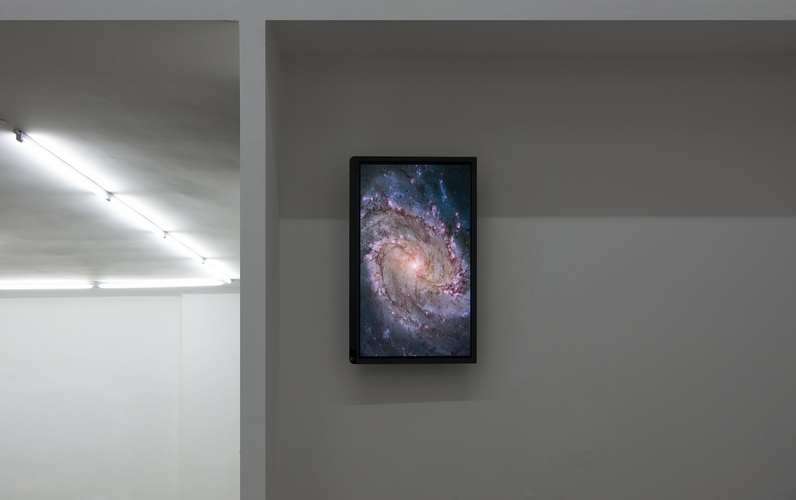
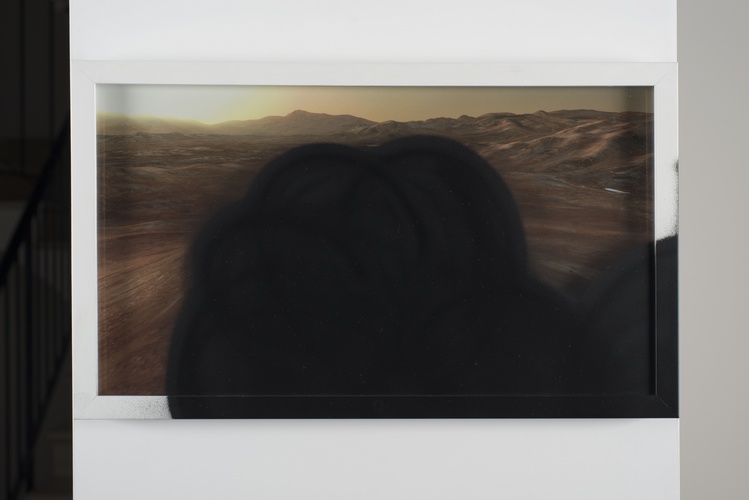
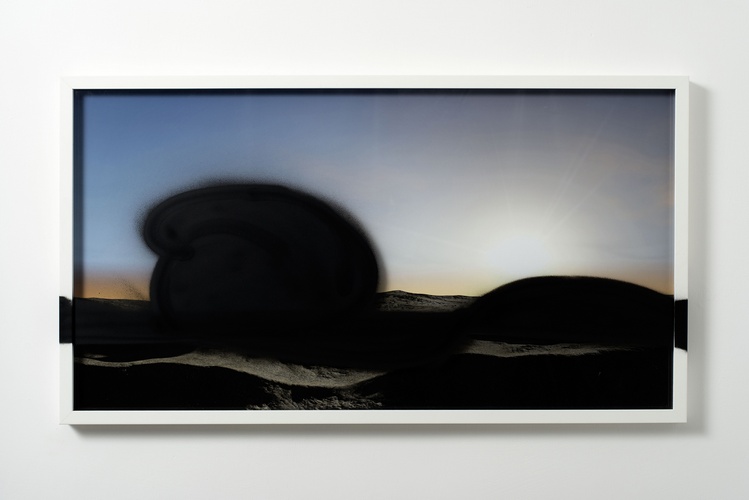
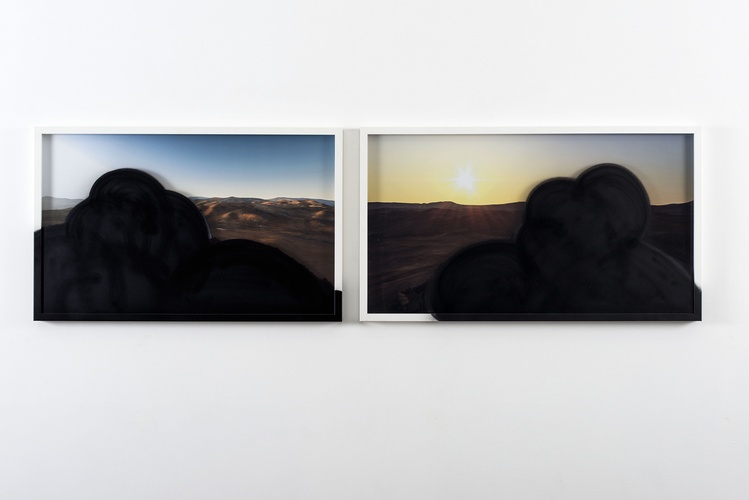
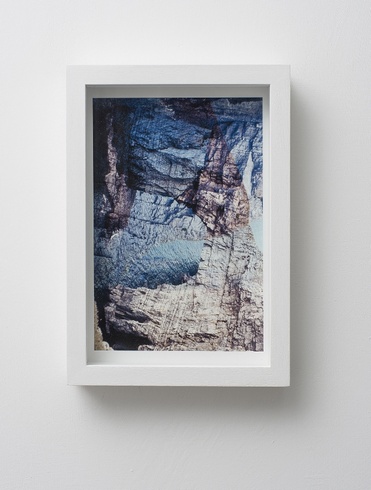
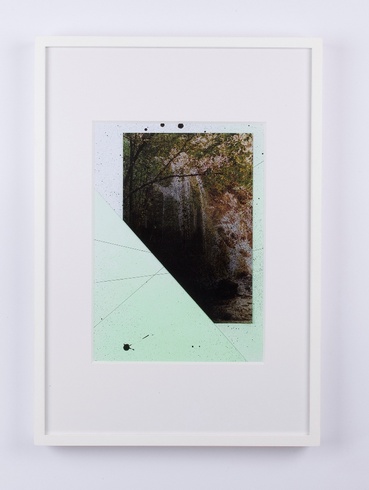
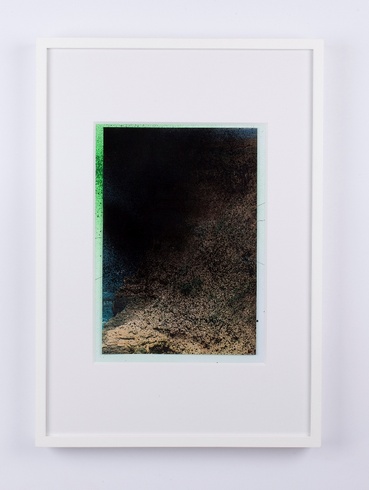
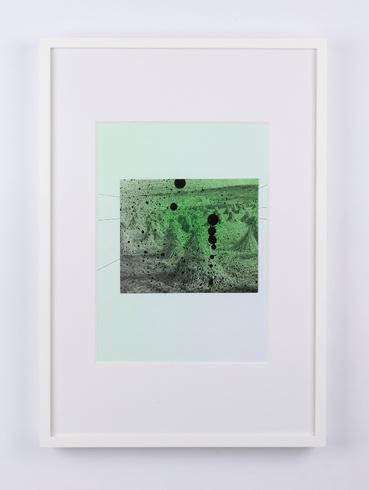
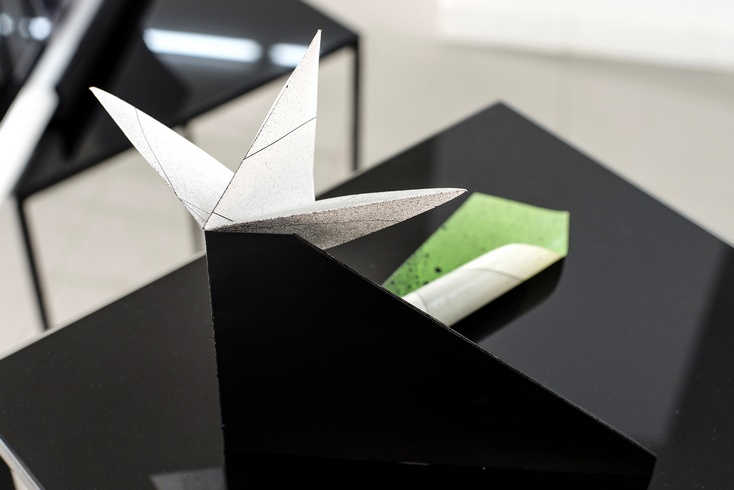
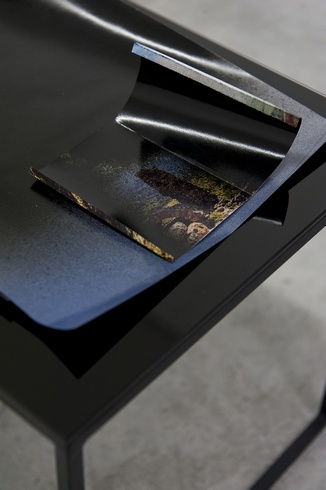
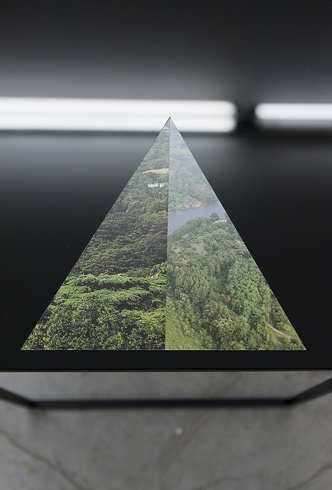
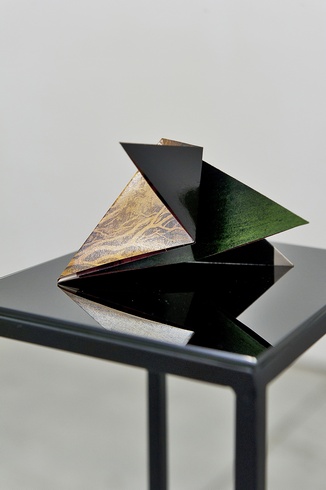
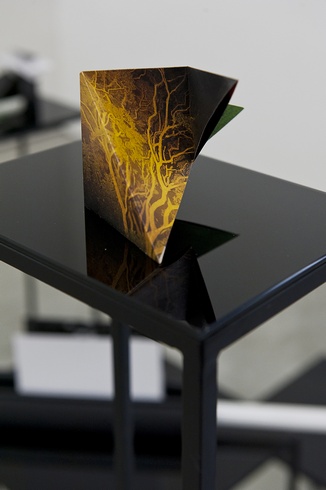
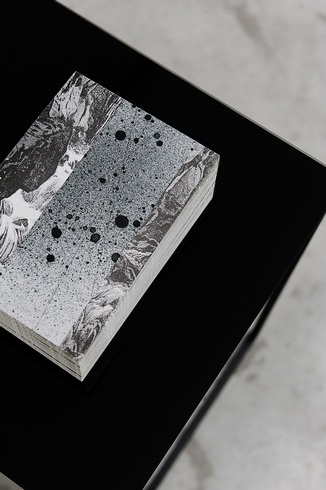
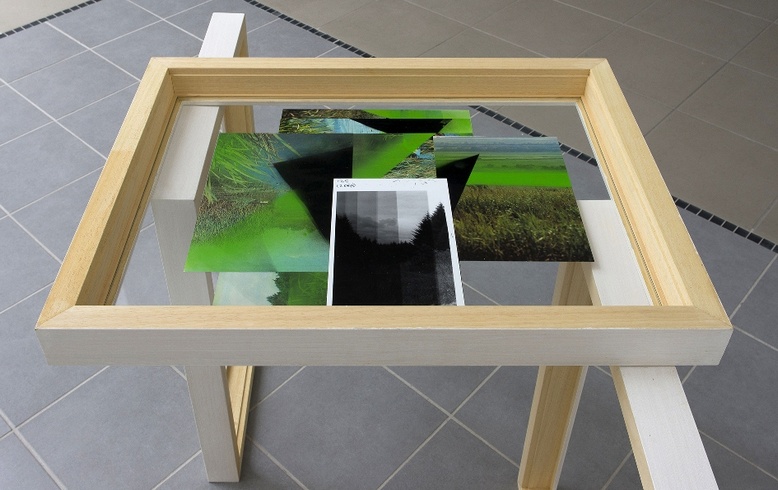
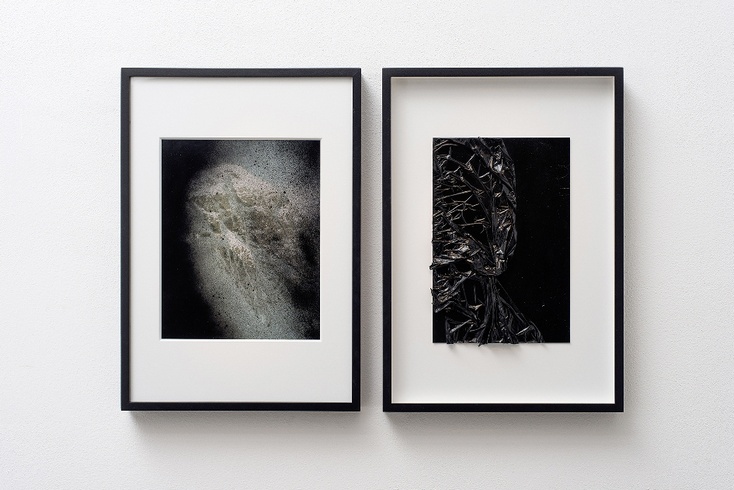
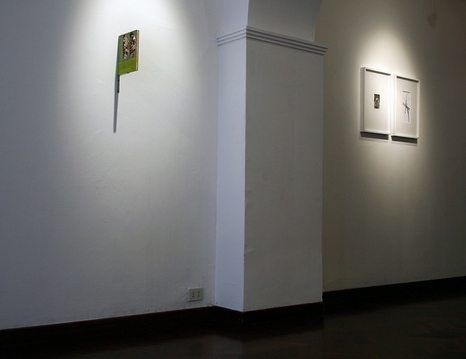
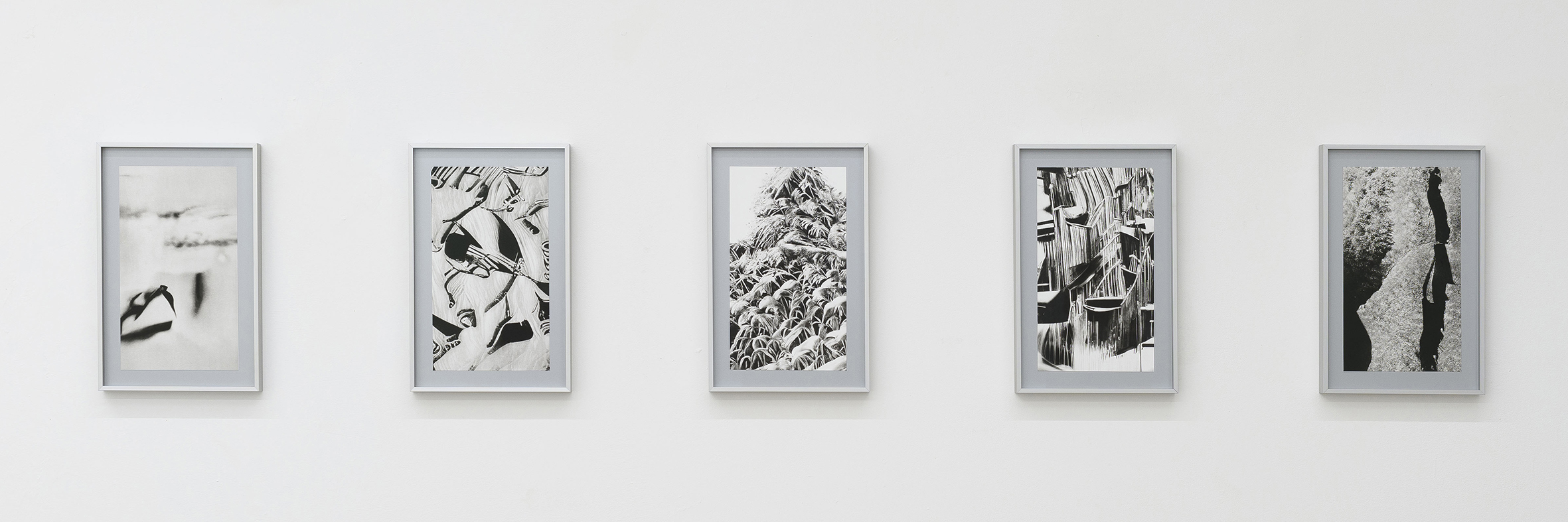
In Etica, Tecnica e Phatos, Strappato uses different media to investigate the topics. Drawing on Werner Herzog’s suggestion (We are surrounded by worn-out images, and we deserve new ones), Strappato presents This place is really nowhere, a series of photoengravings created by using conventional images (landscape stock photos originally spread as smartphone backgrounds) and reprocessed to such an extent that the subject is unrecognizable. Before the spectator’s eyes, the final – ambiguous though evocative – images morph into mental places that, though they suggest the original landscapes, bring to life mysterious fragments of lunar landscapes, imaginary waterfalls or abstractions that evoke pieces of the history of art or paths of the human psychology. The title draws on the claim of the IBM advertising campaign in 1987, when for the first time the developers created a computer-generated mountain in CGI very similar to a real mountain.

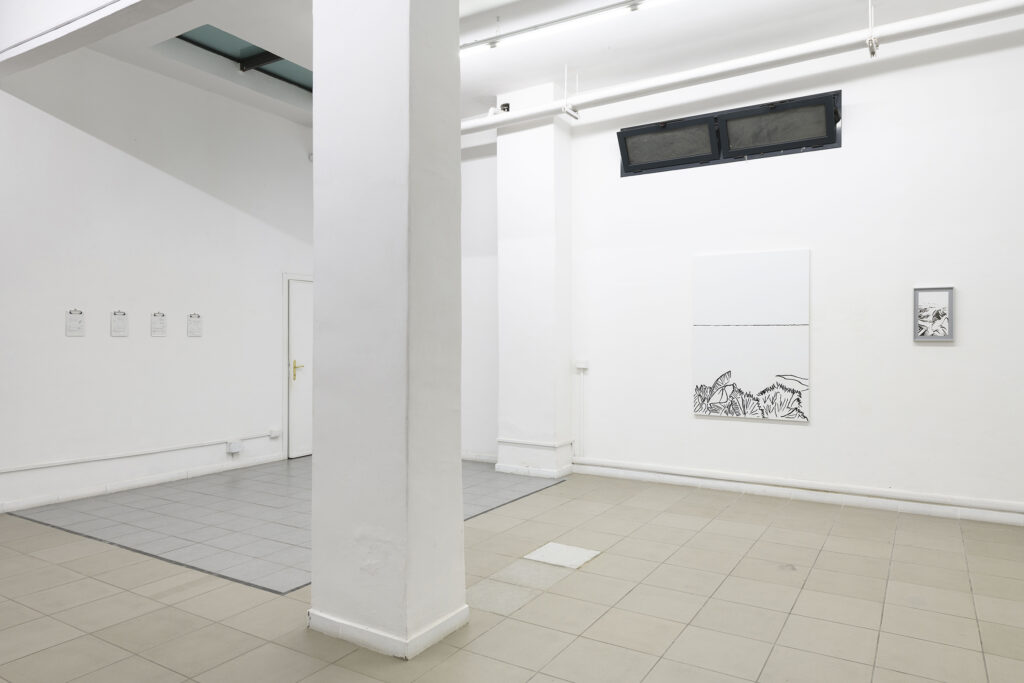
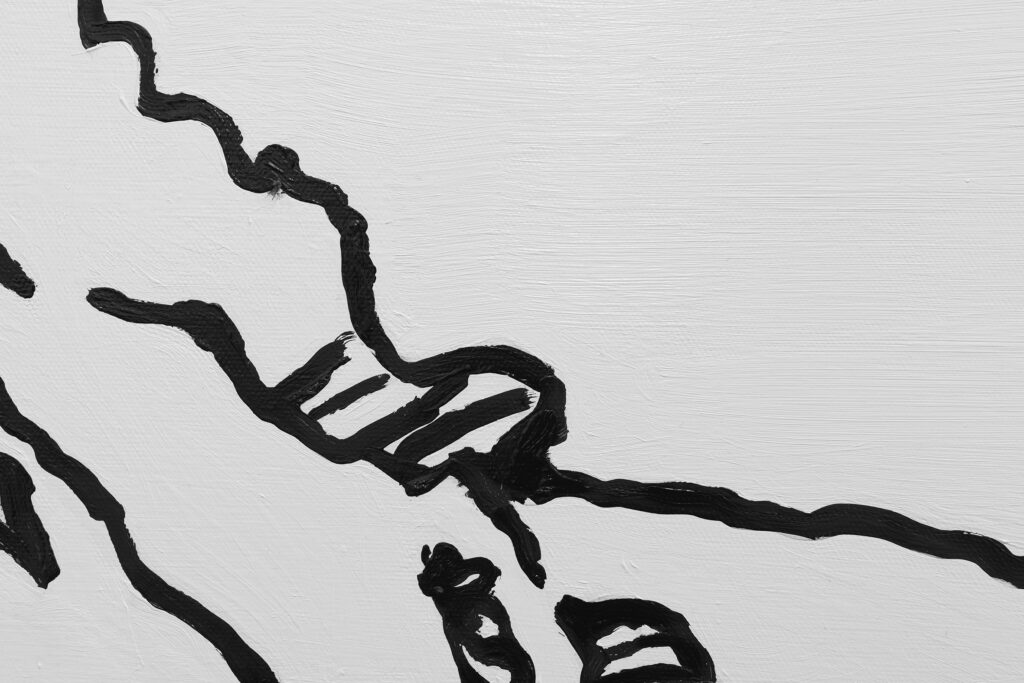
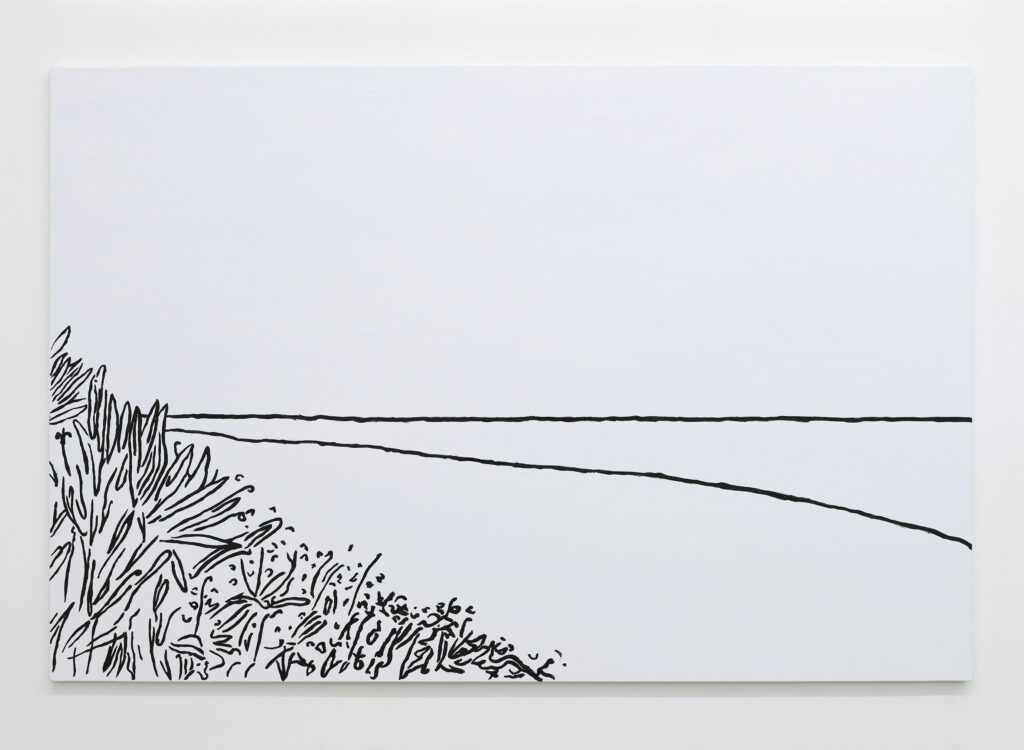
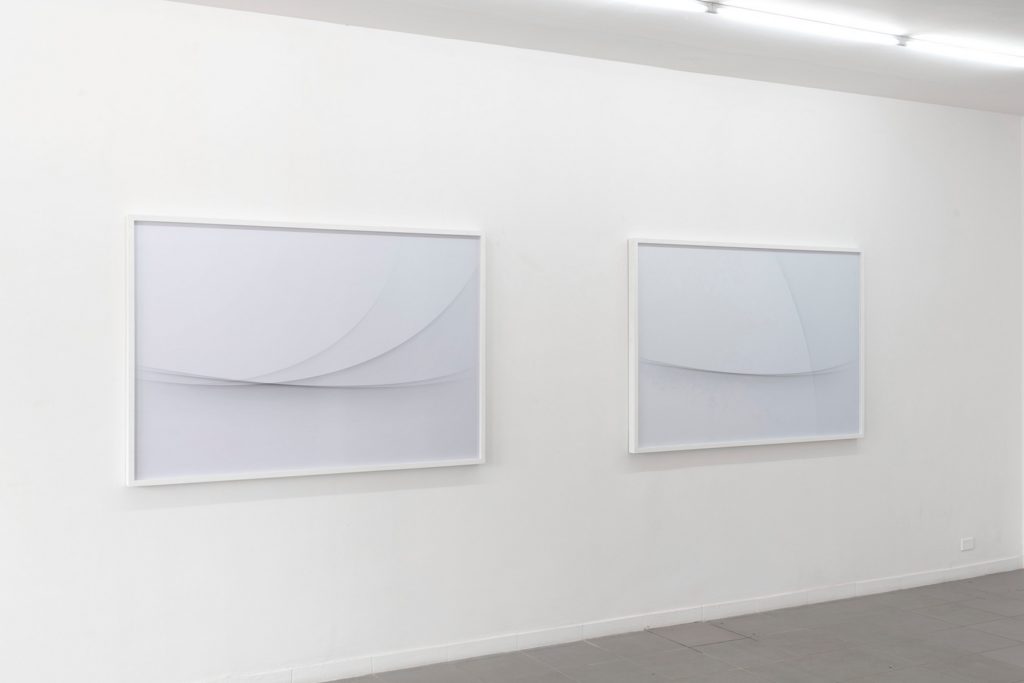
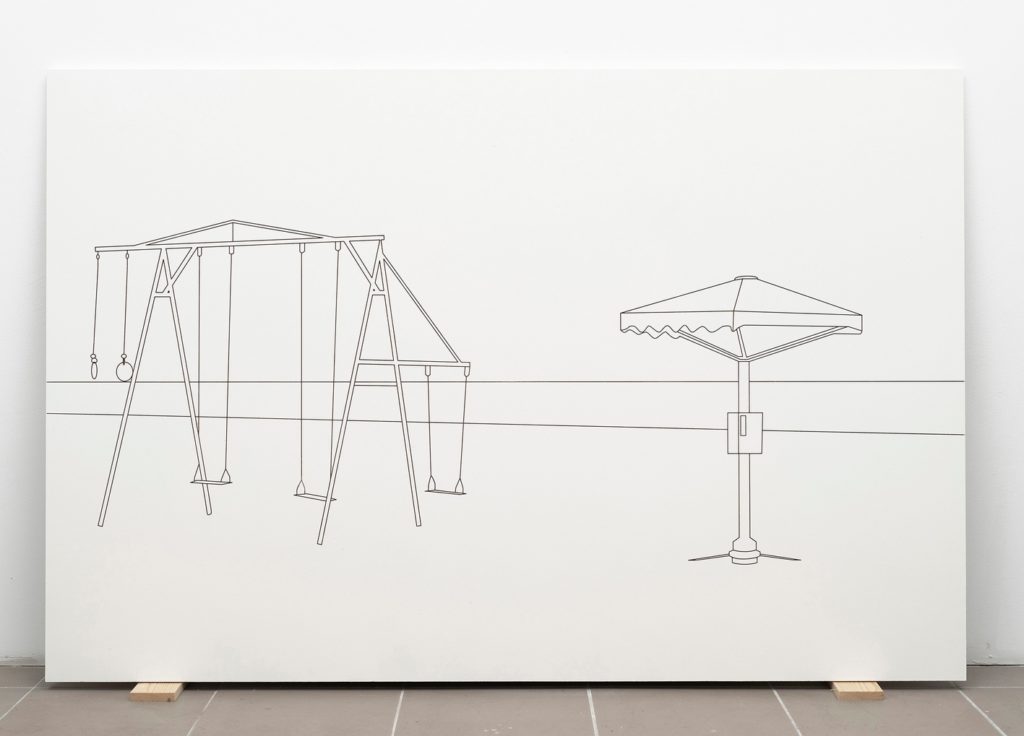
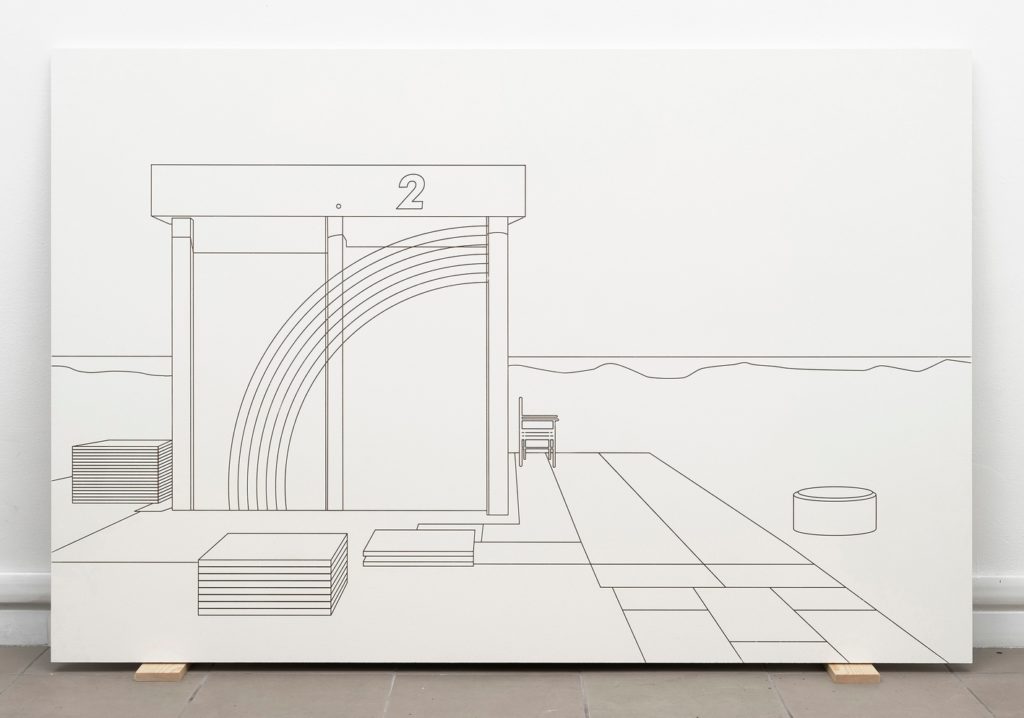
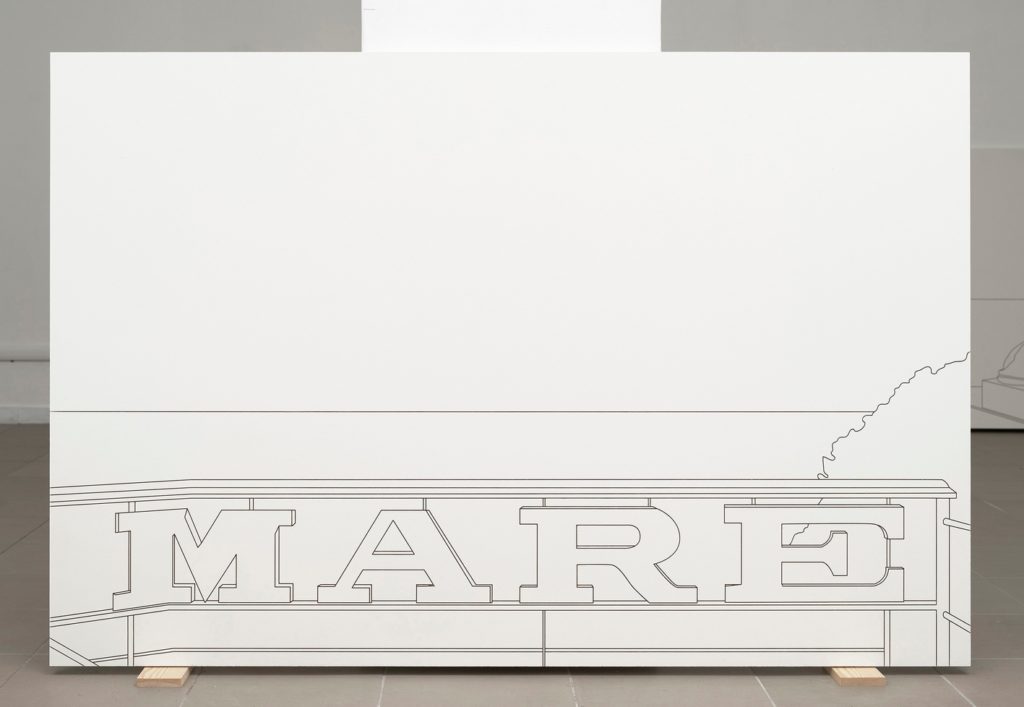
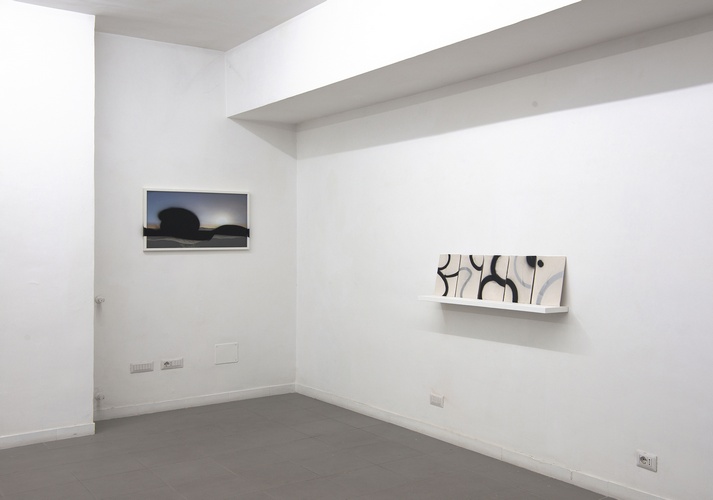
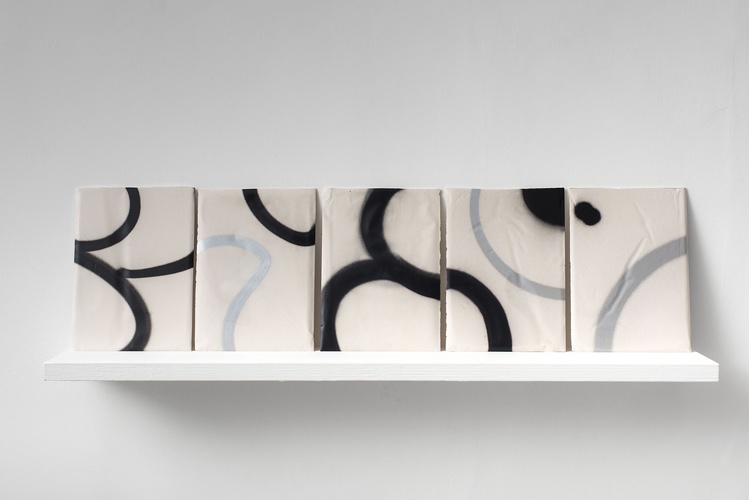
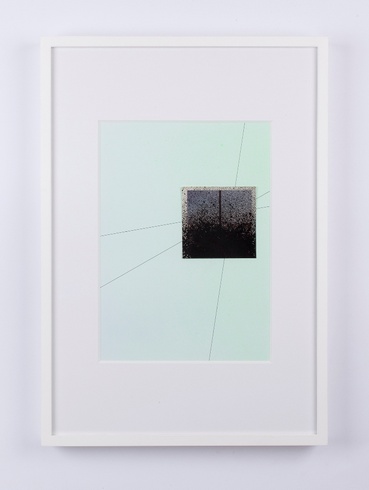
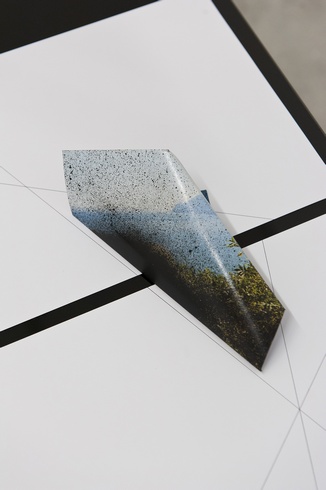
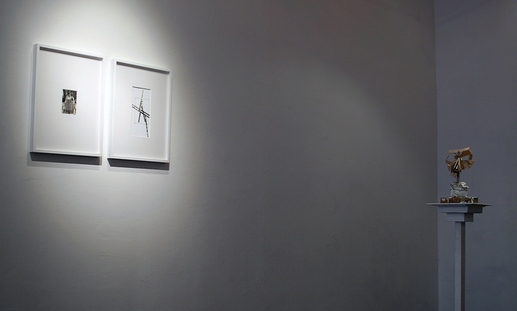
Orizzonte e altre linee (Horizon and other lines) is a series of paintings where the artist creates synthetic images generated starting from the horizon line to build the final image is built. The material used is an archive of iconic postcards and prints of Italian coastal landscapes collected by the artist. It is not a survey of the stunning landmarks; each image represents an overall view that feeds off metonymies. It is not by chance that the artworks are white, crossed only by sharp black brushstrokes. The white colour suspends any temporal reference, consistent with the spectator’s own imagery, whereas the powerful simplicity of the painted line highlights the memories that the images can evoke.  The series of works is a concentration of emotions through a path of identification and recognition in a familiar, though rare, landscape, which is at time recognizable but made archetypical by the obliterating power of the two colours and which is unequivocally Italian.

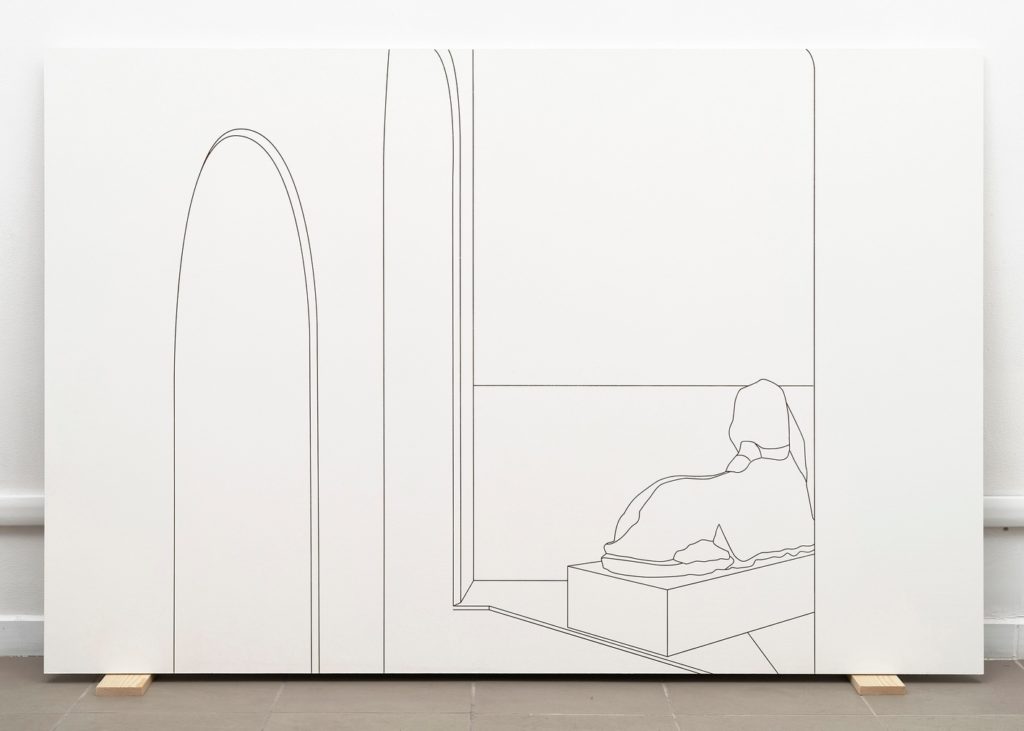
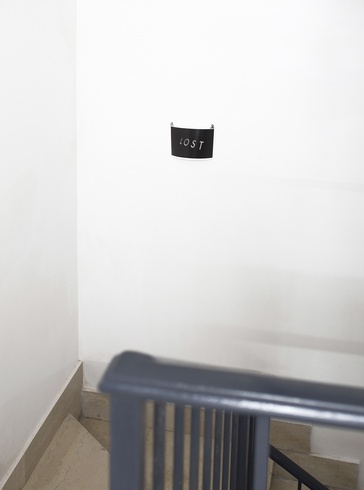
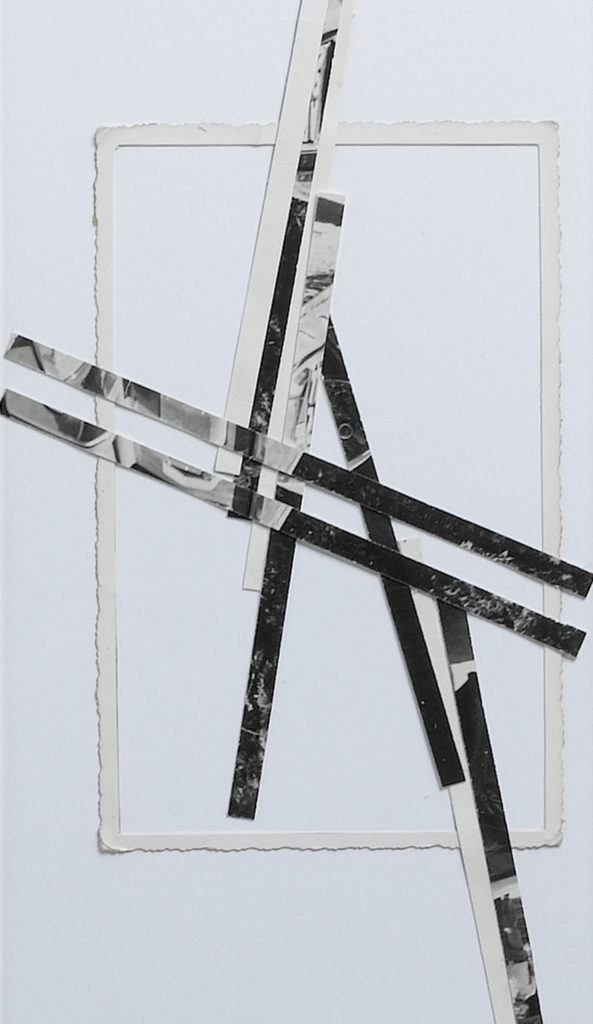
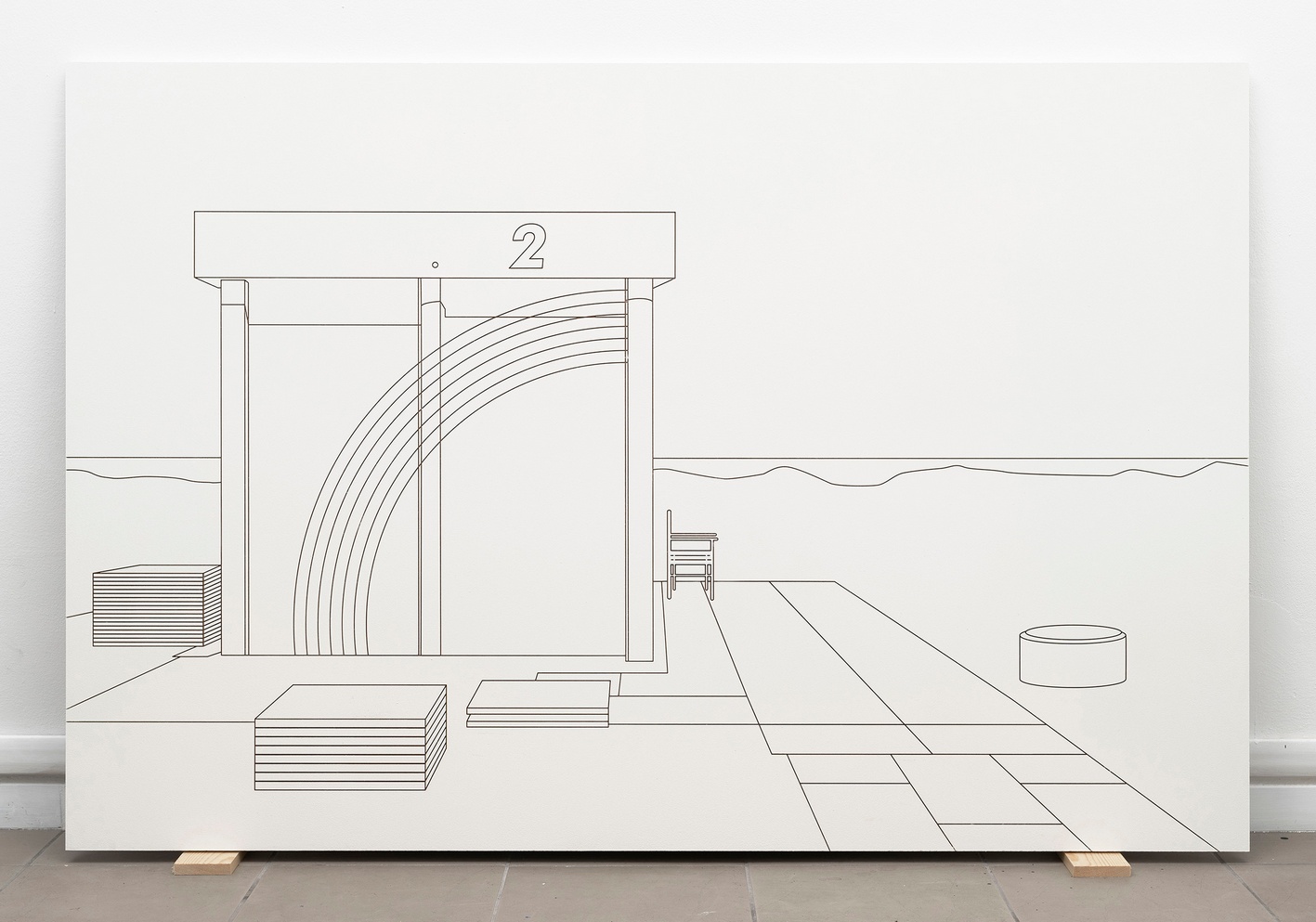
Appunti sulle marine (Notes on the seascapes) is the title chosen for a further series of drawings created on unused documents to register the entry of works of art into galleries. Besides the evocation of the passage of time expressed by the obsolescence of the documents now replaced by digital archives, Strappato invites to reflect on the mechanisms that regulate the spreading of the works of art and the relationships between art and market, underlining the force of the artwork that can convey the poetry of a landscape even when it is only drawn on a simple entry document.   

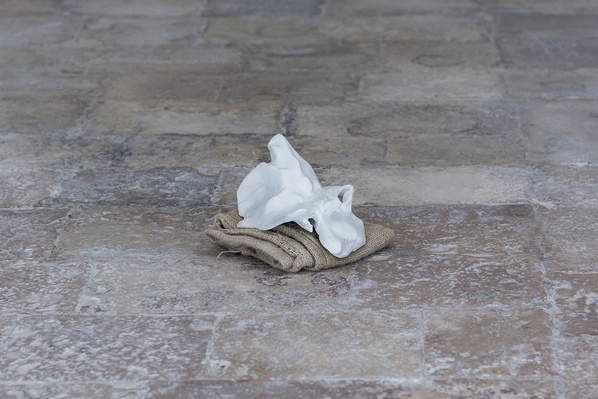
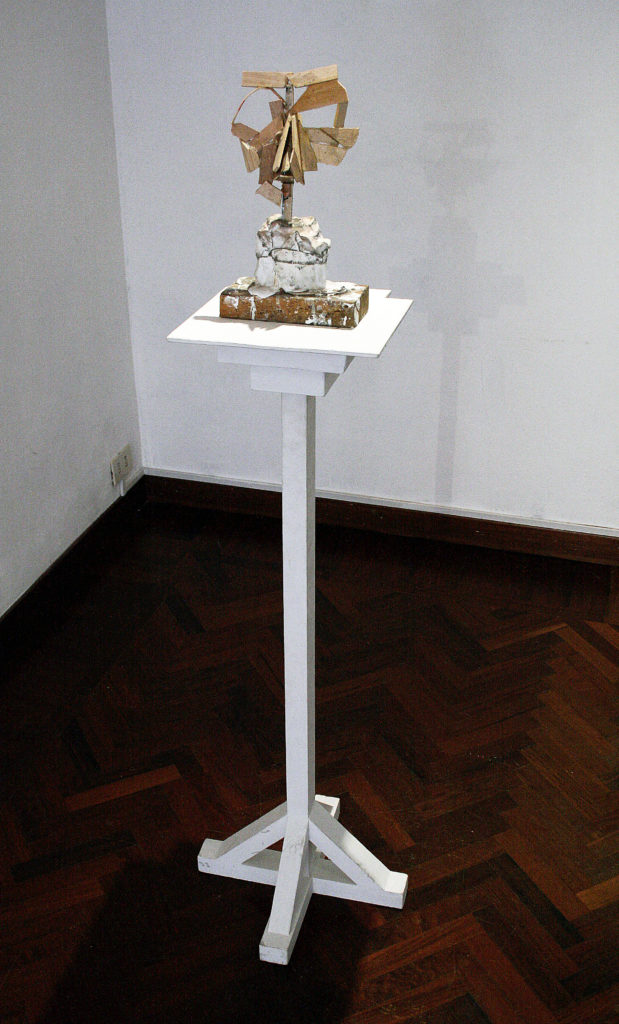
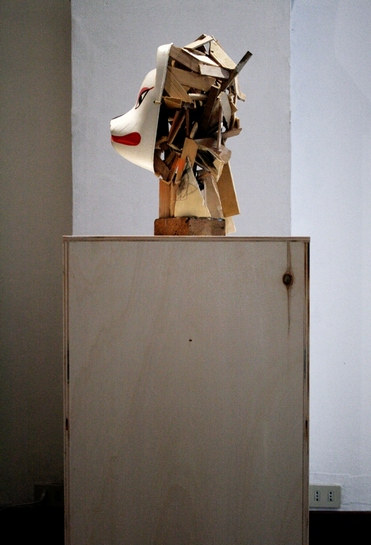
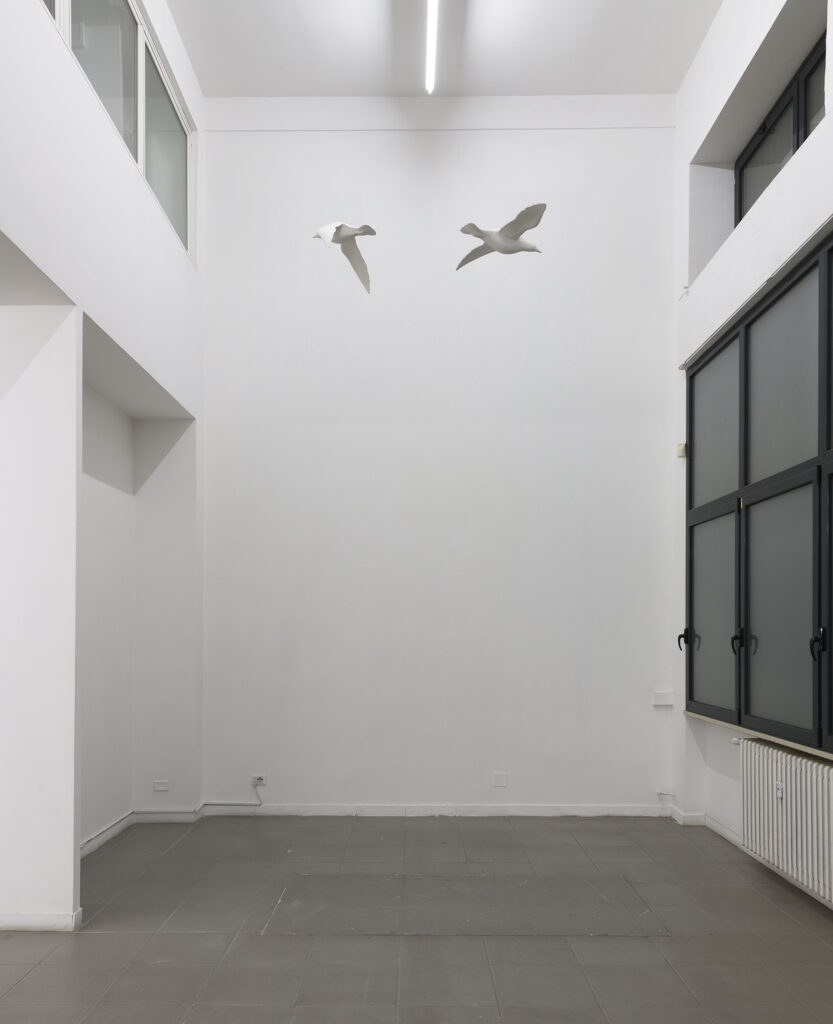
Finally, to underline the aura pervading the exhibition thanks to the gracefulness of the artist to interpret the influence of the natural over the artificial, the only three-dimensional element featured in the exhibition, a couple of seagulls made of wood and chalk and titled Seagulls, descends from the ceiling. Although they are placed in the neutral space of the gallery and not in their natural environment, the two sculptures remind us that the landscape cannot suit the needs of men only, as it is lived by creatures that represent the environmental values and should remain its beneficiaries.

The Gallery Apart è orgogliosa di annunciare Etica, Tecnica e Pathos, la nuova personale di Marco Strappato negli spazi della galleria. Fedele ad un’idea di arte che non può prescindere dall’ambiente, l’artista arricchisce la sua ricerca sul paesaggio di spunti che arrivano tanto dal mondo naturale quanto dall’interpretazione che l’uomo ne dà nei diversi campi della cultura, dall’arte all’architettura, dalla fotografia alla musica fino all’uso della tecnologia.

Strappato titola la mostra rendendo omaggio ad un album del gruppo “CCCP – Fedeli alla linea” dal titolo “Epica Etica Etnica Pathos”. Un omaggio non casuale, tenuto conto delle modalità di incisione e della scelta delle immagini poste a corredo dell’album. La registrazione avvenne in presa diretta in una casa colonica abbandonata nella campagna reggiana. Il gruppo sfruttò l’eco naturale degli ambienti domestici e si stabilì nella villa per tutto il tempo di registrazione. Ecco confermata la centralità del paesaggio, assunto che Strappato pone alla base della sua poetica, anche in versione domestica e al servizio di un’altra arte, la musica. Quanto alle immagini utilizzate per la cover dell’album e inserite in esemplari numerati al suo interno, si tratta di scatti di Luigi Ghirri, per Strappato un riferimento già in passato esplicitato in una serie di opere esposte in galleria in occasione della mostra Au-delà.

Nel fornire la sua personale reinterpretazione del titolo, Strappato accantona l’Epica e sostituisce la Tecnica a Etnica, così da adattare il messaggio alla sua specifica visione. Etica è per l’artista materia inestricabilmente legata al paesaggio, così costantemente sfregiato e così invece bisognoso di cura per mantenerne intatta la bellezza. Tecnica corrisponde all’approccio all’arte di Strappato, elemento così radicato nel suo agire artistico da assurgere ad autonomo filone di indagine, al servizio ma spesso in parallelo a quella sul paesaggio. Per Pathos basta la definizione da dizionario: capacità di suscitare un’intensa emozione e una totale partecipazione sul piano estetico o affettivo. Nulla potrebbe essere più aderente alle intenzioni dell’artista.

In Etica, Tecnica e Pathos Strappato declina i temi proposti utilizzando diversi media. Aderendo al suggerimento di Werner Herzog (We are surrounded by worn-out images, and we deserve new ones), Strappato presenta This place is really nowhere, una serie di fotoincisioni realizzate partendo da immagini convenzionali (fotografie di stock di paesaggi originariamente veicolate come sfondi di smartphones) rielaborate al punto da rendere irriconoscibile il soggetto. Le immagini finali, ambigue ma evocative, all’occhio dello spettatore si trasformano in luoghi mentali che, pur mantenendo echi dei paesaggi iniziali, danno vita a misteriosi frammenti di paesaggi lunari, a fantastiche cascate o ad astrazioni che alludono a pezzi di storia dell’arte o ai percorsi della psicologia umana. Il titolo riprende il claim per la campagna pubblicitaria dell’IBM del 1987 in cui per la prima volta gli sviluppatori crearono attraverso l’uso del computer l’immagine di una montagna in CGI in tutto simile ad una montagna reale.

Orizzonte e altre linee è una serie di dipinti in cui l’artista dà vita a immagini sintetiche nate a partire dalla linea dell’orizzonte, attraverso la quale si viene a costruire l’immagine finale. Il materiale di partenza è un archivio di cartoline e stampe collezionate dall’artista, immagini iconiche di paesaggi costieri italiani. Non si tratta di una ricognizione alla ricerca delle bellezze dei luoghi; ogni immagine risponde ad una visione complessiva che si alimenta per metonimie. Non a caso le opere sono bianche, attraversate solo dalla nettezza del nero della pennellata. Il bianco sospende ogni riferimento temporale, assecondando il ricorso dello spettatore al proprio immaginario personale, mentre la semplicità potente della linea dipinta mette a fuoco ogni possibile ricordo che le immagini riescono ad evocare. La serie di opere vuole essere un concentrato di emozioni attraverso un percorso di identificazione e di riconoscimento in un paesaggio che è familiare ma rarefatto, che è a volte riconoscibile ma reso archetipico dal potere obliterante della bicromia e che in ogni caso è inequivocabilmente italiano.

Appunti sulle marine è il titolo scelto per un’altra serie di disegni, questa volta realizzati su documenti inutilizzati di entrata di opere d’arte nelle gallerie. Al di là dell’evocazione del passaggio del tempo stante l’obsolescenza di documenti ormai soppiantati dagli archivi digitali, Strappato invita a riflettere sui meccanismi che presiedono alla veicolazione delle opere d’arte e sui rapporti tra arte e mercato, sottolineando la forza dell’opera che può restituire la poesia di un paesaggio anche se disegnato su un banale foglio di archiviazione.

Infine, a sottolineare l’aura che pervade la mostra grazie alla delicatezza con cui l’artista interpreta l’influenza del naturale sull’artificiale, dall’alto soffitto della galleria scende l’unico elemento tridimensionale in mostra, una coppia di gabbiani in legno e gesso a cui Strappato ha dato il titolo Seagulls. Le due sculture, seppur collocate nello spazio neutro della galleria e non nel loro ambiente naturale, ci ricordano che il paesaggio non è ad uso e consumo dell’uomo ma è abitato da creature che dei valori ambientalisti sono testimoni e devono restarne beneficiari.
Au-delà

Marco Strappato

07.03.2019 – 26.04.2019

Exhibition Views

Works

The Gallery Apart is proud to present Au-delà, the fourth solo exhibition by Marco Strappato (1982) in the gallery spaces. With longstanding research interests on the depiction of landscapes, analyzed through multifarious approaches, methodologies and means, Strappato indulges in its developments, dovetailing his creative work with his own life path, the latter characterized by a certain proneness to nomadism, which paradoxically led him to rediscover his roots, both as a man and as an artist born and raised by the sea.

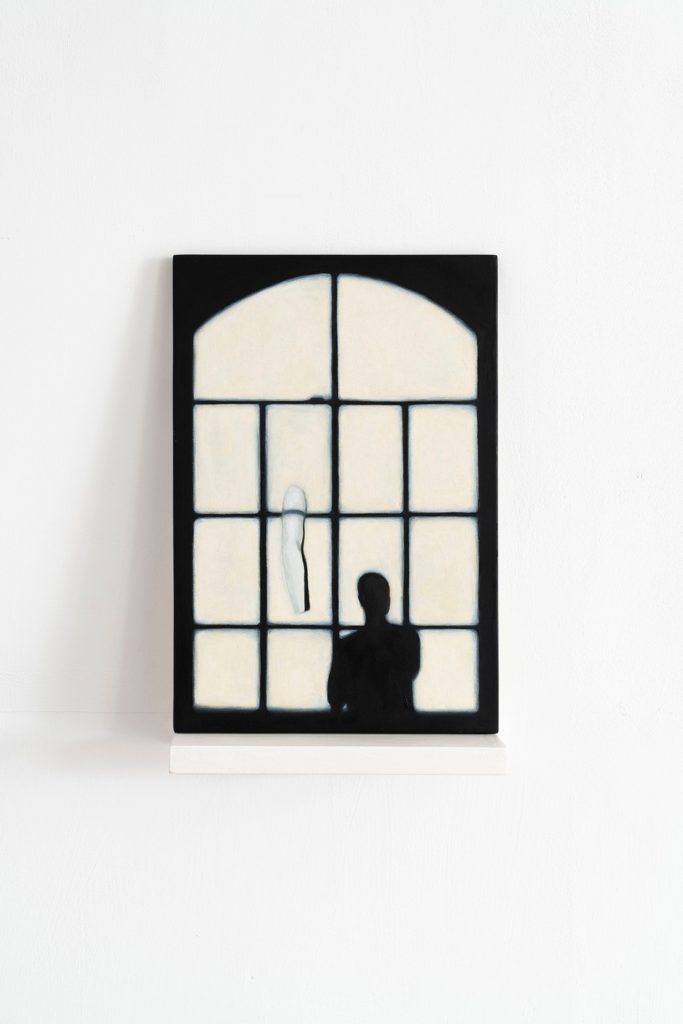
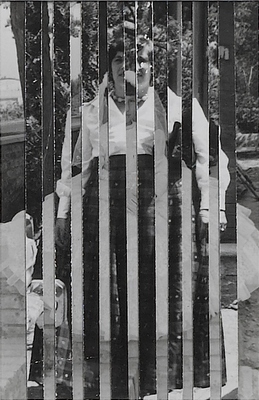
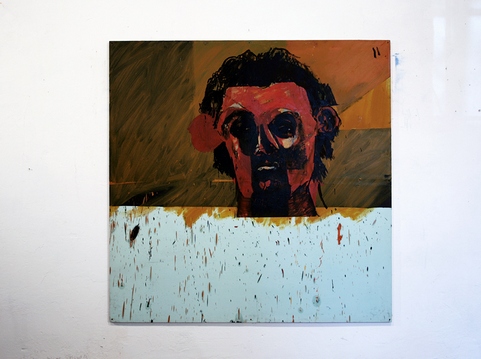
Au-delà is a title that evokes the transcendence of his personal experiences in order to reaffirm an intimate spiritual architecture. Indeed, for the first time, Strappato exhibits a self-portrait, moreover in the form of a painting: painting and silhouette, nothing further from the false epic of the selfies and of Instagram, but rather the symbol of in-depth study and of the search for the self in order to reach the essential through processes of selection, levelling and concealment.

The selection involves first of all the landscape which for the artist, though used to the metropolitan dimension, powerfully retrieves the smell, the atmosphere and the suggestions of the sea. And it manifests itself through some recent emblematic figures from the Italian art history (Ghirri, Fontana, Bonalumi, Manzoni) whose evocative power is exploited by the artist through an act that is not meant to be either an homage or a statement of lineage or even only artistic closeness, but rather an educated sampling aimed at offering an original interpretation of the possible interweaving between artistic researches and representations of landscapes. 

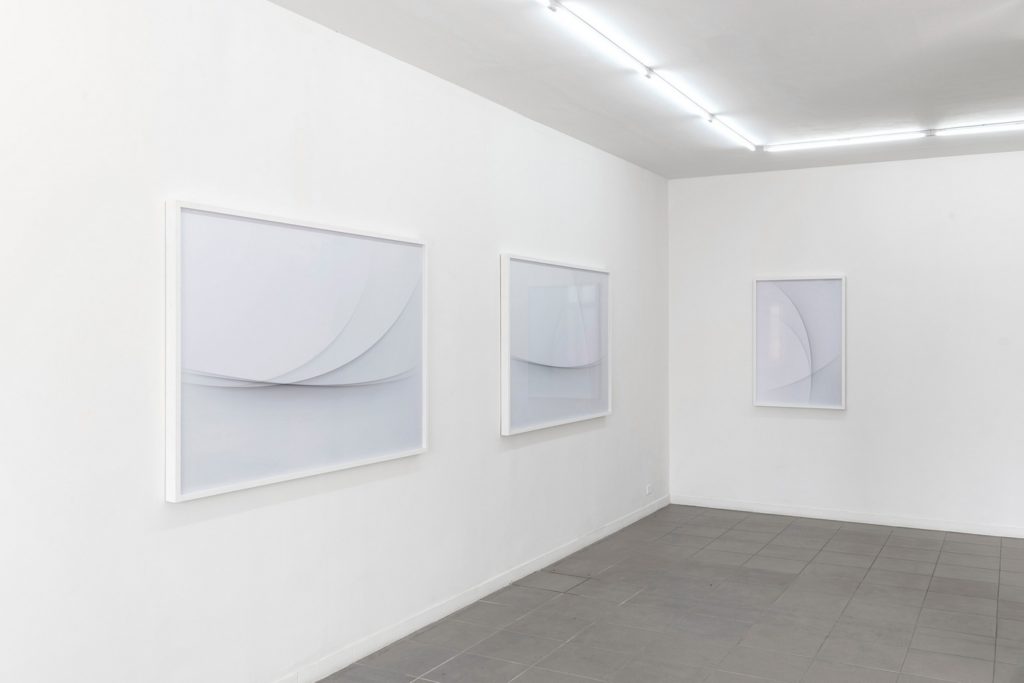
From the visual point of view, Au-delà appears like a fairly monochromatic exhibition, with a preponderance of a white palette that implies leveling, in line with a quest for essentiality; not sterile uniformity, but clarity as the baseline for any possible investigations. White therefore as a blank page to be written, as a canvas waiting to be painted, as a propaedeutic element to hold the meanings that the artist assigns to his drawings, to the images, and to the shapes. 

Strappato finally exploited – unlike his past approach – a process of concealment of the technology, which is there, but it isn’t seen, so as to restore the concept to its rightful leading role.

The Gallery Apart è orgogliosa di presentare Au-delà, la quarta personale in galleria di Marco Strappato (1982). Da tempo impegnato in una ricerca sull’immagine di paesaggio declinata attraverso multiformi approcci, modalità e mezzi, Strappato ne asseconda gli sviluppi facendo coincidere il percorso artistico con quello esistenziale, caratterizzato da una certa tendenza al nomadismo che paradossalmente lo ha condotto a recuperare le sue radici di uomo ed artista nato e cresciuto in riva al mare.

Au-delà è già un titolo che evoca un andare oltre le esperienze vissute per riaffermare un’architettura spirituale intima. Non a caso per la prima volta Strappato espone un autoritratto, per di più sotto forma di dipinto: pittura e silhouette, niente di più lontano dalla falsa epopea del selfie e di Instagram, piuttosto l’emblema dell’approfondimento e della ricerca del sé per arrivare all’essenziale attraverso processi di selezione, di livellamento e di occultamento.

La selezione riguarda anzitutto il paesaggio che per l’artista, pure abituato alla dimensione metropolitana, torna prepotentemente ad assumere il profumo, l’atmosfera e le suggestioni del mare. E si manifesta per il tramite di alcune figure emblematiche del recente passato della storia dell’arte italiana (Ghirri, Fontana, Bonalumi, Manzoni) di cui Strappato asseconda il potenziale evocativo attraverso un’operazione che non intende essere un omaggio né un’affermazione di discendenza o anche solo vicinanza artistica, quanto piuttosto un campionamento colto finalizzato a fornire un’interpretazione inedita dei possibili intrecci tra ricerche artistiche e rappresentazioni di paesaggi. 
Dal punto di vista visuale, Au-delà si configura come una mostra pressoché monocromatica, con una preponderanza del bianco ad attestare un livellamento in linea con la ricerca di essenzialità; non una sterile uniformità bensì una chiarezza di fondo che diviene base per ogni possibile approfondimento. Il bianco quindi come una pagina da scrivere, come una tela preparata per dipingere, come elemento propedeutico per contenere i significati che l’artista assegna ai disegni, alle immagini e alle forme. 
Strappato ha infine operato, all’opposto di quanto fatto in passato, mediante un processo di occultamento della tecnologia, che in realtà c’è ma non si vede così da restituire al concetto il ruolo di protagonista principale che gli compete.

ACTS OF GOD

Marco Strappato

Exchiesetta – Polignano a Mare

06.10.2017 – 28.10.2017

Exhibition Views

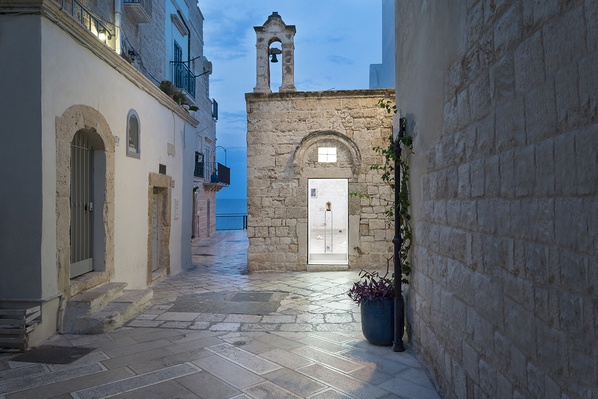
Exchiesetta, in collaboration with The Gallery Apart (Rome), is proud to present the solo exhibition of Marco Strappato (Porto San Giorgio, Italy, 1982).

Referencing the International Navy Law, the term Acts of God defines a “major cause” as the happening of an unexpected and unforeseen event, caused by nature. This statement, defines the fate of dramatic events able to create both disasters and victims, consigns literally to the Laws of God the imputation of an evil and inescapable force.

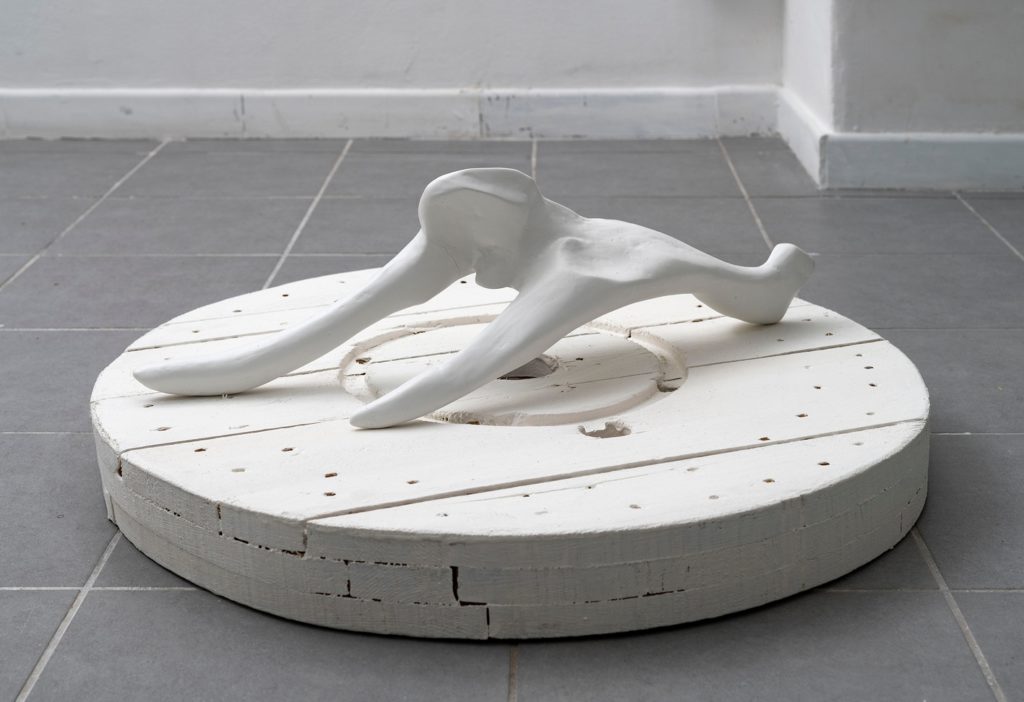
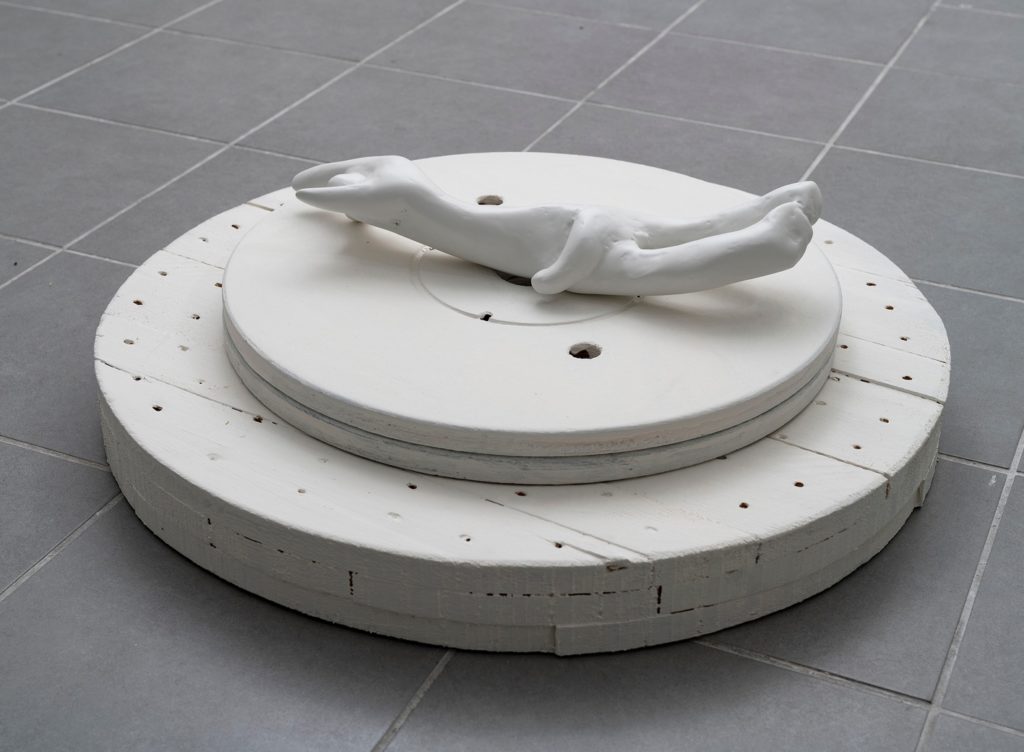
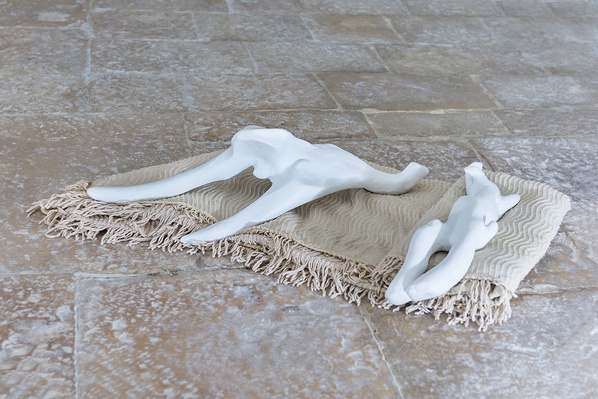
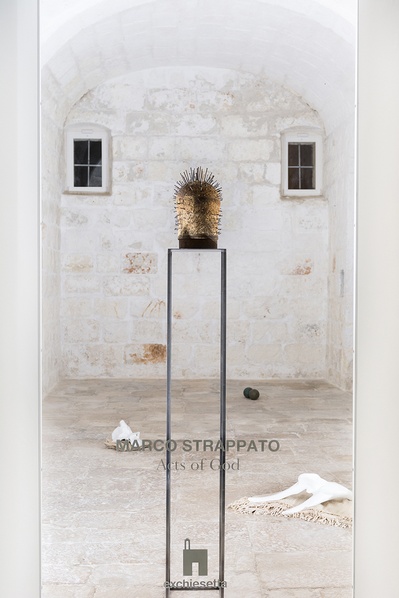
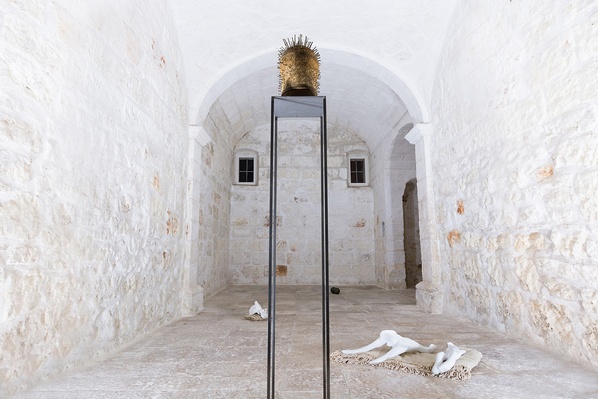
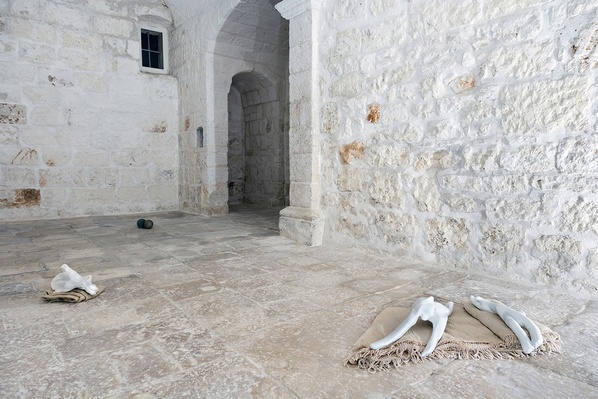
The installation of Marco Strappato evokes the holy deposition scene, in which the presence of the white sculptures created by the artist, manipulate the shapes of broekn tree trunks and branches that have surfaced from the sea, on the shores of Strappato’s home town of Porto San Giorgio, on the Adriatic Sea.

Through the use of plaster, chalk, polyester, acrylic varnish and rabbit glue, the artist bestows to these bodies the appearance of human bones, stolen to the fate of catastrophic events during the seasonal mediterranean migration.

However, the depiction of an unforseeable event, reminds us immediately of the brutality of the trade of humans and the unlimited lives condemned to death. Thus the Acts of Gods becomes solely a conscious, deliberate, cruel act.

Nevertheless, the sculptures also infer that there is a possibile, positive change of sense, acknowledging that the “human” and the “divine” can merge to show the progress of the science, in the creation of synthetic and artificial organs and bones, thanks to microsurgery, with the technique of the first experimentation of bone transplants currently being tested by surgeon Sergio Canavero with focus on the human skull.

The sketched figures, sometimes rounded or tapered, white and solid like ancient greek idols carved in marble, which radiates the fragility from the ossarium in the small church of Santo Stefano, a sacred shelter on the earth.

Exchiesetta, in collaborazione con The Gallery Apart (Roma) è lieta di ospitare la mostra personale di Marco Strappato (Porto San Giorgio, Fm, 1982).

Nell’ambito del Diritto Internazionale Marittimo, il termine Acts of God definisce una “causa di forza maggiore”, il verificarsi di un evento imprevisto ed imprevedibile, derivante dalle forze della natura. L’espressione, designando la fatalità di certi accadimenti drammatici in grado di provocare vittime e disastri, consegna letteralmente alle Leggi di dio l’imputazione di una forza ineluttabile e sinistra.

L’installazione di Marco Strappato evoca la scena di una sacra deposizione, con la presenza di candide sculture che l’artista ha prodotto rielaborando la forma e la superficie di rami e tronchi riemersi dal mare, logori e consunti, sulle coste della sua Porto San Giorgio, sulle rive dell’Adriatico.

Attraverso l’uso di stucco, gesso, poliestere, vernice acrilica e di colla di coniglio, l’artista conferisce a questi “corpi” l’aspetto di ossa umane, sottratte alla fatalità di eventi catastrofici nel corso delle quotidiane migrazioni mediterranee. Tuttavia, la rappresentazione di un evento imprevedibile, riporta immediatamente alla memoria la brutalità dei trafficanti, artefici della tratta di vite umane umiliate e spesso condannate a morte certa. Ecco che gli Acts of God si trasformano immediatamente in atti umani, deliberati, feroci, nefasti.

Tuttavia le sculture dell’artista sembrano procedere anche verso un possibile, radicale ribaltamento di senso, manifestando quanto “umano” e “divino” appaia il progresso della tecnica e della scienza, come nella creazione sintetica di organi ed ossa artificiali ad opera della microchirurgia e della cranioplastica: tecniche del trapianto osseo con cui, in questi giorni, si effettuano i primi esperimenti di trapianto di testa umana (ad opera del neurochirurgo italiano, Sergio Canavero).

A questo alludono le forme stilizzate e levigate, talvolta sferiche oppure affusolate, bianche e solide come antichi idoli cicladici scolpiti nel marmo, eppure fragili elementi di un ossario radunato nella piccola chiesa di Santo Stefano, rifugio inviolabile sulle coste della terraferma.

Over Yonder

Marco Strappato

12.12.2015 – 13.02.2016

Exhibition Views

Works

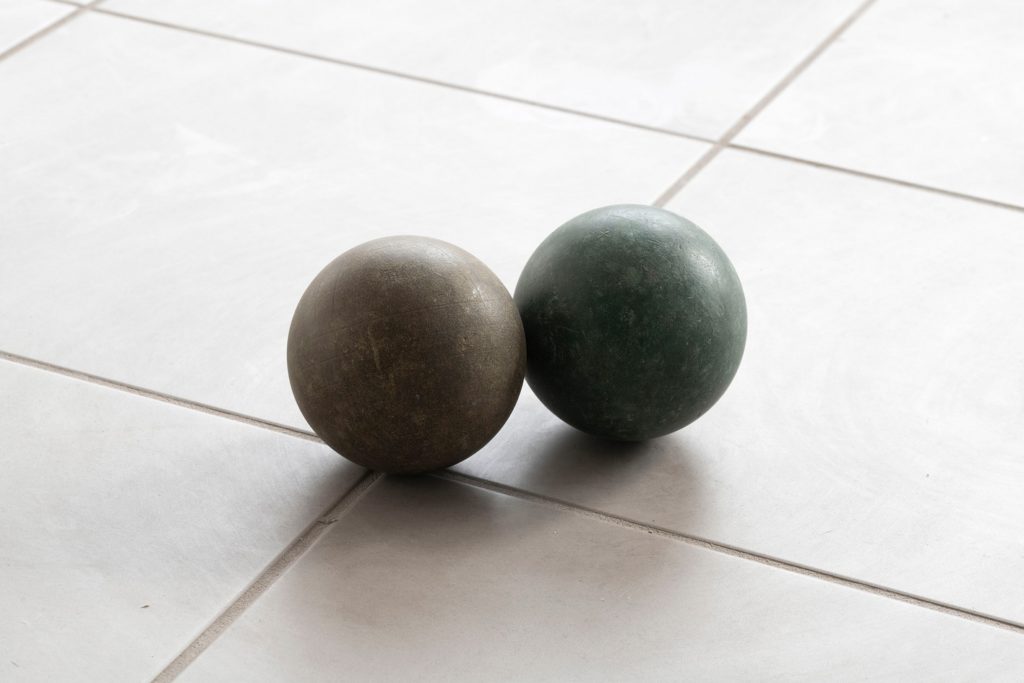
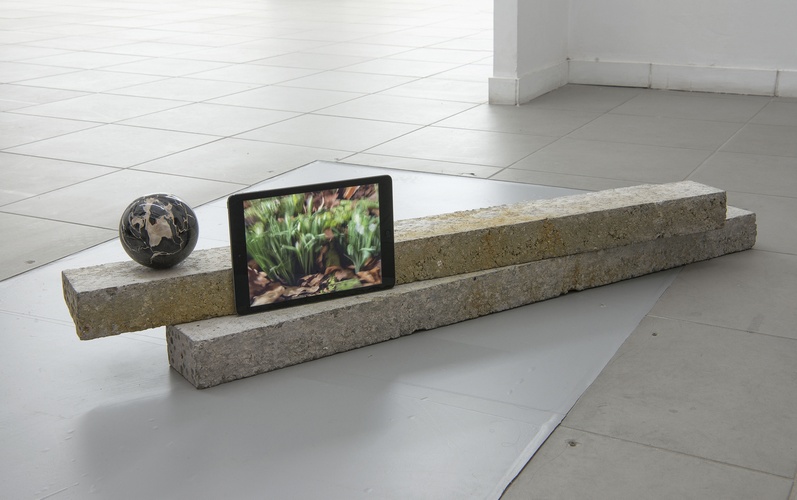
The Gallery Apart is proud to present the third solo show dedicated to Marco Strappato (1982, Porto San Giorgio, Italy, currently living and working in London). Strappato’s work deals with the production and distribution of images in the modern age, through a  multidisciplinary practice consisting of collage, video, photography and installation. The specific interest for the landscape images –  with an extended meaning – is part of a more general  research aimed to understand the aesthetic experience of our times (within what is defined the consumer culture), tackling rhetoric debates of authenticity and inauthenticity, exotic and familiar, artificial and natural. The sculptural side of Strappato’s work is based on an utilitarian relationship with the objects that are part of his installations. Whether they are plinths, concrete beams, marble sphere or video screens, these objects always play an ancillary role compared to the primary objective, that of the assimilation of the image and of its reproduction based on new meanings.
Over Yonder
 brings together the works produced during the last months spent at the Royal College of Art in London and the new series of works, conceived and produced during the artist-in-residence at qwatz in Rome, inspired by the 1985 album by Italian songwriter Franco Battiato titled “Mondi lontanissimi”, where journey represents the central theme, both across the Earth and the space, and therefore the meeting with other new “possible” landscapes. In this regard, the main source of inspiration, on which the artist also draws for the title of the exhibition, is The Wild Blue Yonder, a 2005 film directed by Werner Herzog that narrates a typically science-fiction story, but shot in a mock-documentary style and making full use of archive images to which a new and different meaning is attributed. This is exactly what Strappato does in his work, triggering off short circuits between the signifier and the signified. It is from this need to go  beyond the mere  recognition of the object or of the image that the artist takes the expression over yonder, which sometimes is used in place of the more common over there, but with a slightly different meaning, as it refers to the location of a thing that cannot be seen readily by the speaker. Herzog represents an essential reference for Strappato, so much that a quotation of the German director opens the statement of the artist: We are surrounded by worn-out images, and we deserve new ones. Perhaps I seek certain utopian things, space for human honor and respect, landscapes not yet offended, planets that do not exist yet, dreamed landscapes. Very few people seek these images today which correspond to the time we live, pictures that can make you understand yourself, your position today, our status of civilization. I am one of the ones who try to find those images.
Strappato is constantly researching images to be used as words, images that represent the landscape  in all its possible forms. The work and thought underlying Over Yonder have opened up new iconographic horizons, allowing him an exploration of the universe according to a personal science-fiction mythology that feed on those who, like Franco Battiato, have already made this mysterious, transcendental cultured, Dante-inspired journey, though in a musical context but with the same capacity to evoke images. Herein lies the reference, to the limit of appropriation, to the album Mondi lontanissimi, with Strappato shares the yearning for research, fascination with the unknown, the new, the unfamiliar, the exotic, in a word the fascination with the inconnu.
Over Yonder
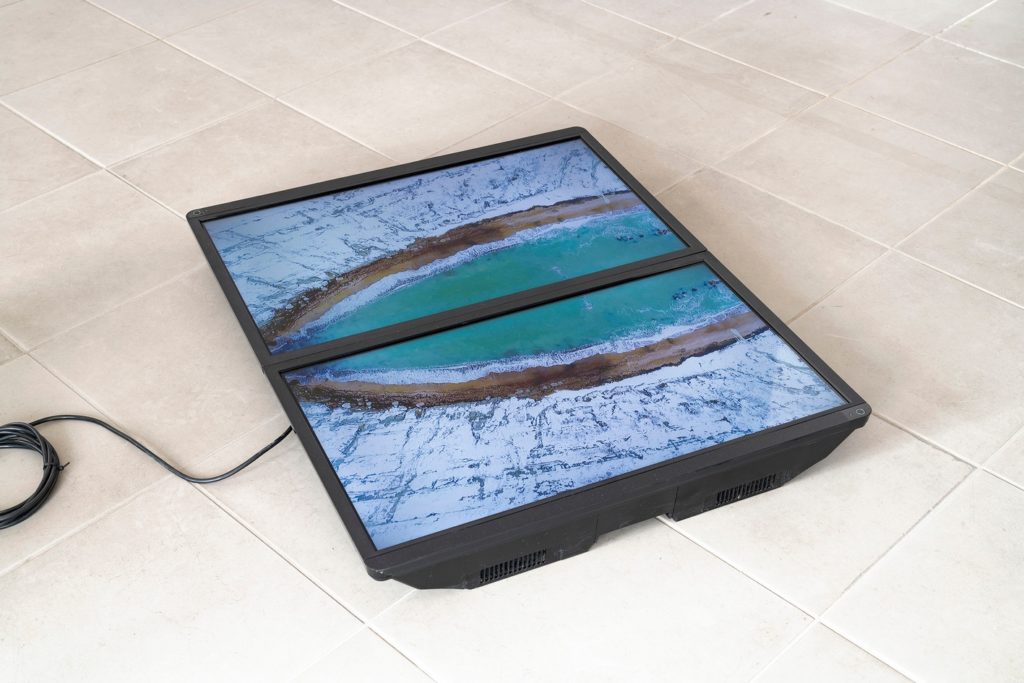
 is a succession of explicit references and intellectual cross-references to experiences of visions related to the journey, even  interplanetary, confirming a tendency for abstraction that leads us to mental or only dreamed landscapes. To see, today more than ever before, means also seeing though technology, cables, mechanical arms, audio and video devices are left in plain sight by Strappato, which then become integral parts of the artworks. The reference to the surfaces of these devices (smartphones, iPads, TV screens, monitors) recurs also when it is aimed to evoke thresholds to cross towards the infinite or digitally created sunsets. Thereby the black mirrors are created, reflecting those devices when they are turned off or in stand-by. Their aspect ratio is usually 16:9, which has become the most common format in the production and distribution of images and that are often arranged vertically on a monitor in order to highlight the passage from the traditional horizontal panoramic picture frame to that of the mobile phone or of the scrolling down of the Web pages.
Strappato’s research has evolved as he attaches more importance not only to the landscape as content, but also to the formalisation of the work of art, showing great openness to the use of the materials and a with a keen sense of aesthetics supported by unpredicted references to art history. Thus, besides the algid perfection of the mirroring surfaces, of the hi-tech devices, of the refined frames, the artist uses spray paint, the transformation of broken–down old office file cabinets in bodies evoking  as many classic sculptures, as well as the three-dimensional reification of the abstract concept of files  through the use of Jesmonite.

The Gallery Apart è lieta di presentare la terza personale dedicata a Marco Strappato (Porto San Giorgio 1982, vive e lavora a Londra). Il lavoro di Strappato ha a che fare con la produzione e distribuzione d’immagini nell’epoca contemporanea, attraverso una pratica multidisciplinare che comprende collage, video, fotografia e installazione. L’interesse specifico per l’immagine di paesaggio – in un’accezione estesa – si inserisce in una più generale ricerca tesa a comprendere l’esperienza estetica dei giorni nostri (iscrivendosi in quella che viene definita consumer culture), affrontando discorsi retorici di autenticità e inautenticità, esotico e familiare, artificiale e naturale. Il versante scultoreo del lavoro di Strappato si fonda su un rapporto utilitaristico con gli oggetti chiamati a far parte delle sue installazioni. Siano essi plinti, travi di cemento, sfere di marmo o monitor, questi oggetti assumono sempre una funzione ancillare rispetto all’obiettivo primario, quello della metabolizzazione dell’immagine e della sua riproposizione secondo inediti nessi di significato.
Over Yonder
 unisce la produzione degli ultimi mesi passati al Royal College of Art di Londra ad un nuovo corpo di lavori, pensati e prodotti durante un periodo di residenza a Roma da qwatz, ispirati all’album del 1985 di Franco Battiato intitolato “Mondi lontanissimi”, il cui tema centrale è il viaggio, sia sulla terra che nello spazio, e dunque l’incontro con altri e nuovi paesaggi “possibili’. In tal senso, la prima fonte di ispirazione, da cui l’artista trae anche lo spunto per il titolo della mostra, è The Wild Blue Yonder, film del 2005 diretto da Werner Herzog che narra una storia tipicamente di fantascienza ma con stile documentaristico e facendo ampio ricorso ad immagini di repertorio a cui viene attribuito un significato nuovo e diverso. Esattamente quello che fa Strappato nei suoi lavori, innescando cortocircuiti tra significante e significato. E’ da questa esigenza di andare oltre la mera riconoscibilità dell’oggetto o dell’immagine che l’artista coglie l’espressione over yonder (laggiù, in italiano), a volte utilizzata in alternativa alla ben più diffusa over there, ma con un’accezione leggermente diversa, riferita a qualcosa di cui viene indicata la posizione ma che è difficile poter vedere e poter raggiungere. Herzog è per Strappato un riferimento fondamentale, tant’è che una citazione del regista tedesco apre lo statement del giovane artista: We are surrounded by worn-out images, and we deserve new ones. Perhaps I seek certain utopian things, space for human honor and respect, landscapes not yet offended, planets that do not exist yet, dreamed landscapes. Very few people seek these images today which correspond to the time we live, pictures that can make you understand yourself, your position today, our status of civilization. I am one of the ones who try to find those images.
Strappato è costantemente alla ricerca di immagini da utilizzare come lessico, immagini che declinino il paesaggio in tutte le forme possibili. Il lavoro e il pensiero che sostengono Over Yonder gli hanno aperto nuove frontiere iconografiche, consentendogli un’esplorazione del cosmo secondo una personale mitologia fantascientifica che trova alimento in chi, come Franco Battiato, questo viaggio misterioso, trascendentale e colto, quasi di dantesca ispirazione, ha già condotto seppure in ambito musicale ma con altrettanta capacità di evocare immagini. Ecco dunque il riferimento, ai limiti dell’appropriazione, dell’album Mondi lontanissimi, di cui Strappato condivide l’anelito alla ricerca, il fascino dell’ignoto, del nuovo, dello sconosciuto, dell’estraneo, in una parola il fascino dell’inconnu.
Over Yonder
 è un susseguirsi di riferimenti espliciti e di rimandi intellettuali ad esperienze di visualità legate al viaggio, anche interplanetario, a conferma di una tendenza all’astrazione che ci conduce direttamente a paesaggi mentali o solo sognati. Vedere, oggi più che mai, significa anche vedere attraverso la tecnologia, Strappato lascia in vista cavi, bracci meccanici, dispositivi audio e video che finiscono tutti per diventare parti integranti delle opere. Il riferimento alle superfici di tali dispositivi (smartphones, iPads, TV screens, monitors) ritorna anche quando è finalizzato ad evocare soglie da varcare verso l’infinito o tramonti realizzati digitalmente. E’ così che nascono gli specchi neri (black mirrors), riflettenti come lo sono quei dispositivi quando spenti o in stand by. Di frequente la loro proporzione è di 16:9, standard oramai dominante nella produzione e distribuzione di immagini, e spesso la loro posizione è verticale per sottolineare il passaggio dalla tradizionale visione panoramica orizzontale a quella propria del telefono cellulare o degli infiniti scroll down delle pagine web.
La ricerca di Strappato si è andata evolvendo nel senso di annettere sempre più importanza, oltre che al paesaggio come contenuto, anche alla formalizzazione dell’opera, dimostrando grande apertura all’uso dei materiali e forte senso estetico sorretto da non scontati riferimenti alla storia dell’arte. Ecco dunque che alla perfezione algida delle superfici specchianti, delle strumentazioni hi-tech, delle cornici raffinatissime, si unisce il ricorso agli interventi con la vernice spray, la trasformazione di vecchi e logori armadietti da ufficio in corpi evocanti altrettante sculture classiche, nonché la reificazione tridimensionale del concetto astratto di files realizzata utilizzando la Jesmonite.

Not yet titled

Marco Strappato

22.11.2013 – 09.01.2014

Exhibition Views

Works

The Gallery Apart is proud to present Not yet titled by Marco Strappato, the second solo exhibition dedicated to the artist following the exhibit La ripetizione, qualora sia possibile, rende felici hosted in 2011 in the former gallery spaces in via Monserrato, Rome.

Marco Strappato makes his comeback to Rome with an exhibition of his new works, after several meaningful artistic and educational experiences, including his recent admission to the ‘MA programme in Sculpture’ at the Royal College of Art in London, where the artist has been living and working for a few years now. 

Strappato further reflects on the themes addressed in his research, starting from the common visual and linguistic codes that he consistently challenges and calls into question through the selection, manipulation and alteration of the images. Among the wide variety of material and visual information available in our everyday life, Strappato prefers a particular category of images, which Michael Jacob defines as landscape-images. A category that may be used to understand the aesthetic experience in our contemporaneity, amid the rhetorical discourses about the authentic and inauthentic, the exotic and familiar, the artificial and the natural. For the project Not yet titled, Strappato has developed a new series of collages, an installation and some in-situ performances.      

As highlighted by Claudio Musso, one of whose article on Strappato’s work also elevates and exalts the exhibition, “From a certain point of view, we may read the evolution of art as the construction, life and metamorphosis of images. This is partly due to the human need to take in (and understand)the surrounding environment. Hence, the reproduction of reality has soon internalized the limits imposed by conventions and defined them with words that may all be synonyms of constraint (frame, framing, painting or screen).

Today, undertaking a research on the image implies the immersion into a continuous flow, where, sometimes, the selection, the modification or the touch-up are more effective than the ex-novo creation. Marco Strappato carries out a material analysis of the representation, oftentimes he enters into direct contact with the image-objects (photographs, prints, slide films, pages, films) found along his path and that he treats as a living body. His main goal, at first sight, is the landscape in its multiple representations. Although evidence may seem to prove the contrary, his paintings do not represent natural landscapes, but they are far-away places or places of desire, film settings for stories whose plot has been roughly outlined or yet to be written, where it is easy to spot some familiar features and which, however, it is hard to link to the right place they belong to.More than joining the pictorial art, some kinds of Vedutism, Strappato provokes and evokes interior visions, shifted onto the outside world, or rather onto its depiction. Images are explored through their own perception and, mostly in the artist’s more recent artworks, through exhibition systems wherein the meaning of landscape may be confused and interchanged with that of portrait (and viceversa).”

The Gallery Apart è orgogliosa di presentare Not yet titled di Marco Strappato, seconda personale dedicata all’artista dopo la mostra La ripetizione, qualora sia possibile, rende felici tenutasi nel 2011 nel precedente spazio di via Monserrato.

Marco Strappato torna ad esporre a Roma dopo importanti esperienze artistiche e formative, tra cui la recente ammissione al ‘MA programme in Sculpture’ presso il Royal College of Art di Londra , città dove l’artista vive e lavora già da tempo.

Strappato compie un’ulteriore riflessione sui temi cari alla sua ricerca, a partire dai comuni codici visivi e linguistici che egli rimette continuamente in discussione attraverso la selezione, la manipolazione e l’alterazione delle immagini. Fra le infinite possibilità di materiali e informazioni visive del nostro quotidiano, Strappato predilige una particolare categoria di immagini, quelle che Michael Jakob definisce come immagini-paesaggio. Categoria che può essere utilizzata per comprendere appieno l’esperienza estetica in età contemporanea, fra retoriche dell’autentico e dell’inautentico, dell’esotico e del quotidiano, dell’artificiale e del naturale. Per il progetto Not yet titled, Strappato ha realizzato una serie di nuovi collage, un’installazione ed alcuni interventi in situ.

Come sottolinea Claudio Musso, un cui testo sul lavoro di Strappato arricchisce la mostra, “Da un certo punto di vista è possibile leggere l’evoluzione dell’arte come costruzione, vita e metamorfosi di immagini. Ciò risponde, in parte, alla necessità umana di registrare (e comprendere) l’ambiente circostante. La riproduzione della realtà ha poi introiettato ben presto i limiti che la convenzione aveva imposto, definendoli con termini che possono essere tutti sinonimi di vincolo (cornice, inquadratura, quadro o schermo).

Oggi intraprendere una ricerca sull’immagine presuppone l’immersione in un flusso ininterrotto, nel quale, a volte, la selezione, la modifica o il ritocco sono più efficaci della creazione ex novo. Marco Strappato conduce un’analisi materica della rappresentazione, molto spesso entra in contatto diretto con gli oggetti-immagine (fotografie, stampe, diapositive, pagine, pellicole) che incontra e che tratta come corpo vivo. Il suo obiettivo primario è, a prima vista, il paesaggio nelle molteplici sue declinazioni. Anche se l’evidenza in molti casi sembra smentire, i suoi non sono paesaggi naturali, sono piuttosto luoghi lontani o del desiderio, set cinematografici per storie appena accennate o ancora da scrivere, in cui è facile riconoscere tratti di familiarità e a cui, al contempo, è impossibile dare una collocazione certa.

Più che apparentarsi al genere pittorico, a qualche forma di vedutismo, Strappato compone visioni interiori, traslate sul mondo esterno, o meglio sulla sua raffigurazione. Le immagini vengono indagate attraverso la loro stessa percezione e, soprattutto nelle prove più recenti, attraverso sistemi espositivi in cui il significato di paesaggio può confondersi con quello di ritratto (e viceversa)”.

LA RIPETIZIONE, QUALORA SIA POSSIBILE, RENDE FELICI

Marco Bongiorni, Marco Strappato

02.05.2011 – 02.07.2011

Exhibition Views

MARCO BONGIORNI | MARCO STRAPPATO

LA RIPETIZIONE, QUALORA SIA POSSIBILE, RENDE FELICI