Tremit ante arescit

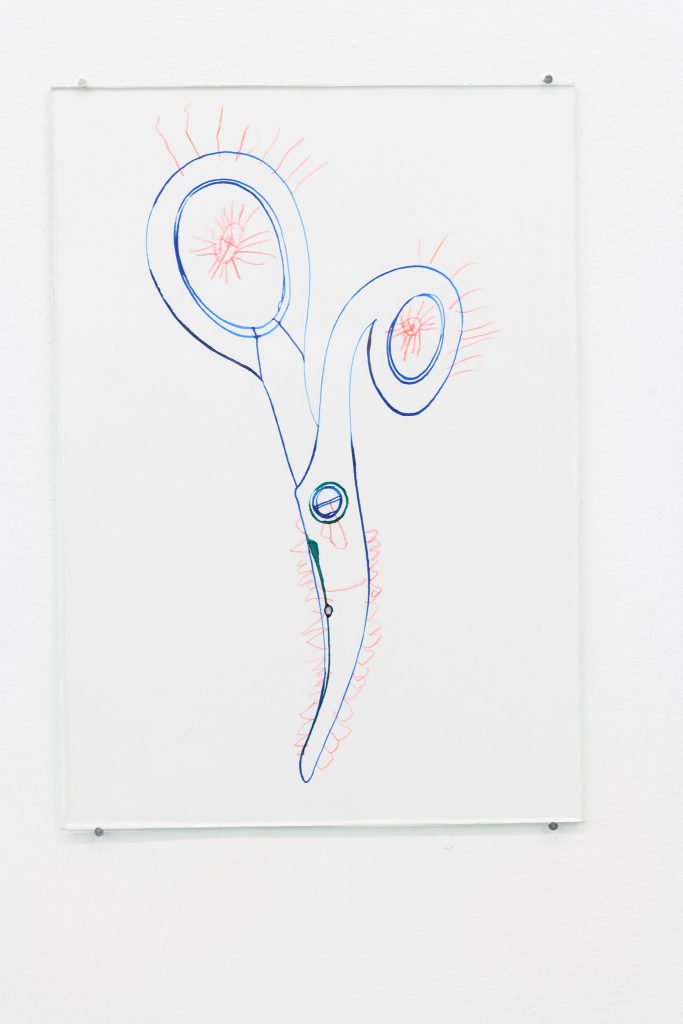
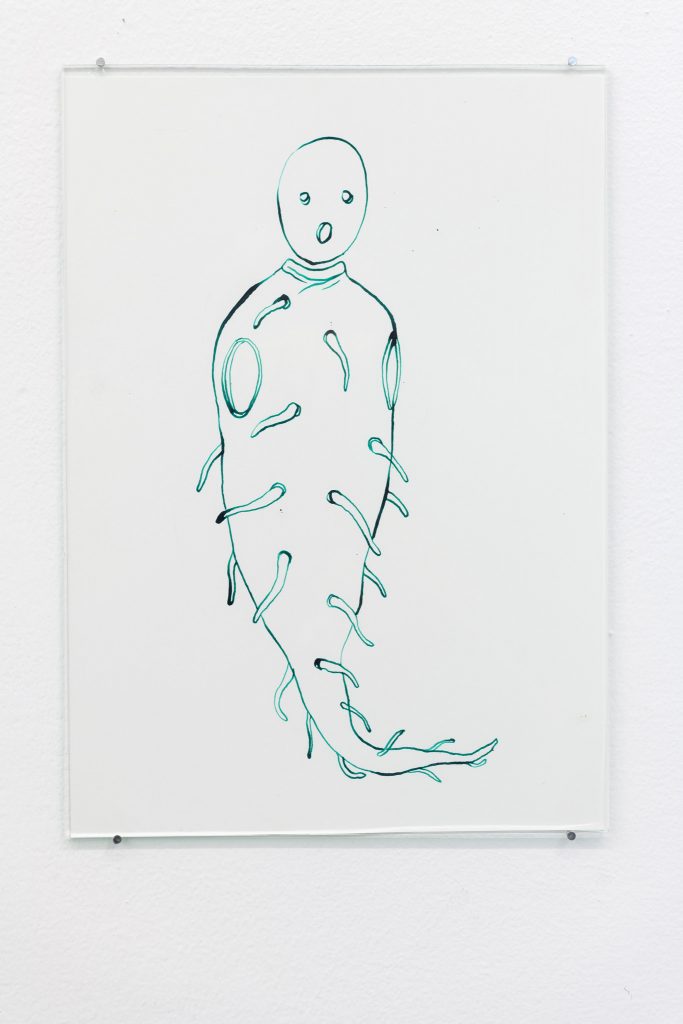
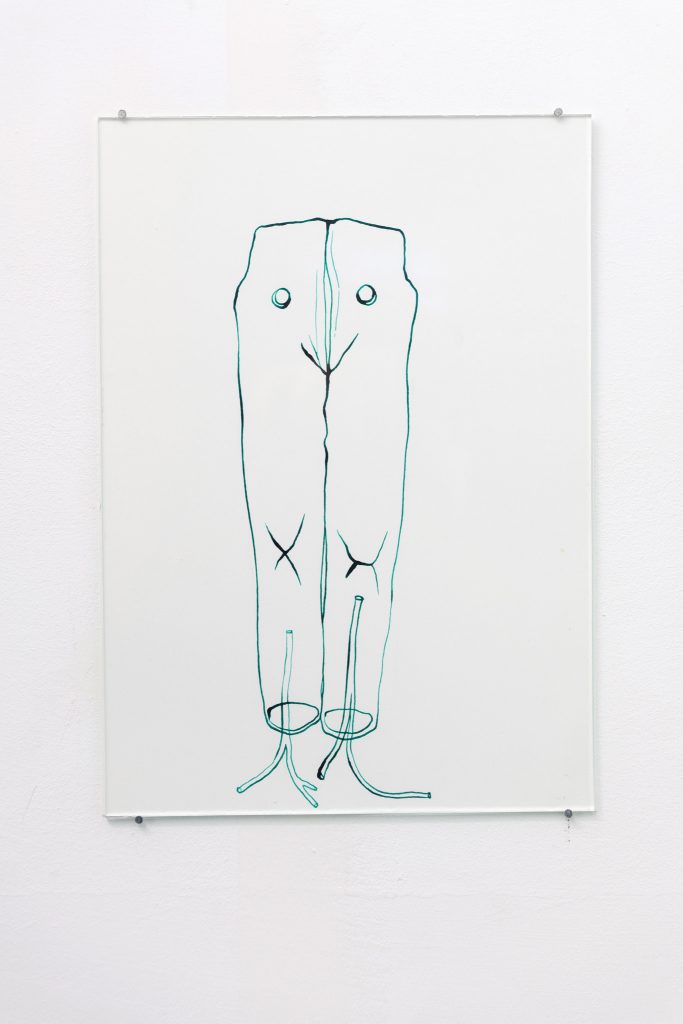
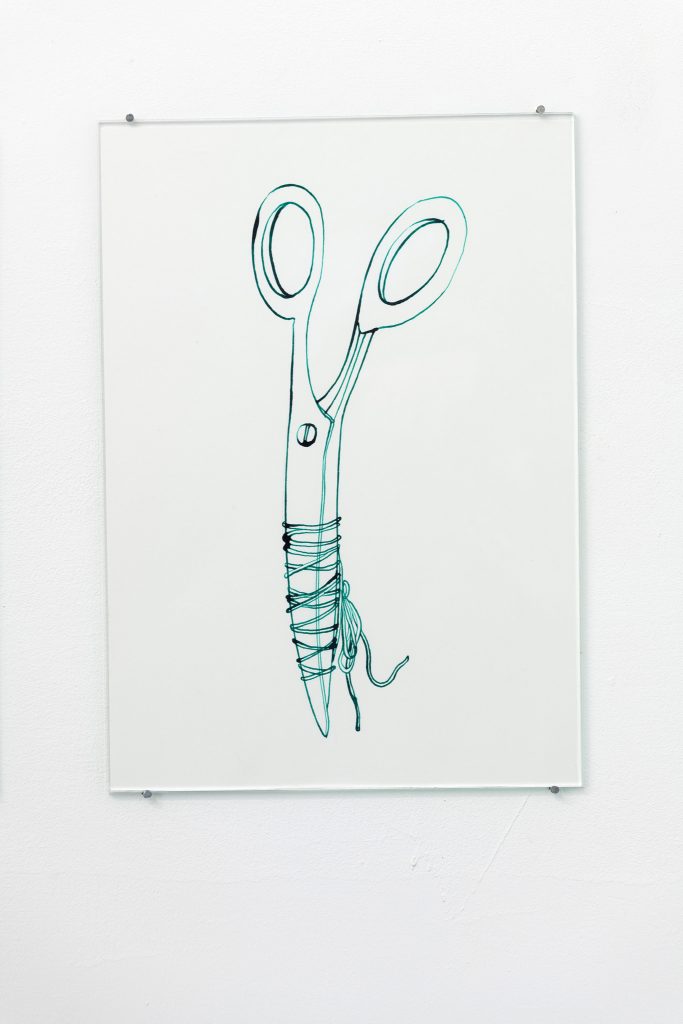
Anna Fiedlerová, Václav Girsa, Eva Koťátková, Jiří Kovanda, Dominik Lang, Anna Ročnová 

a project by Dominik Lang

03.03.2022 – 22.04.2022

Exhibition views
Works

Invited to exhibit for the third time in the spaces of The Gallery Apart, Dominik Lang assumes the role of an architect of exhibitions by conceiving a site-specific project for the gallery and bringing together artists spanning different generations who from Prague, the city where they are sharing their activity, have innervated and continue to liven up the international artistic scene. 

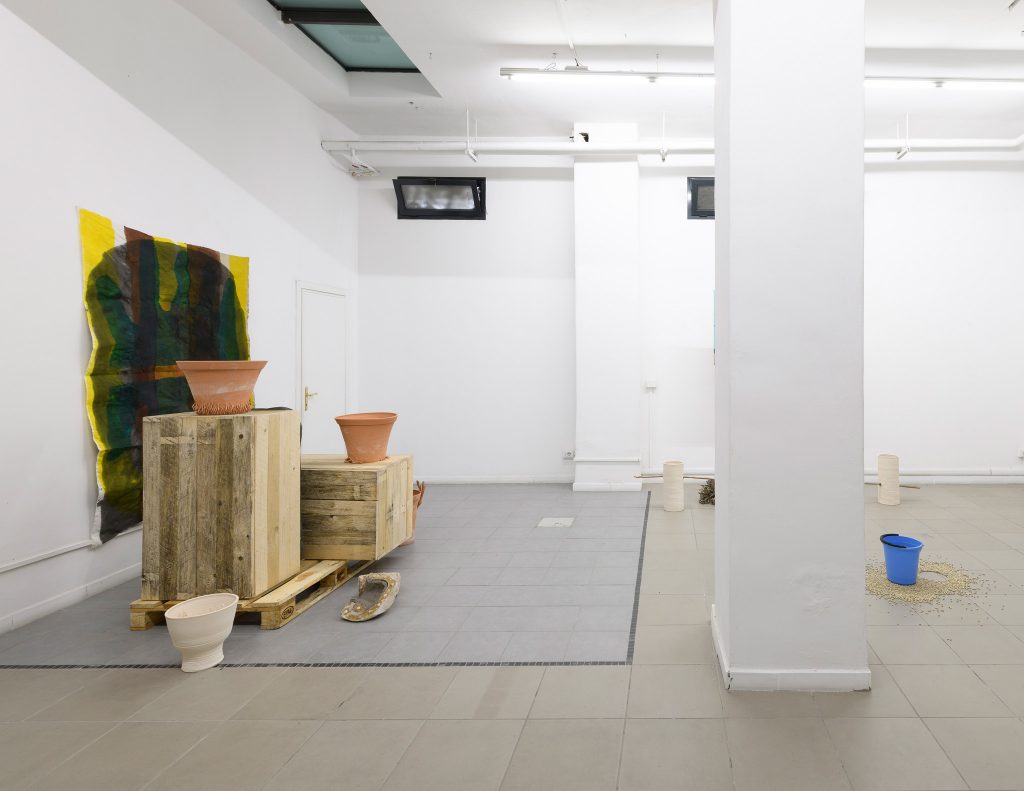
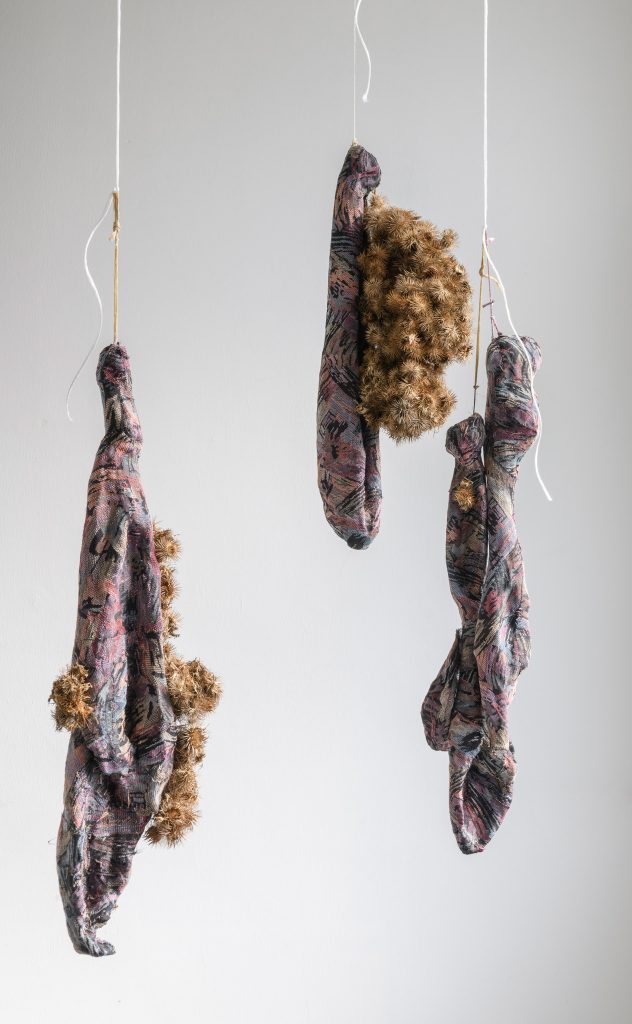
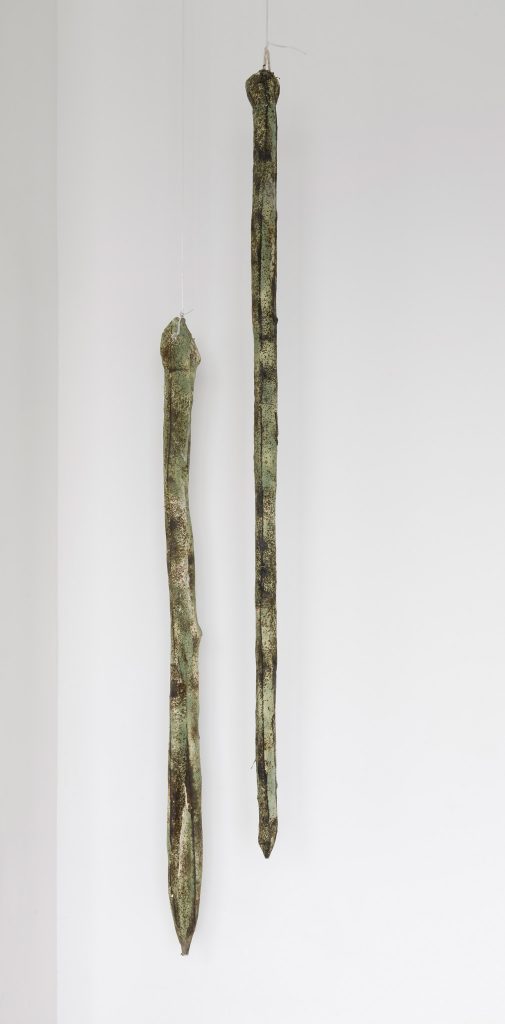
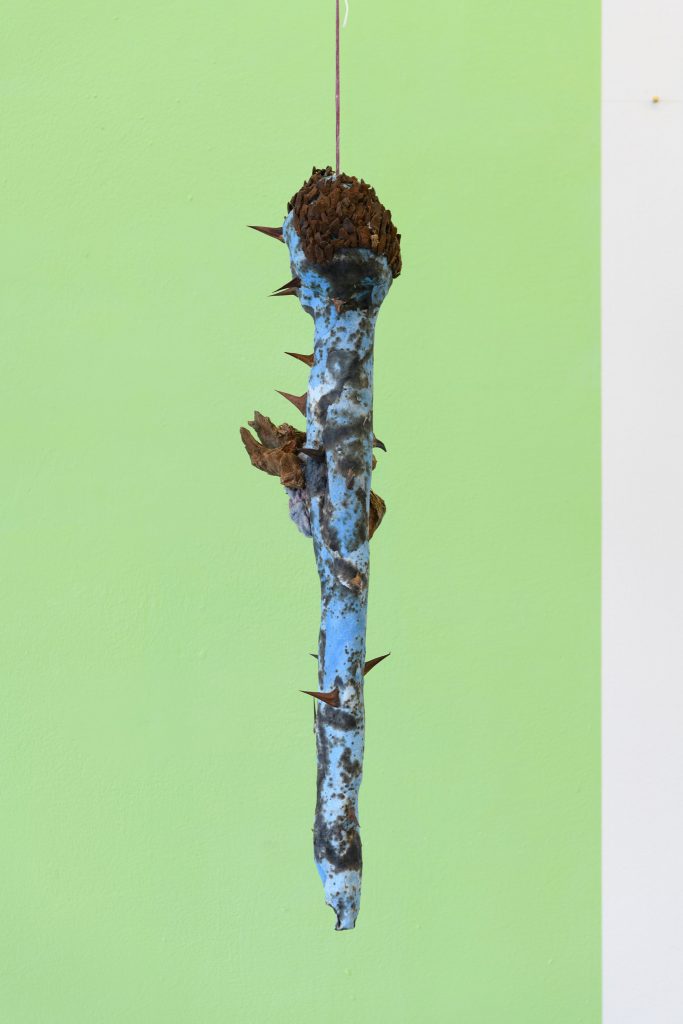
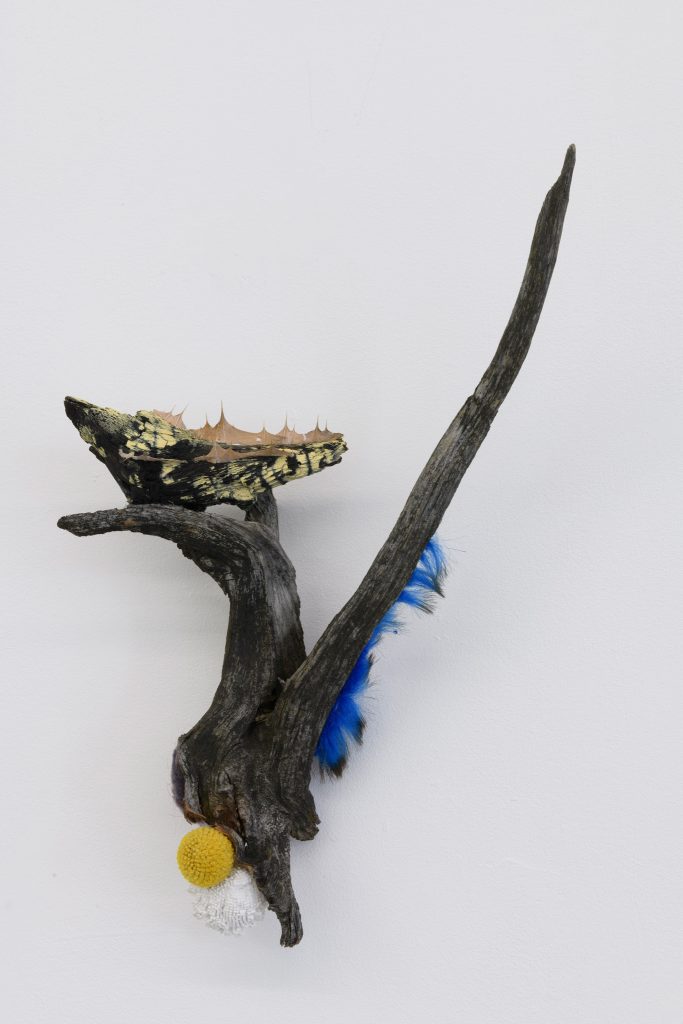
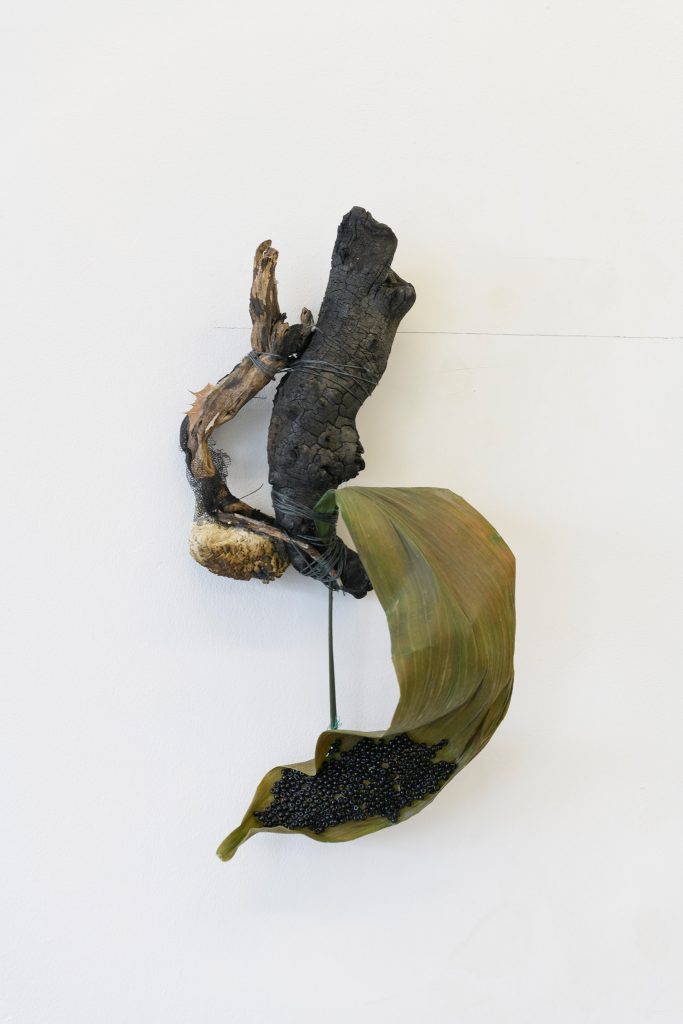
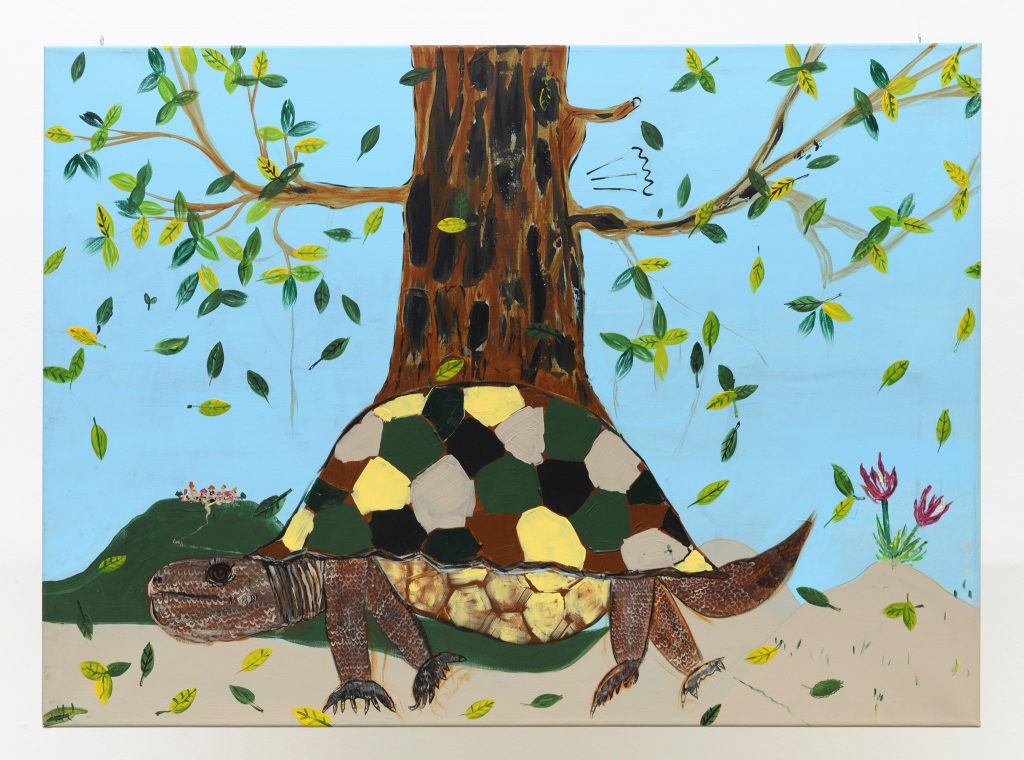
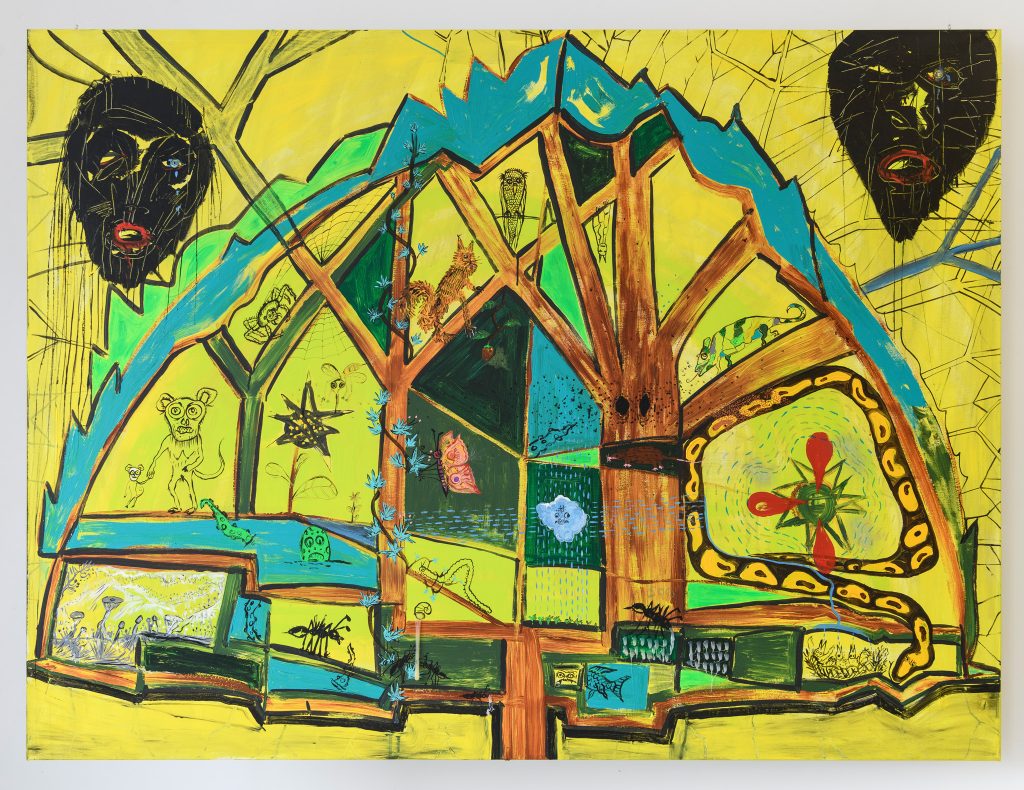
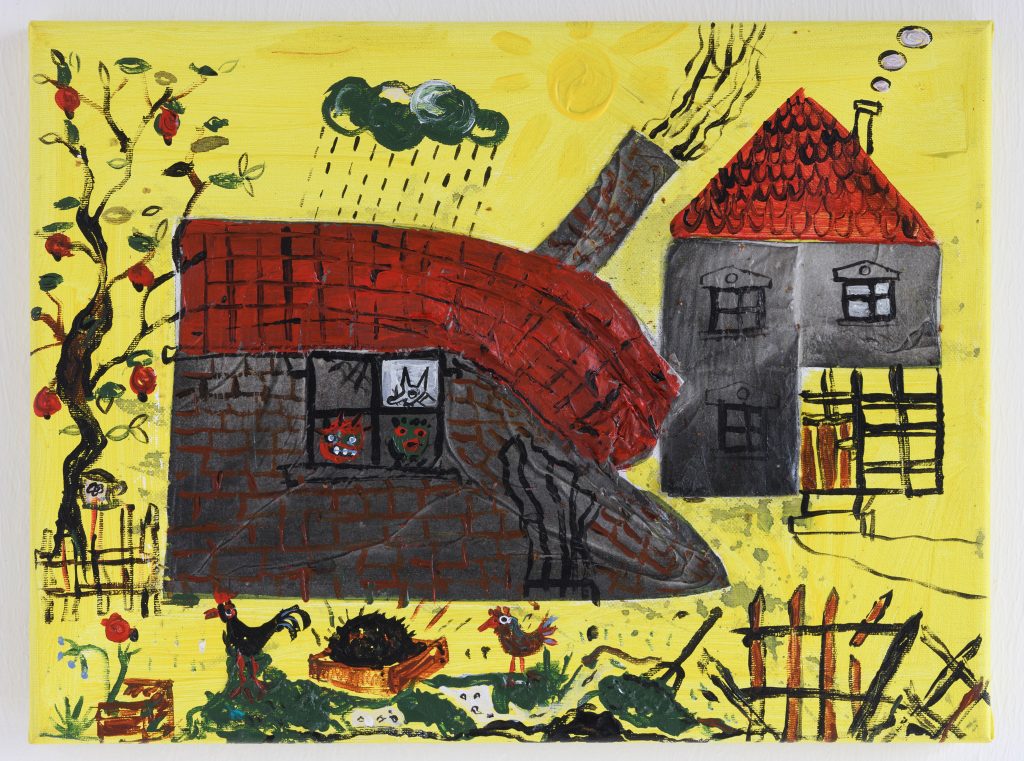
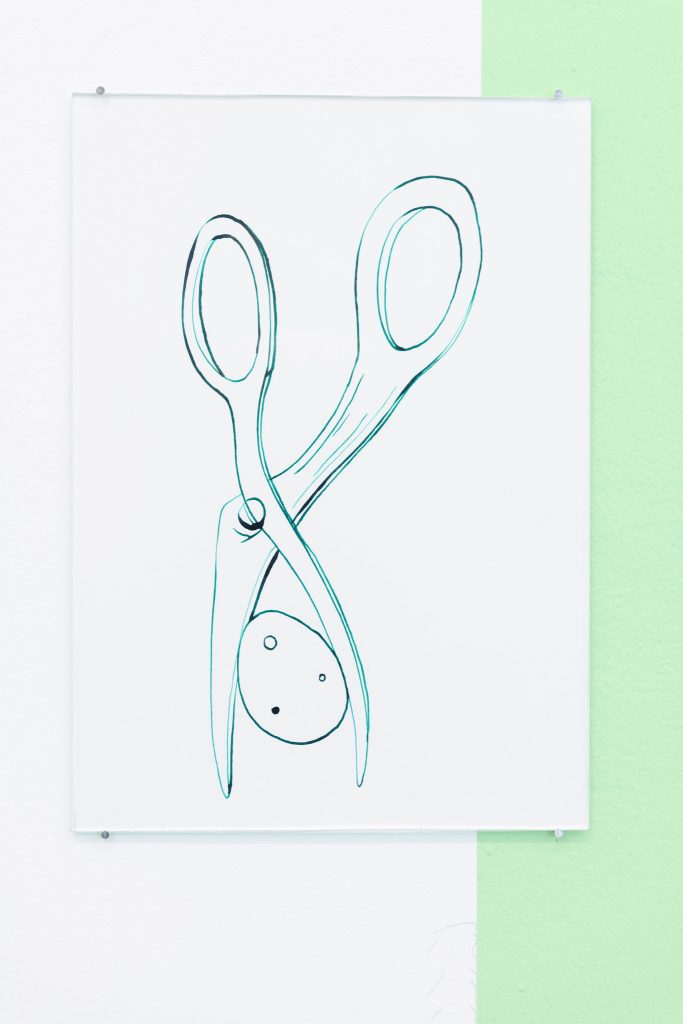
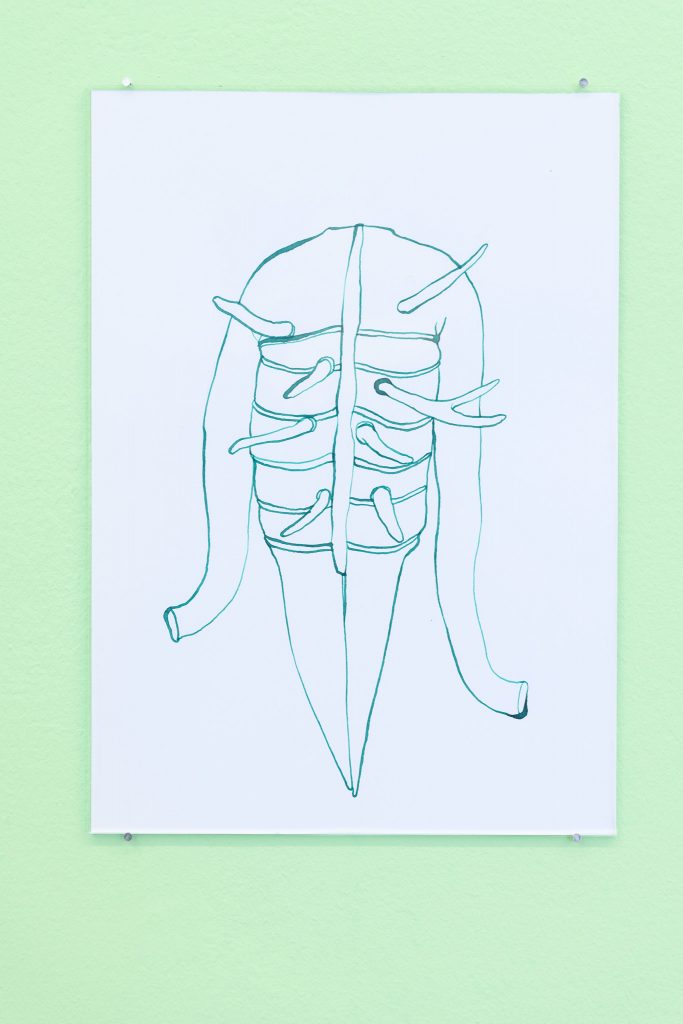
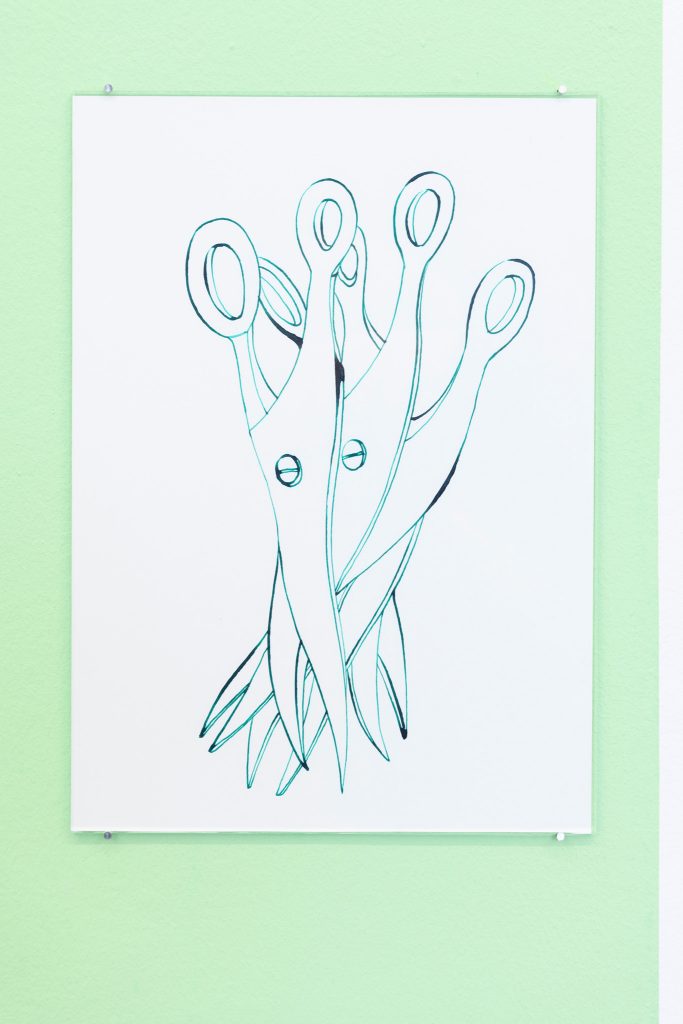
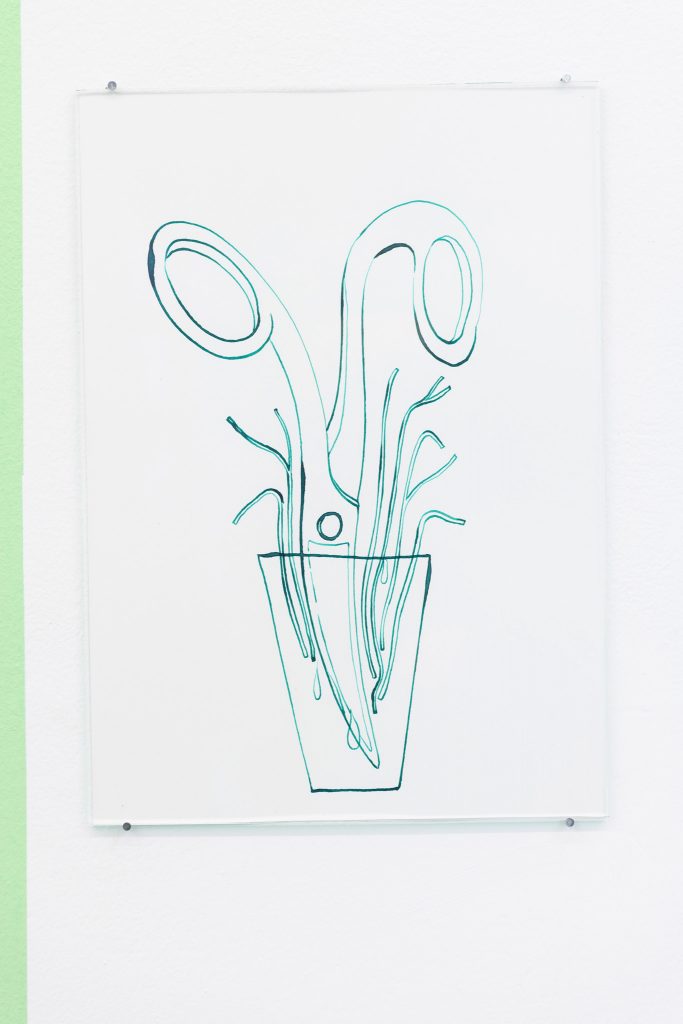
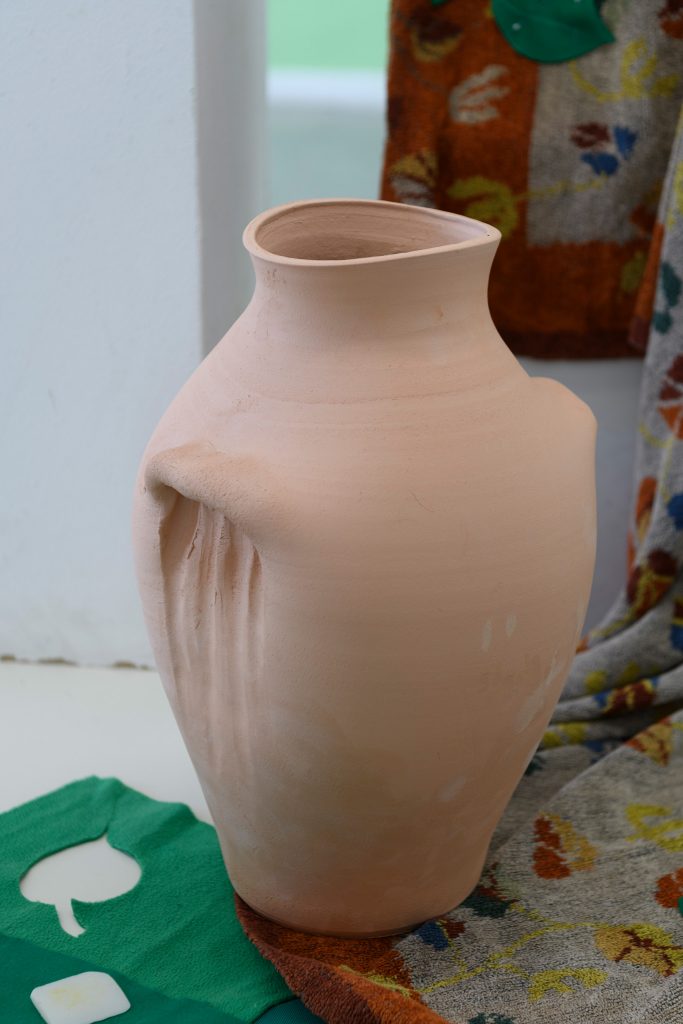
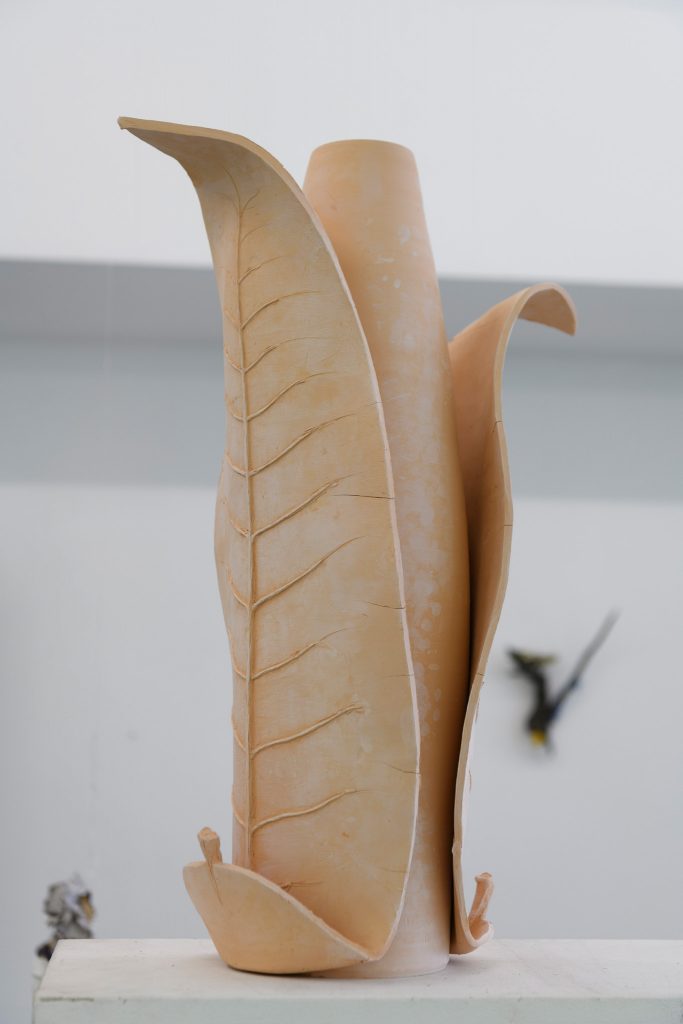
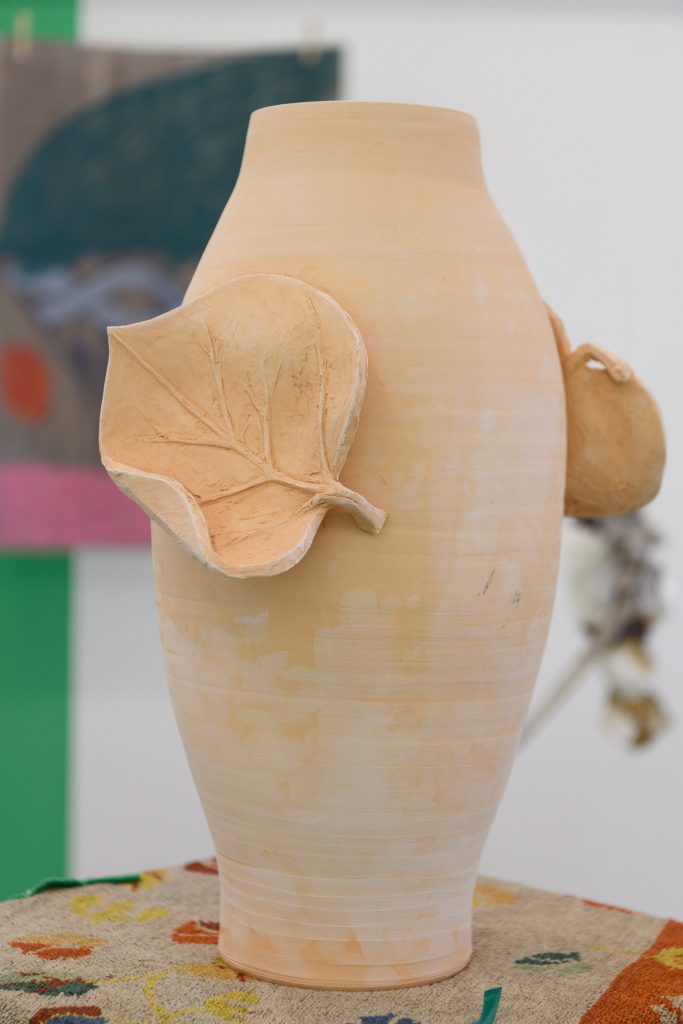
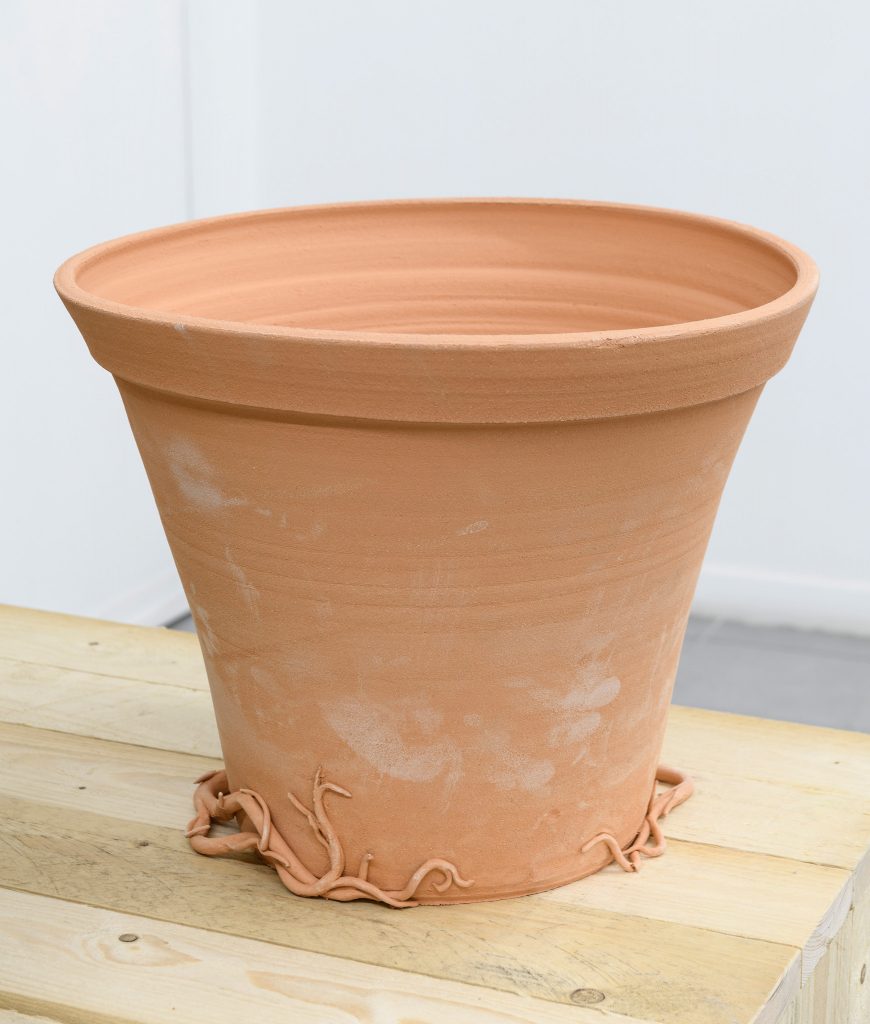
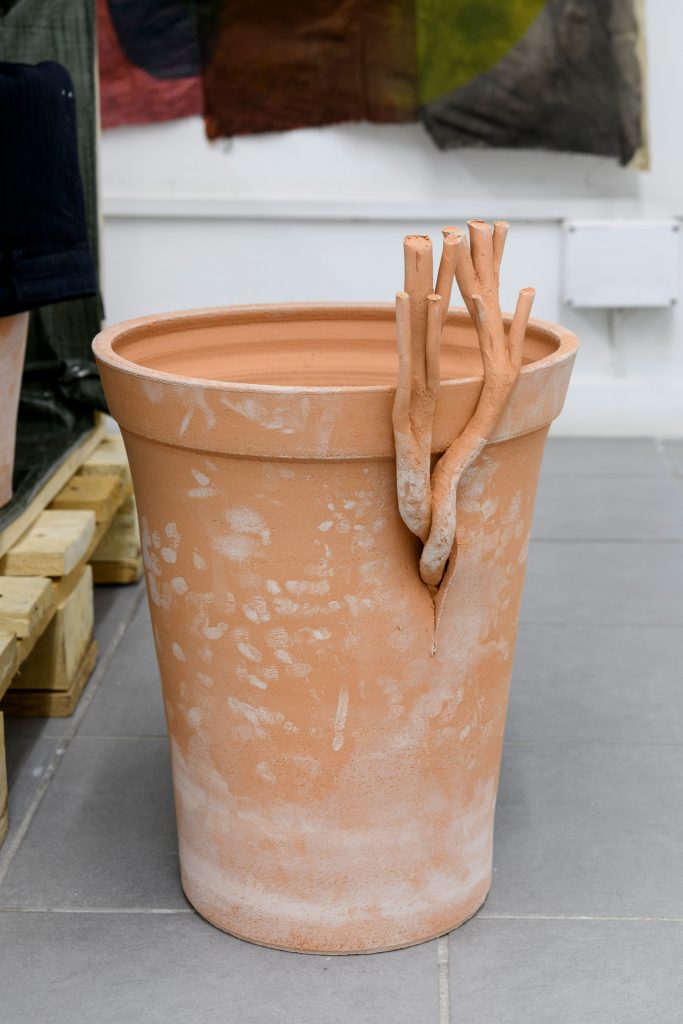
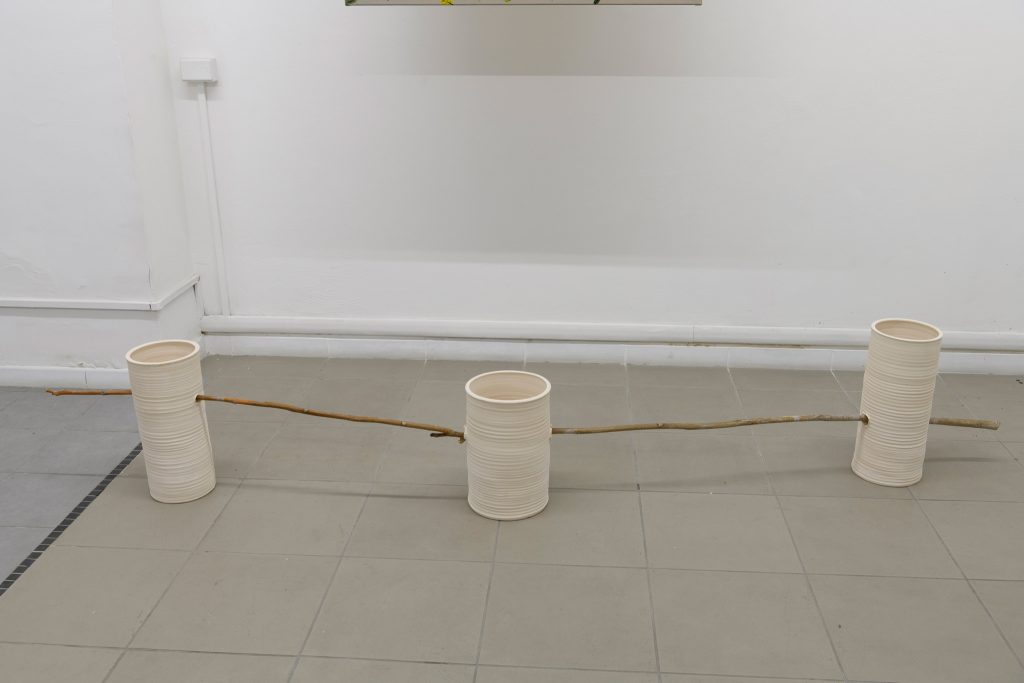
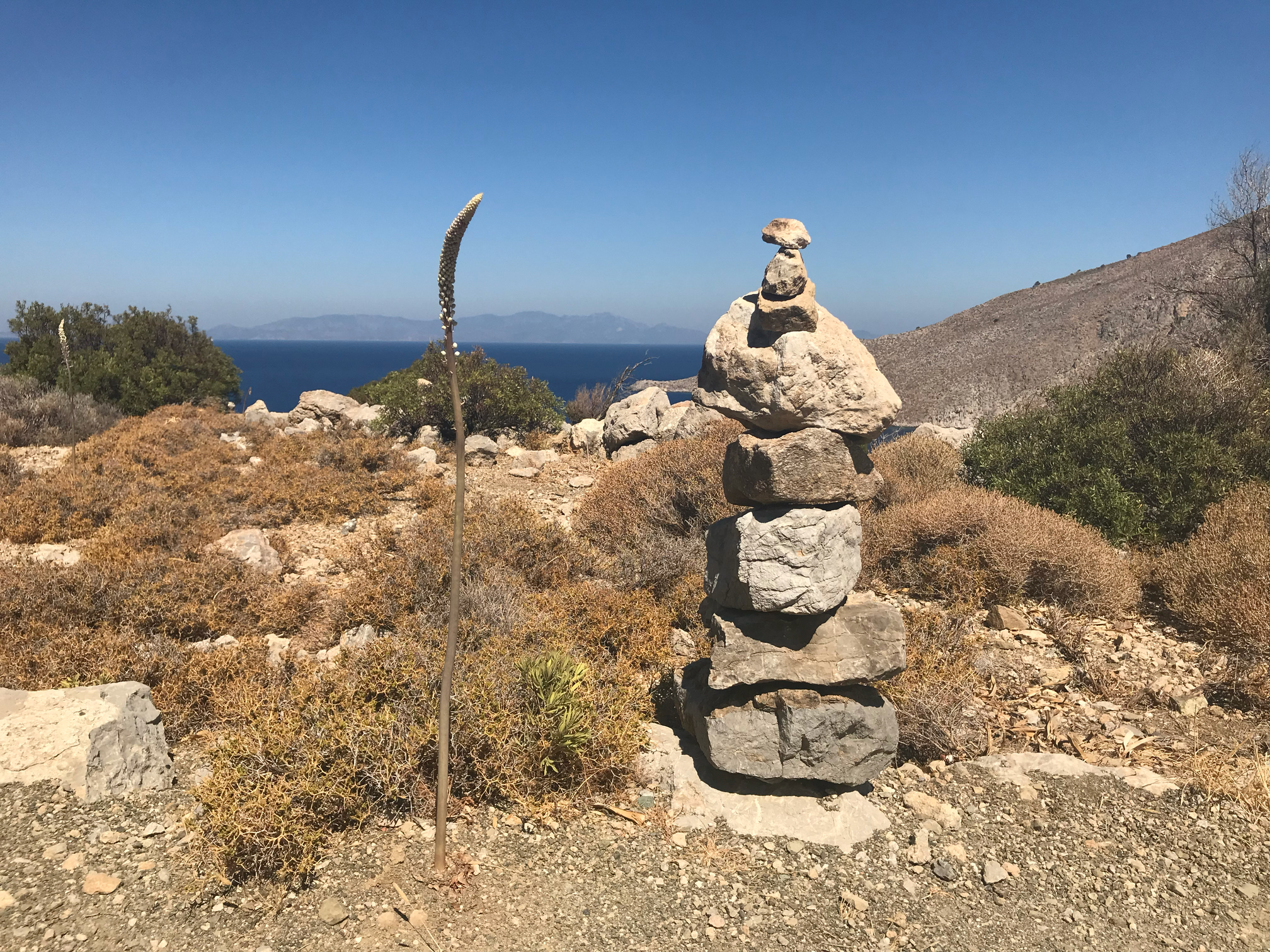
The title Tremit ante arescit is inspired by the scientific language of botany to highlight the fragility of the natural processes that the exhibiting artists draw from the life experience in the open spaces to transpose them within the gallery spaces. These are processes that typically in nature escape attention due to their ephemeral and swift character, to the lack of attention towards nature and, unfortunately, in many cases because of a misinterpreted and overwhelming sense of human centrality that too often has led to consider nature a resource to be exploited rather than being respected and protected. Only recently, and we hope it is not too late, we have begun to realize that the indiscriminate and senseless exploitation of the planet will result in the cutting of that branch on which the humanity is perched.

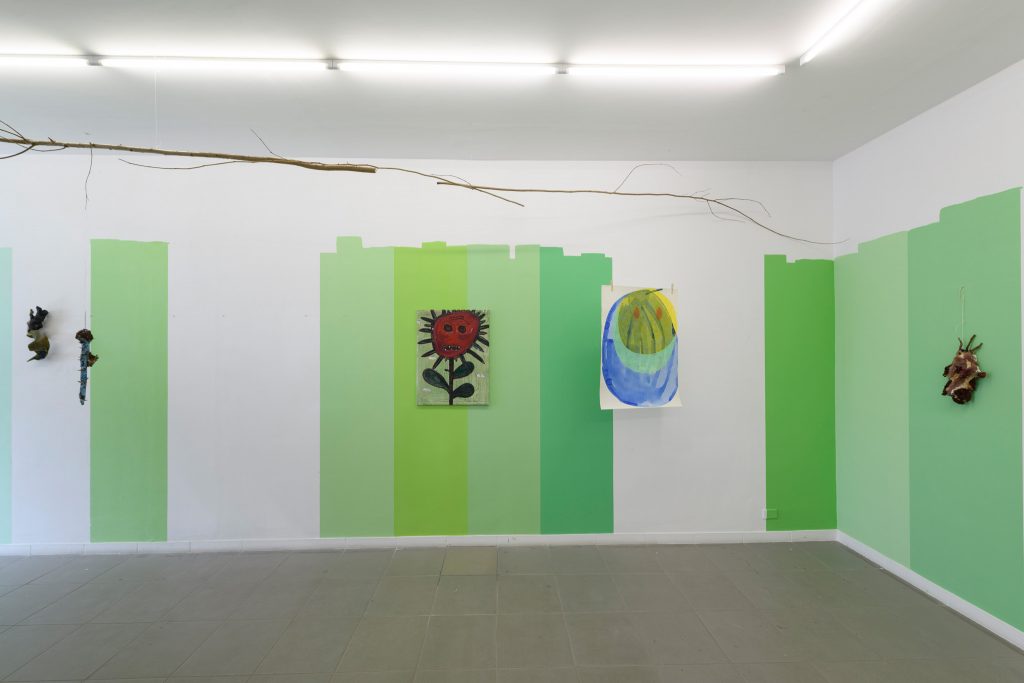
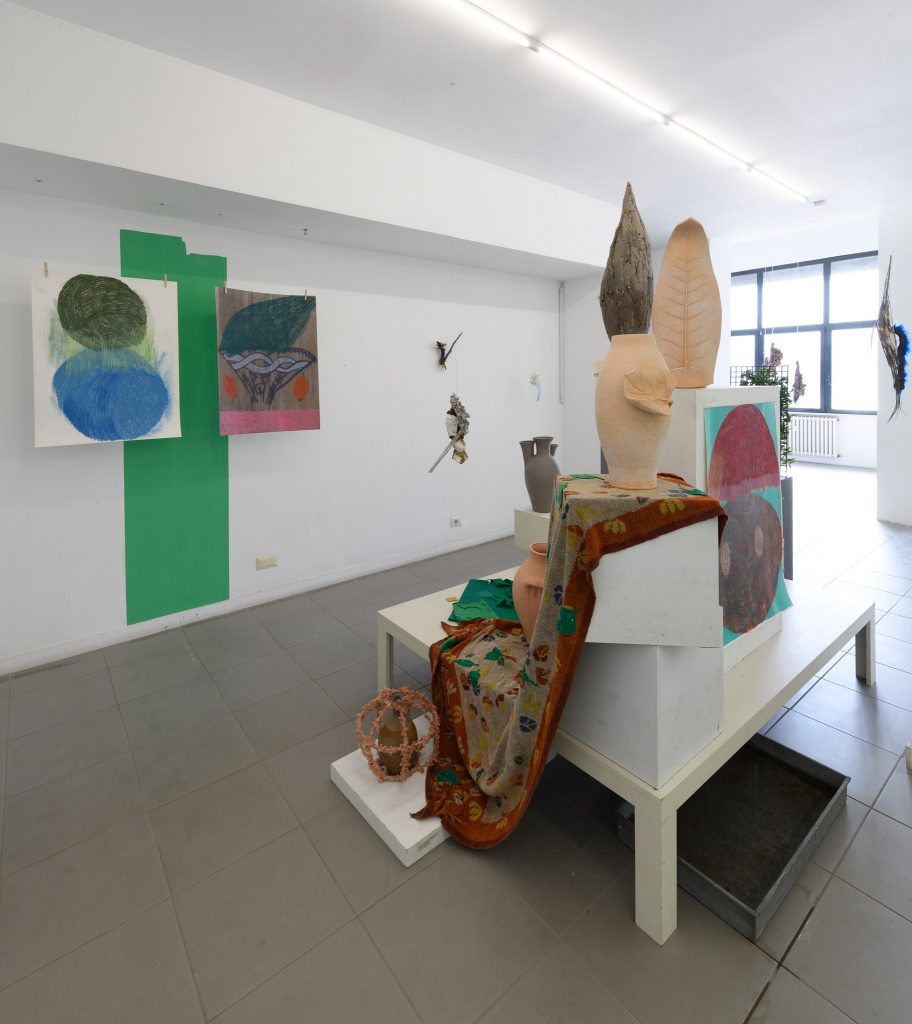
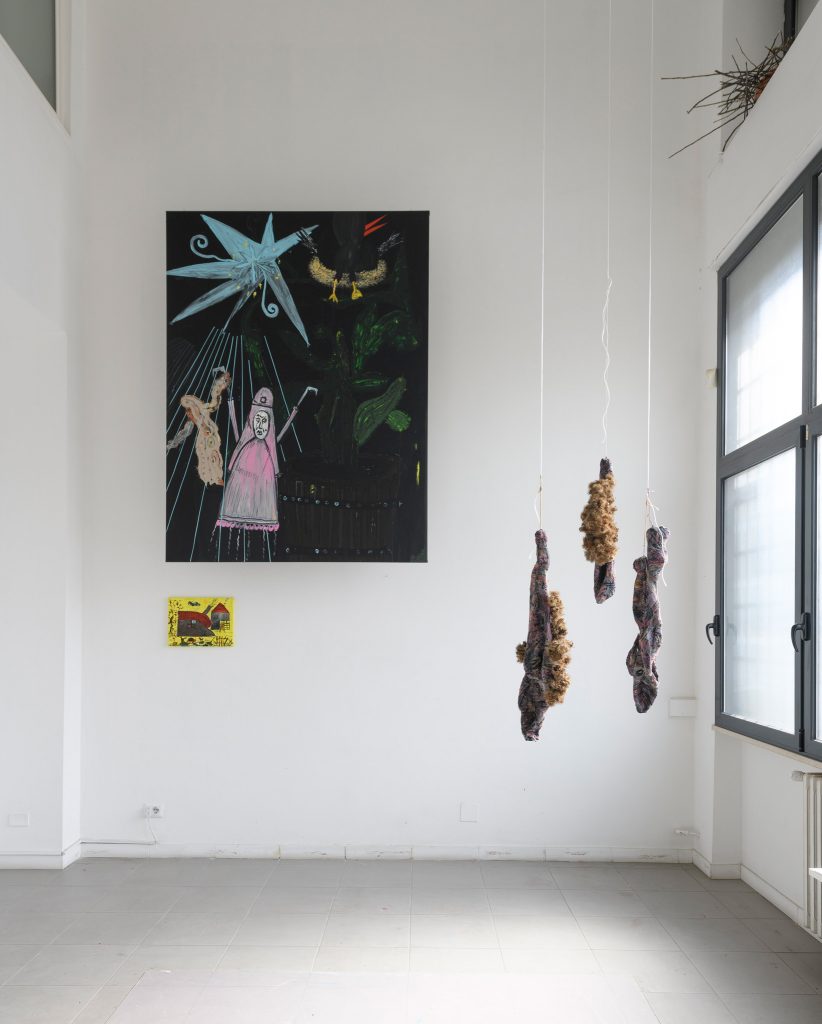
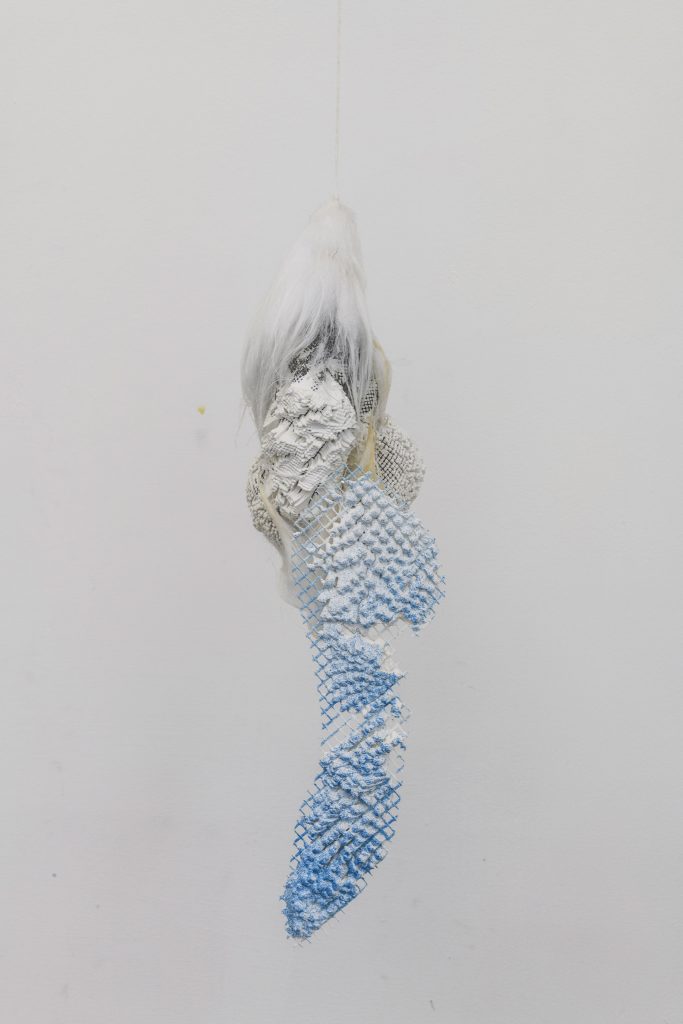
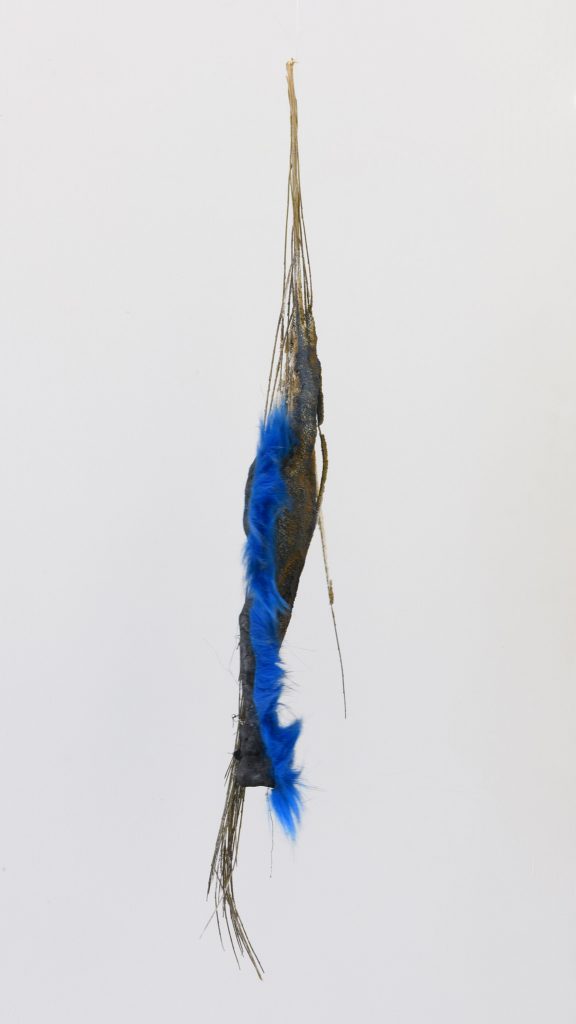
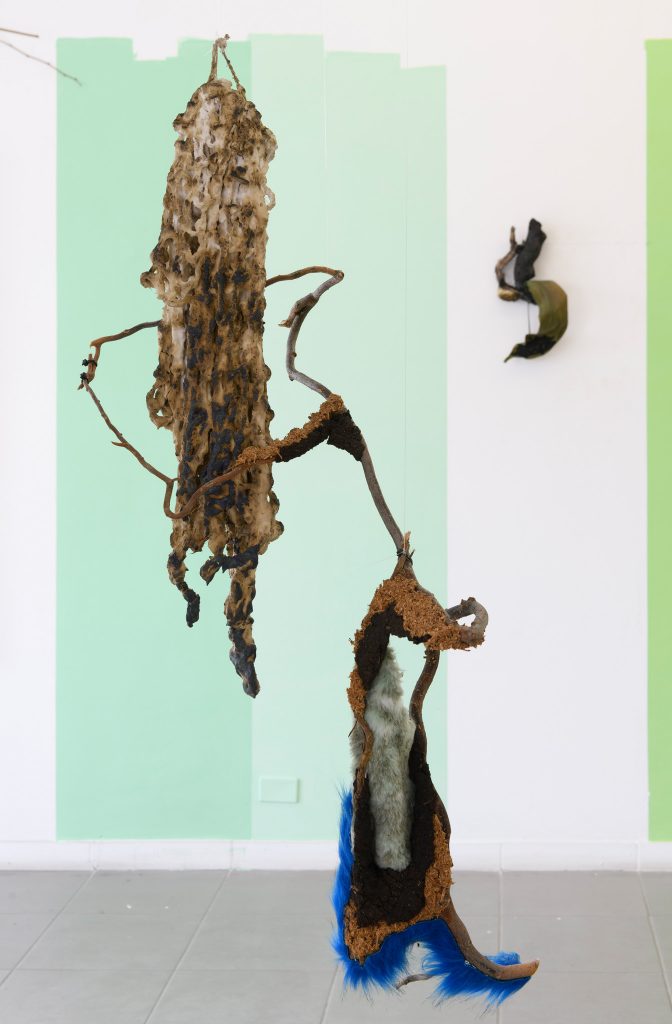
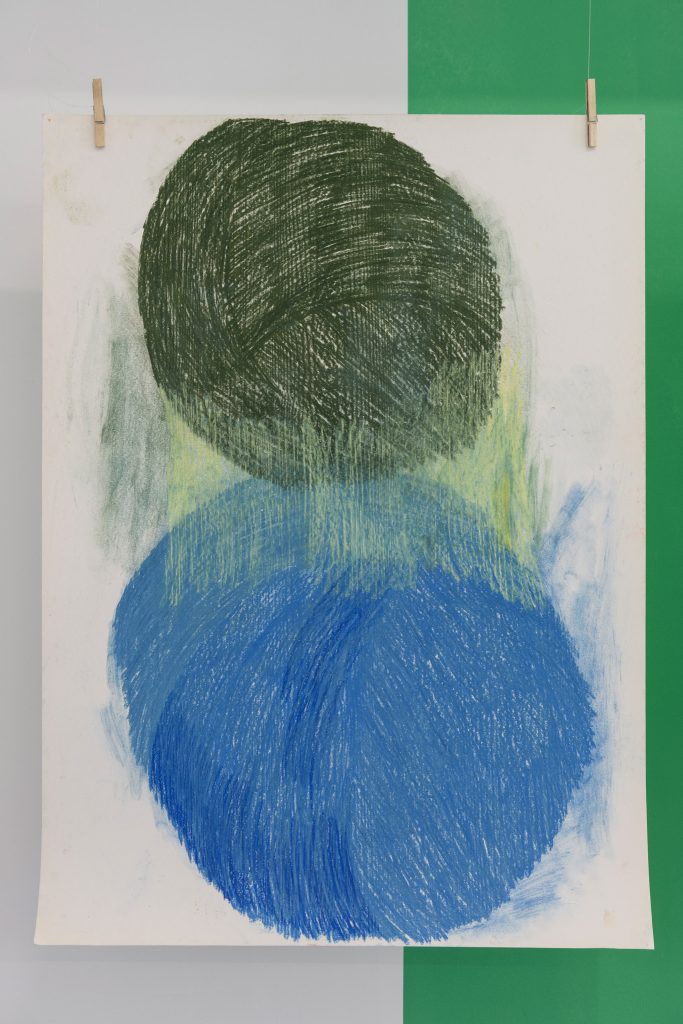
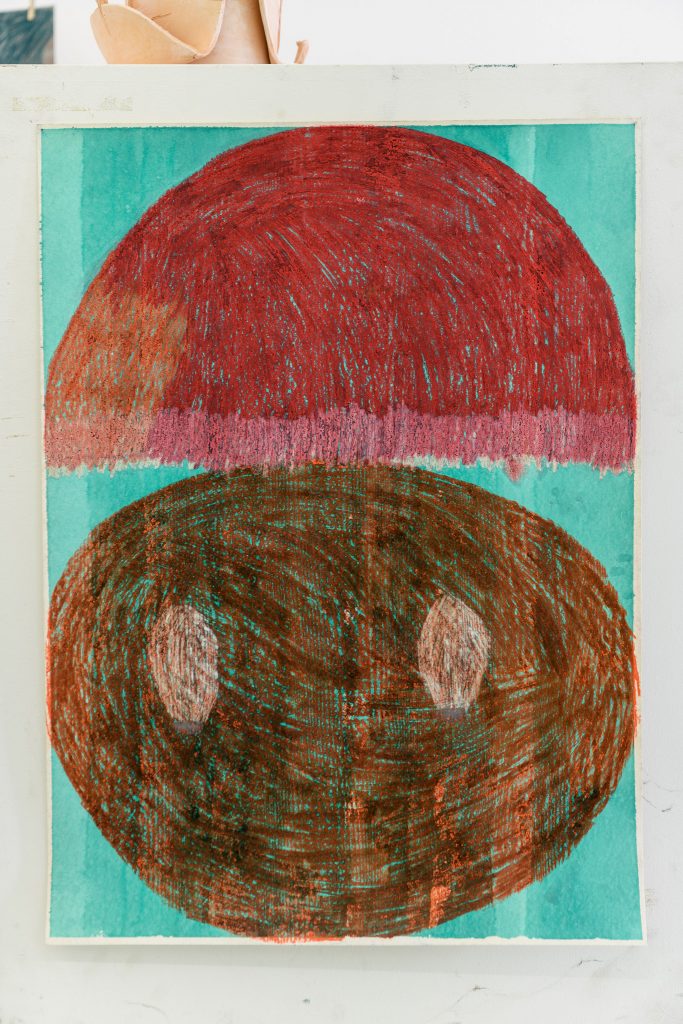
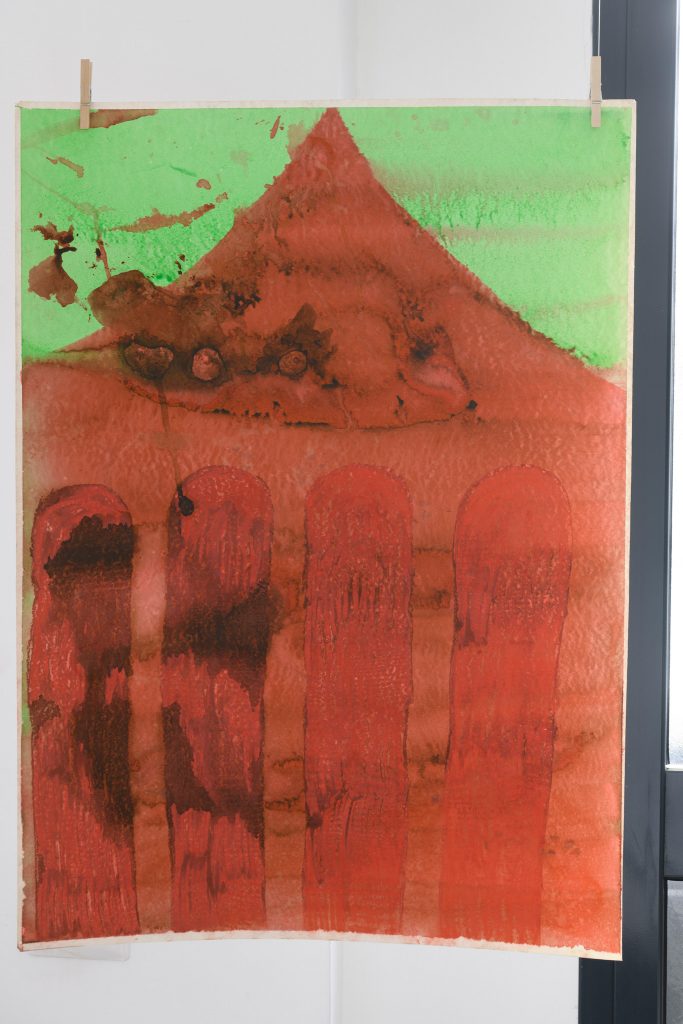
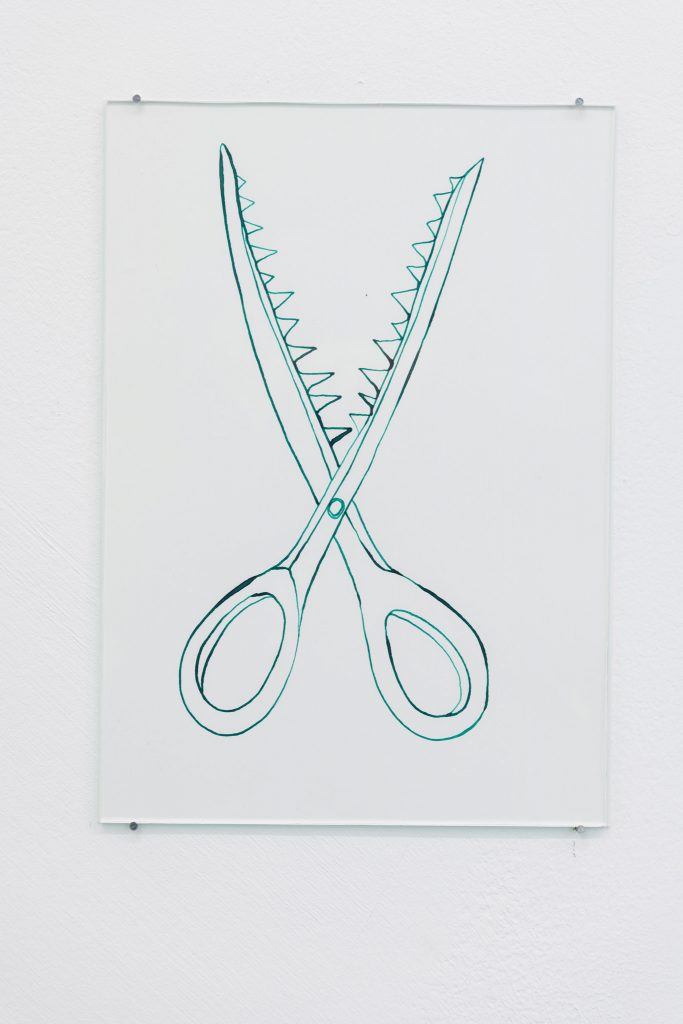
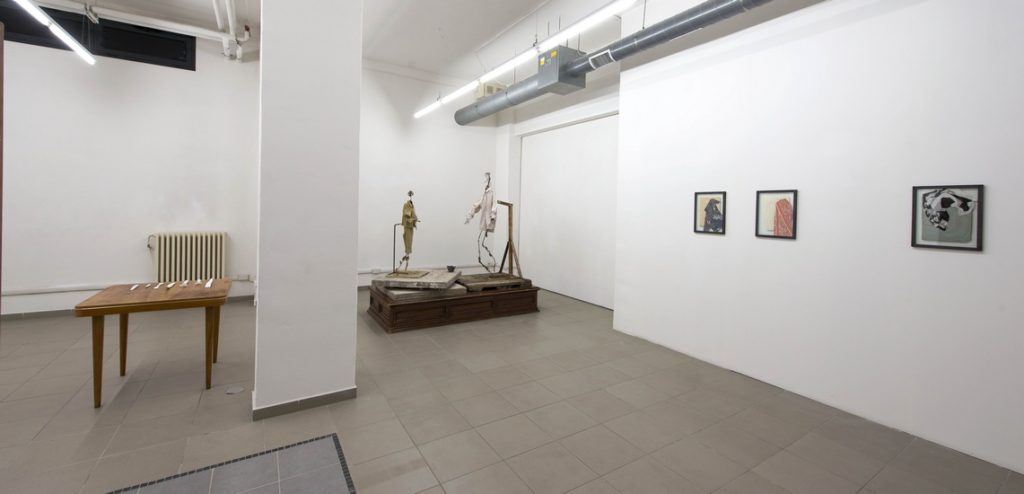
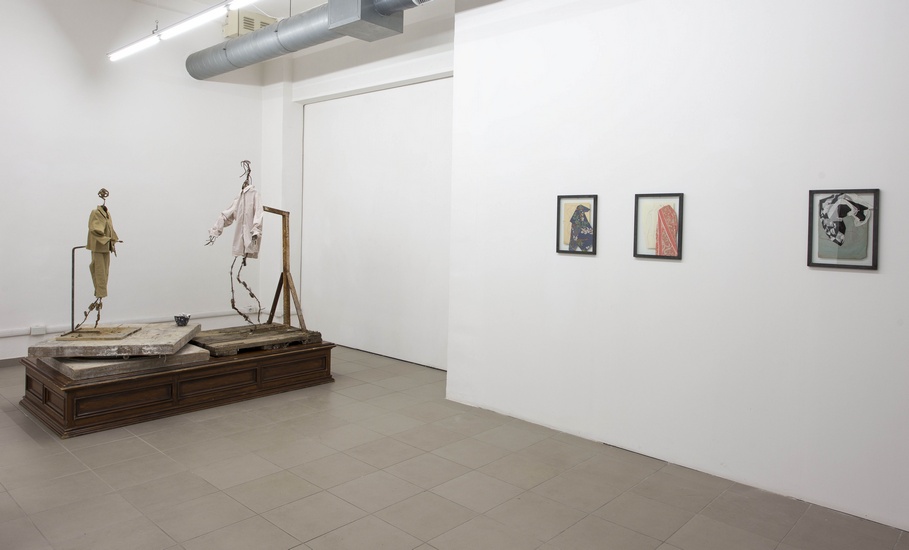
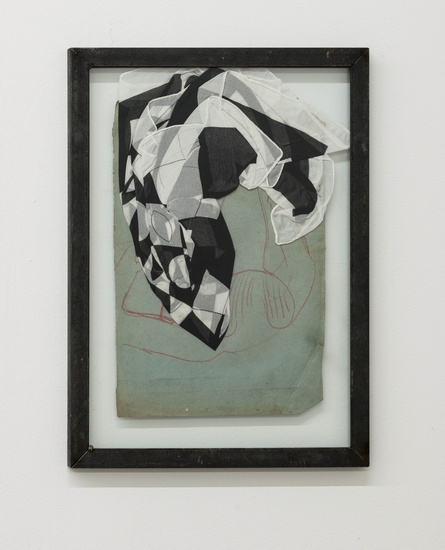
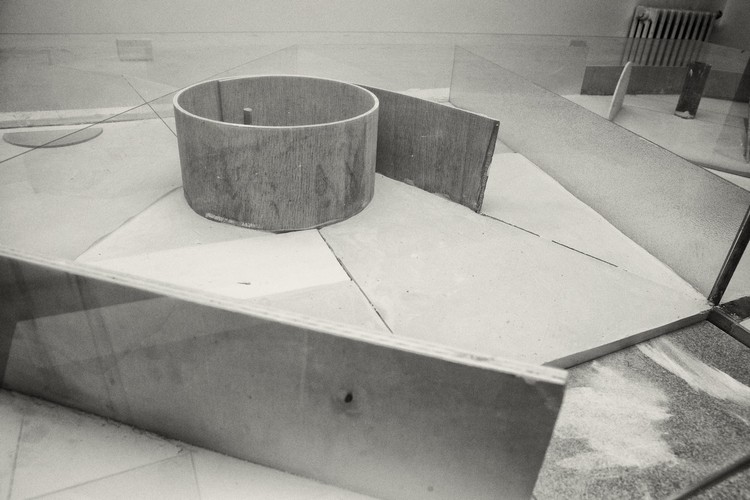
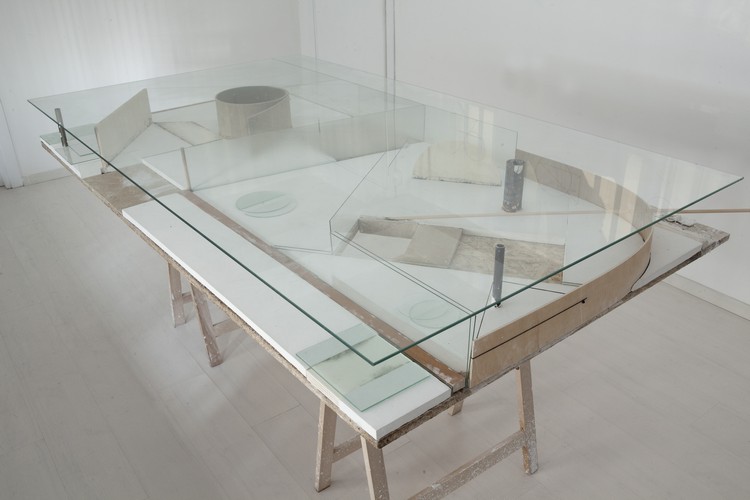
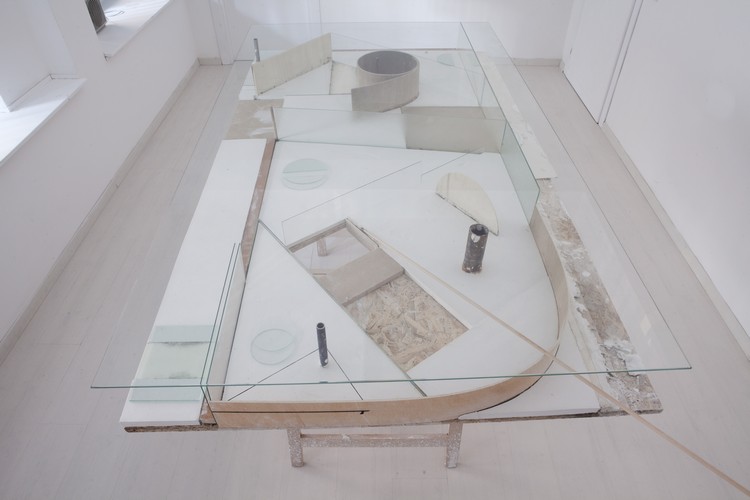
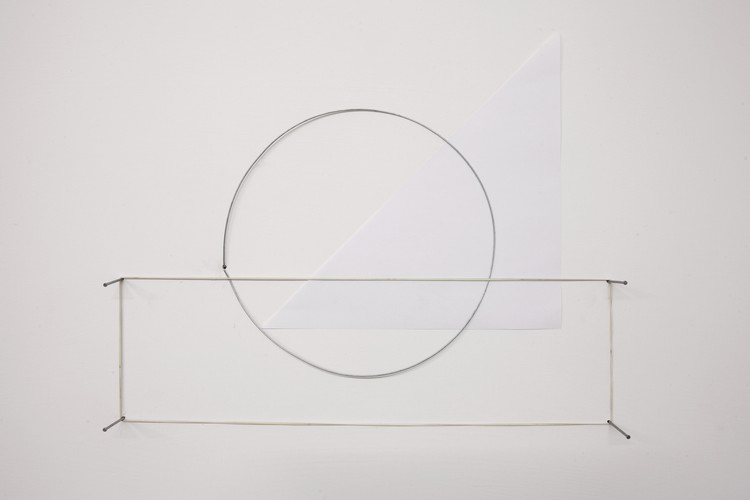
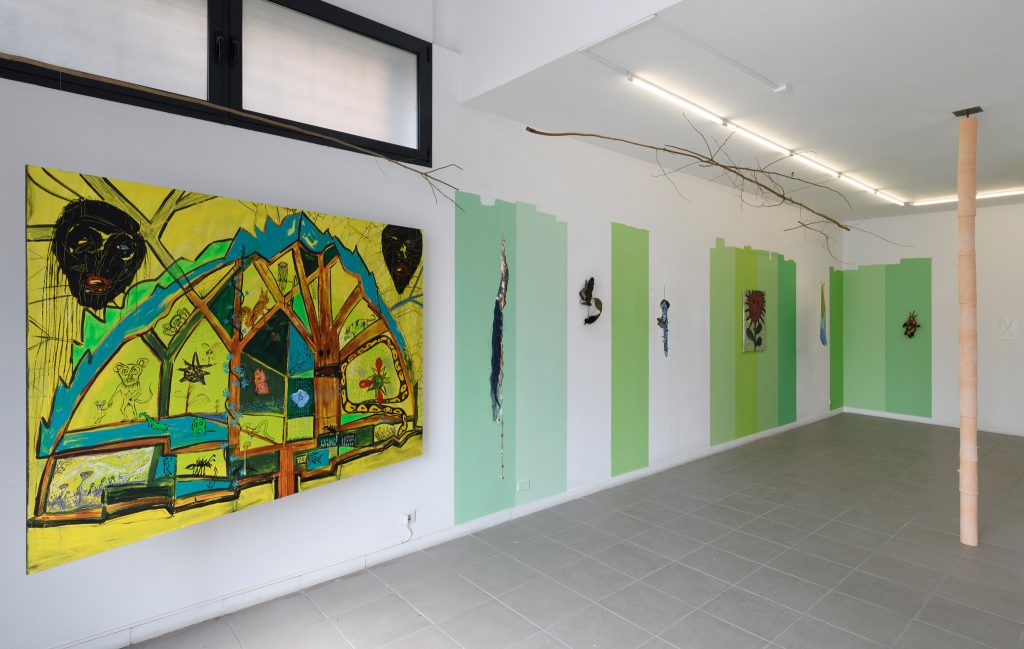
Anna Fiedlerová, Václav Girsa, Eva Koťátková, Jiří Kovanda, Dominik Lang and Anna Ročňová interpret the exhibit and the exhibition spaces as a choir where the different voices are modulated and coordinated to pursue a homogenous result. Drawing on the natural world, the artists (three women and three men) present their works like the petals of a single flower, placing their personal sensitivity in harmony with the cyclical patterns of nature, modulating them according to the dichotomies found in nature, starting from the dichotomy that counterposes growth to wilting.

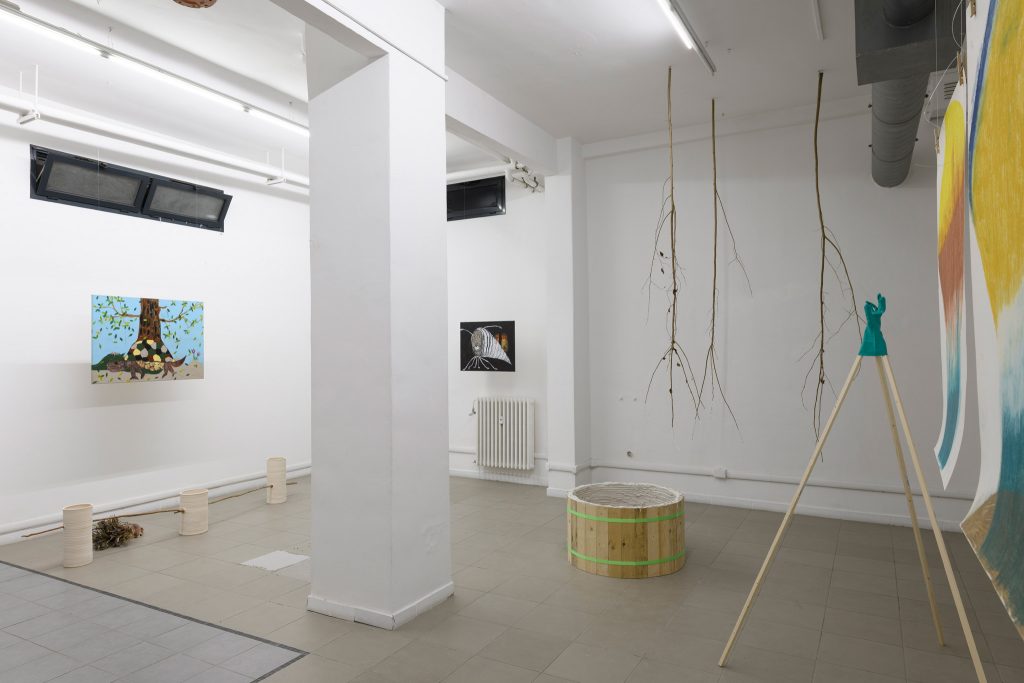
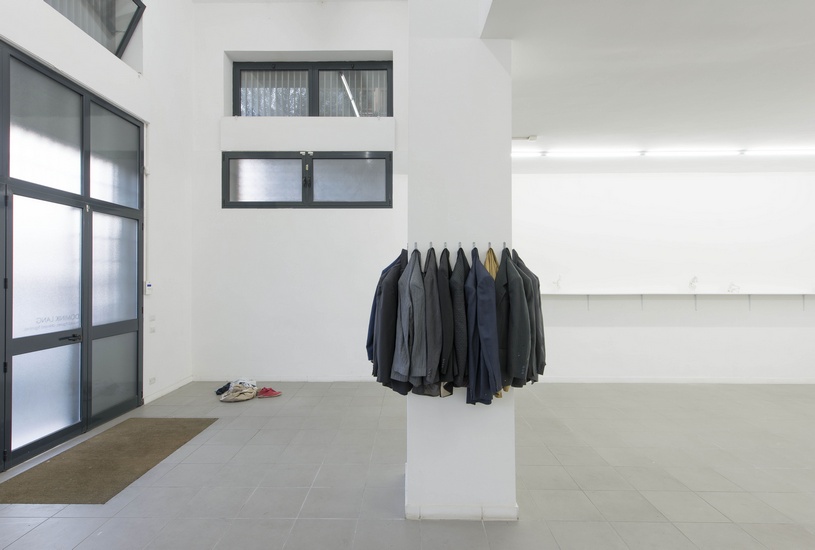
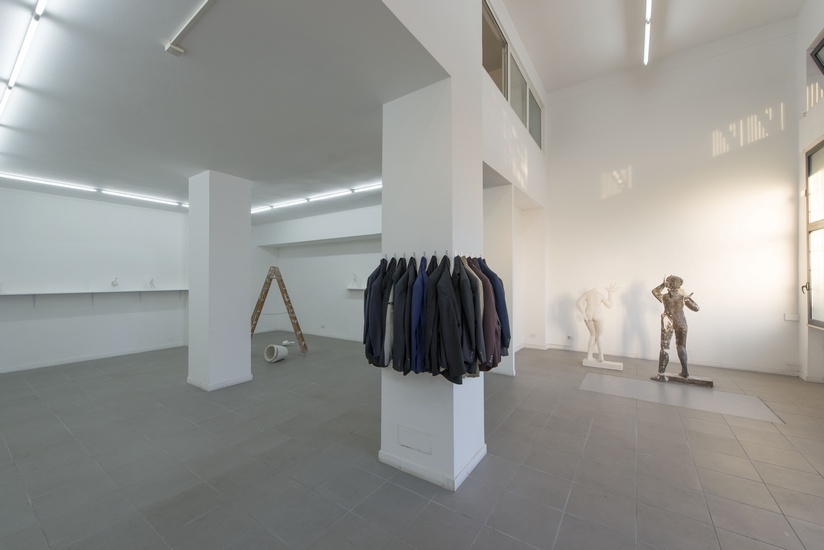
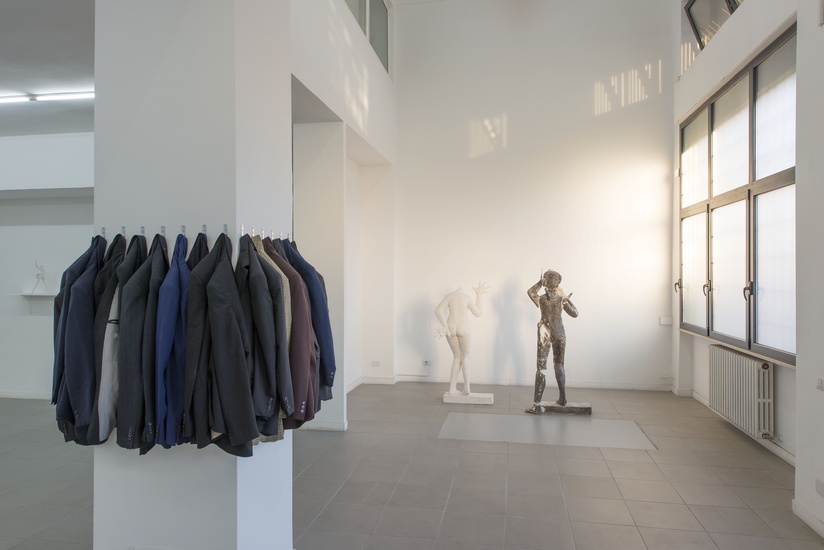
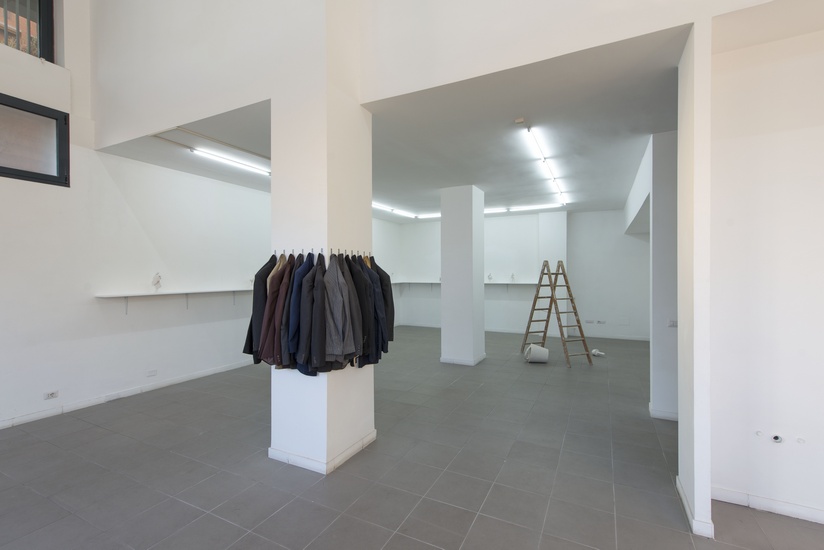
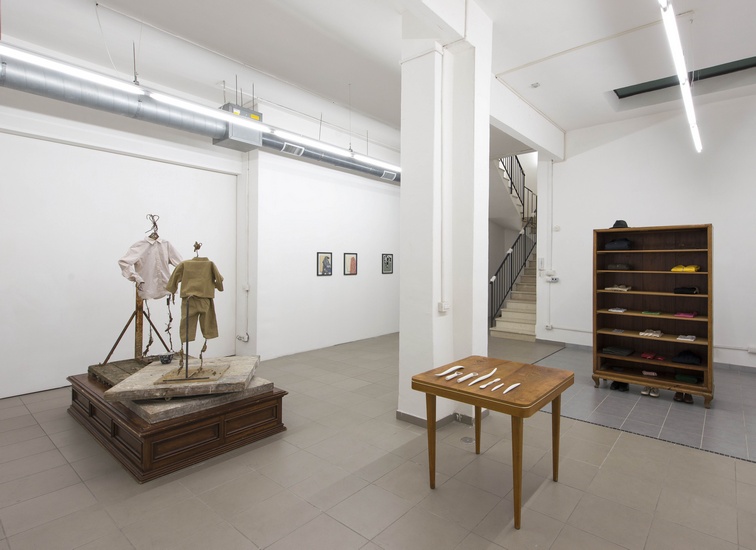
The staging of the exhibition conceived by Lang also contributes to interpreting it as an autonomous ecosystem, where the artworks are arranged so as to follow the architectural layout of the gallery on three floors: that is exactly what occurs when nature is not contaminated by the human constructions and spreads partly underground, partly on the earth, and partly over the earth.

In collaboration with Centro Ceco Rome.

Chiamato ad esporre per la terza volta negli spazi di The Gallery Apart, Dominik Lang decide di vestire i panni dell’architetto di mostre ideando un progetto site specific per la galleria e chiamando a farne parte artisti di differenti generazioni che da Praga, città in cui condividono la residenza, hanno innervato e continuano a vivacizzare la scena artistica internazionale.

Tremit ante arescit è il titolo declinato non a caso nella lingua scientifica della botanica per sottolineare la fragilità dei processi naturali che gli artisti in mostra traggono dall’esperienza di vita nei luoghi aperti per trasporli all’interno dello spazio della galleria. Sono processi che in natura di solito sfuggono all’attenzione dell’uomo, per il loro carattere effimero e veloce, per disattenzione ai temi della natura e in molti casi per un malinteso e purtroppo ormai soverchiante senso di centralità dell’uomo che ha troppo spesso portato a considerare la natura come una risorsa a disposizione, da sfruttare anziché rispettare. Solo da poco, e speriamo non troppo tardi, si è cominciato a comprendere che lo sfruttamento indiscriminato e insensato del pianeta corrisponde al taglio del ramo su cui l’umanità è seduta.

Anna Fiedlerová, Václav Girsa, Eva Koťátková, Jiří Kovanda, Dominik Lang e Anna Ročňová interpretano la mostra e i luoghi di esposizione come un coro dove le diverse voci sono modulate e coordinate per conseguire un risultato omogeneo. Ispirandosi al mondo naturale, gli artisti (tre donne e tre uomini) declinano i loro lavori come petali di un unico fiore, ponendo la loro sensibilità individuale in sintonia con la ciclicità della natura, modulandoli secondo dicotomie presenti in natura, a partire da quella che contrappone crescita e appassimento.

Anche l’allestimento ideato da Lang contribuisce alla lettura della mostra quale autonomo ecosistema, con la disposizione delle opere che segue l’andamento architettonico della galleria disposta su tre piani: esattamente come accade quando la natura non è contaminata dalle costruzioni dell’uomo e si dispone in parte sottoterra, In parte sulla terra e in parte al di sopra della terra.

In collaborazione con Centro Ceco Roma.

Naked Figures, Dressed Figures

Dominik Lang

09.10.2015 – 05.12.2015

Exhibition Views

Works

The Gallery Apart is proud to present the second solo exhibition by Dominik Lang, who two years ago inaugurated the current gallery space in the Ostiense neighborhood with a monumental work that beautifully captured and exalted the internal geometries of the gallery architecture, thanks to a language and to a research committed to the interpretation of space and time through works always physically framed in a given context and evocative of experiences and personalities from the past. Arrived in Rome on the wave of the great success of The Sleeping City, the large-scale installation presented in the Czech and Slovak Pavilion during the 54th Venice Biennale, between the first and the second Roman shows Lang debuted an impressive series of exhibitions in well-known public and private institutions worldwide, such as the solo shows hosted at the National Gallery in Prague, at the MUMA in Melbourne, at INHOTIM’s Galeria Lago in Belo Horizonte, at the Czech Center New York, at the Kunsthaus Dresden.
Naked Figures, Dressed Figurines
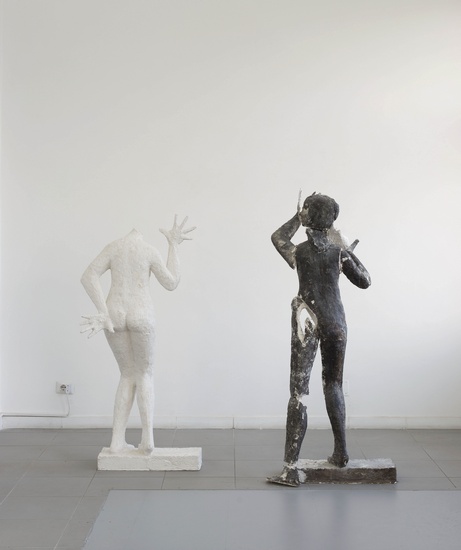
 – the title of the exhibition – suggests a new slight, though meaningful, shifting of the centre of gravity in the artist’s interest. In Lang’s works, the human figure has always been the main element around which the context revolves. The relationship between man and surrounding space, built or evoked through unsettling architectural modifications, and the relationship between man and time, through the ideal, and at times even factual, reference to the artworks of predecessor artists, find new life in a research that this time  investigates the  relationship between man, as sculpted figure, and the artist himself. The field of investigation, so universal but also so intimate, drives Lang to consider and therefore to use once again the sculptures of his late father artist Jirí Lang (1927–1996), with an approach to the sculpted figure that highlights the theme of the exhibition, which is the relationship between the model and its representation, between sculpture and space, between the art-making process and the artist.
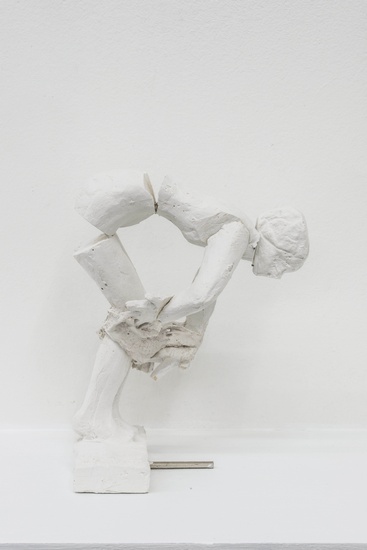
Dominik Lang develops the theme by interconnecting the sculptures  with each other, working on the idea of copy and playing with scale representations, skillfully manipulating the humane figure through interventions of segmentation and fragmentation, providing the viewer with the perception of new coordinates and never-seen-before compositions, presenting sculptures related to different  phases of the creative process. Aim of the artist is to create and show a whole range of figures which as duplicates draw life from the  real model, wherefrom the creative process started to the formless and abstract mass of clay, through a series of sculpted figures that seem to return to the real original model.
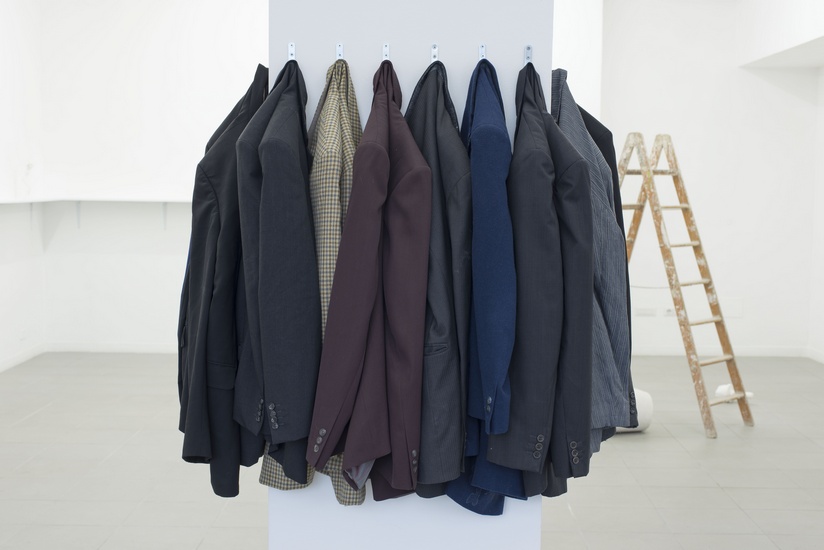
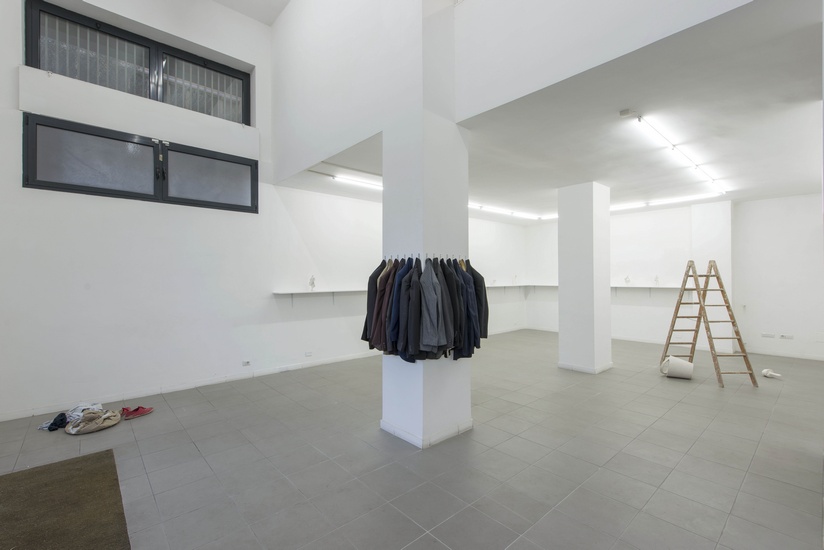
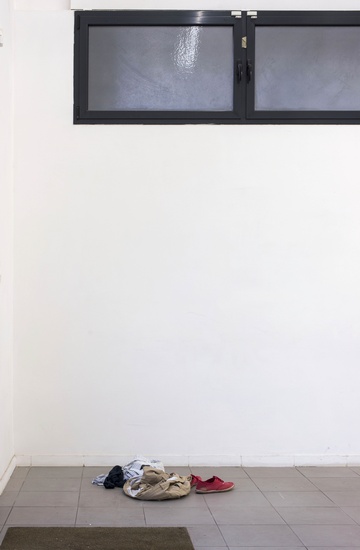
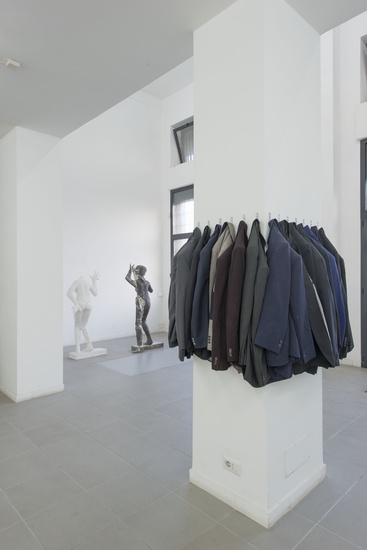
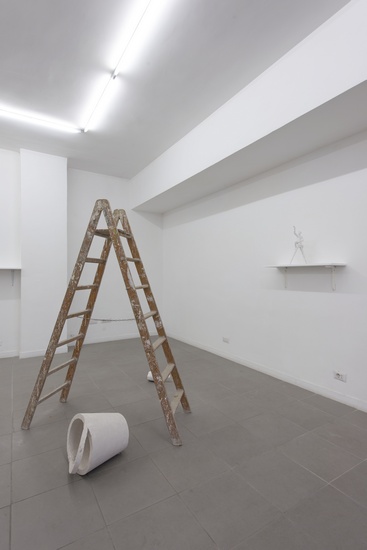
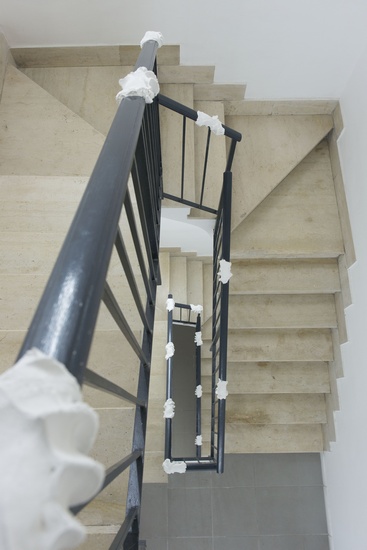
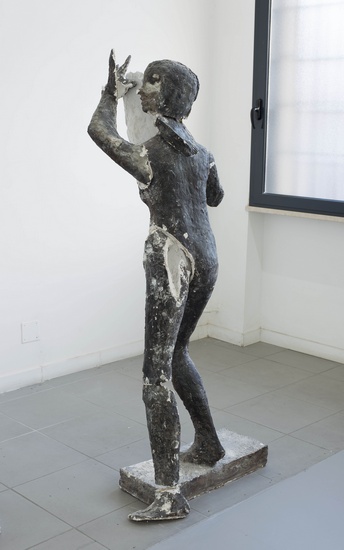
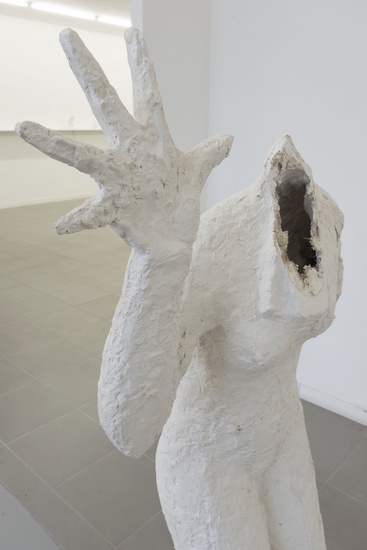
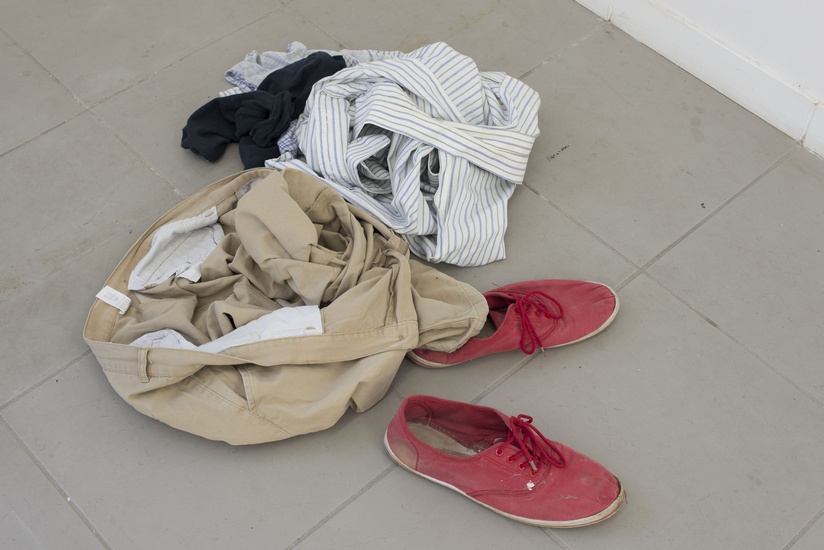
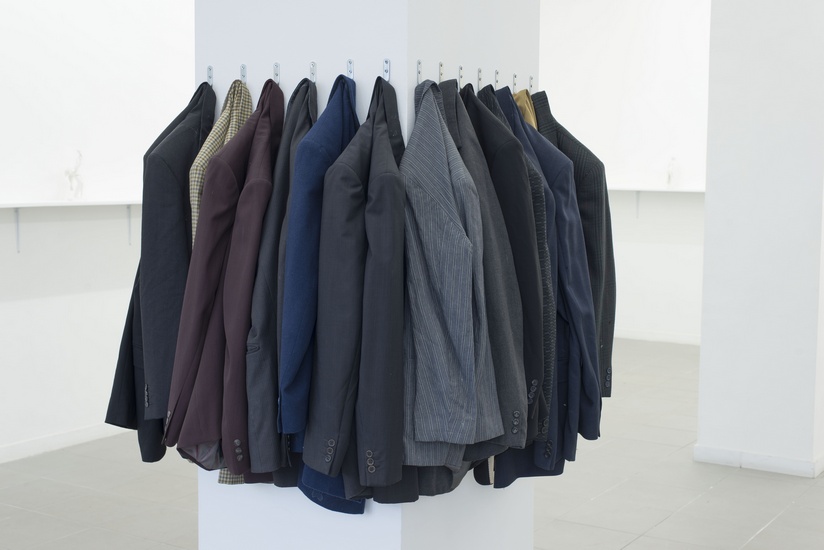
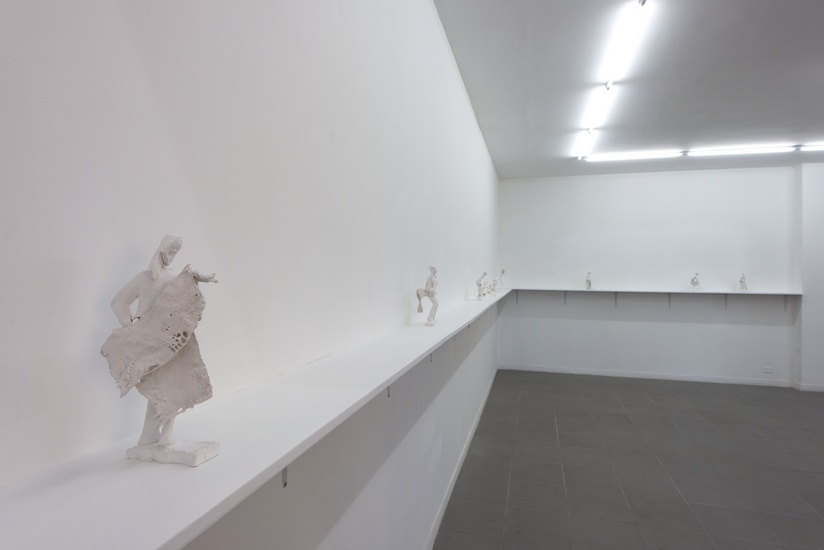
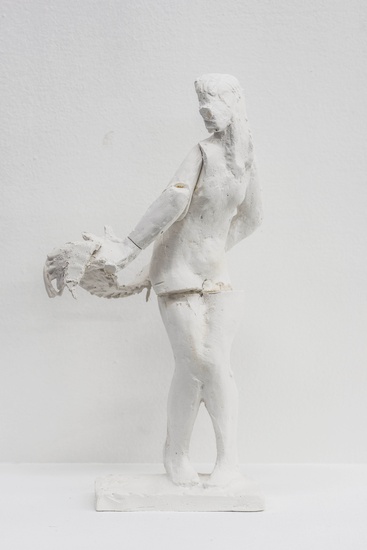
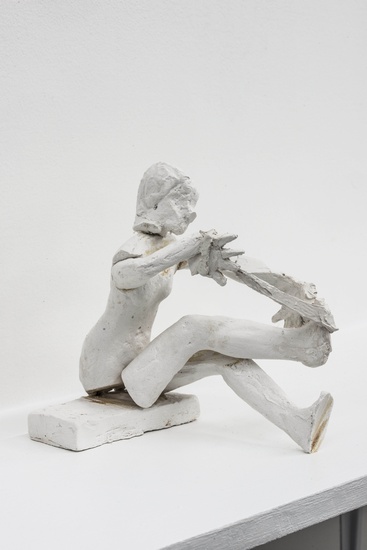
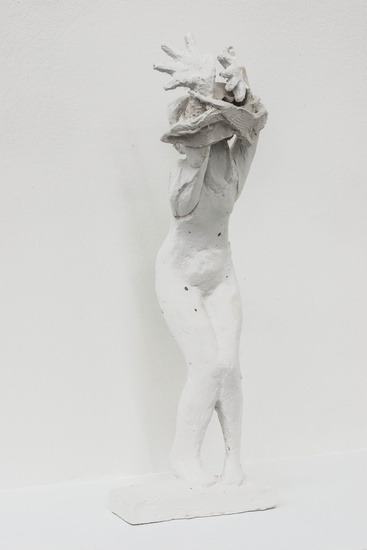
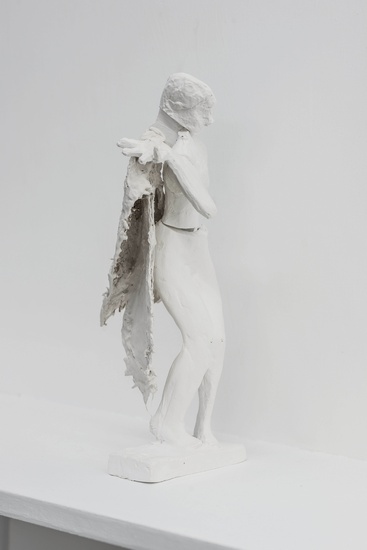
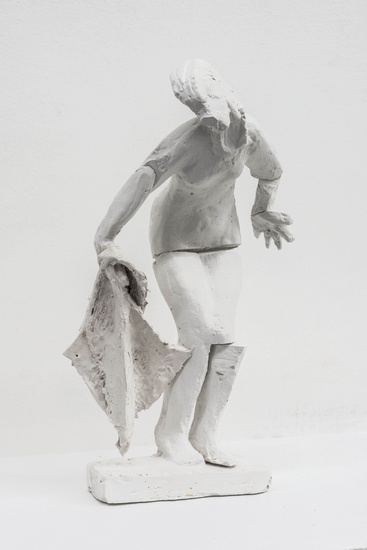
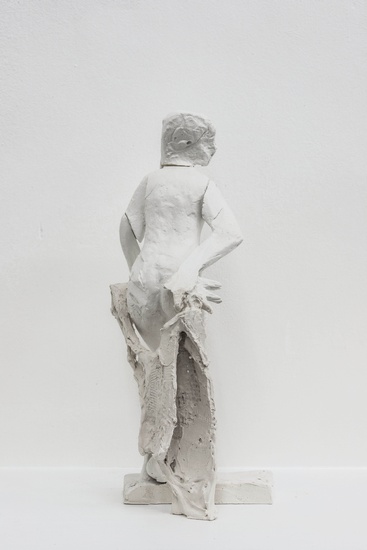
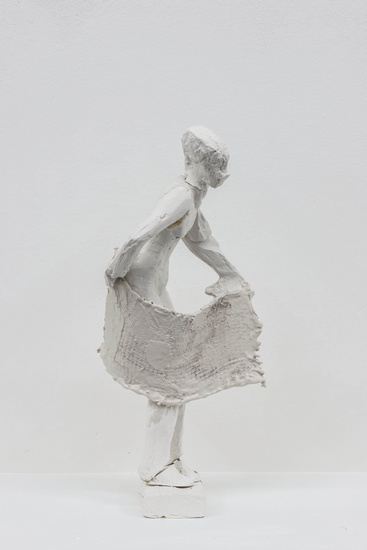
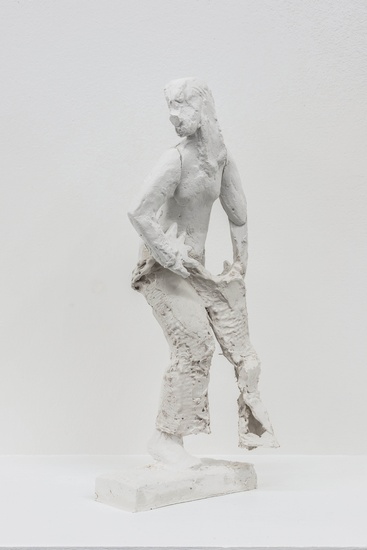
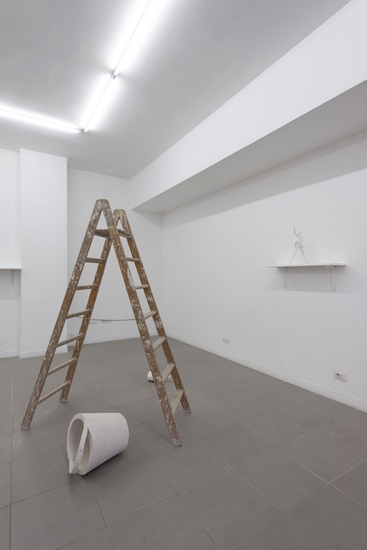
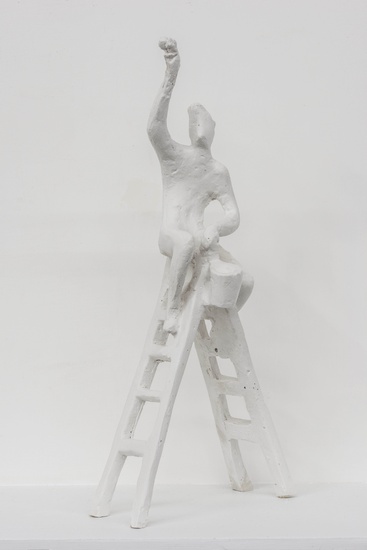
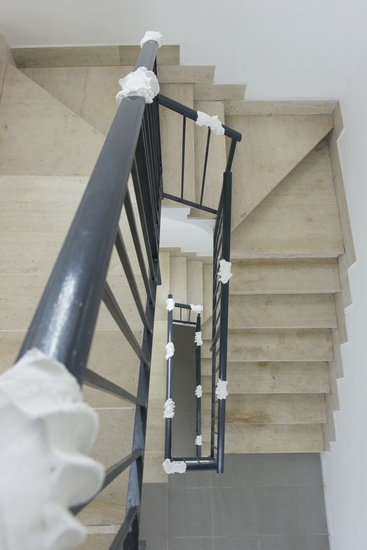
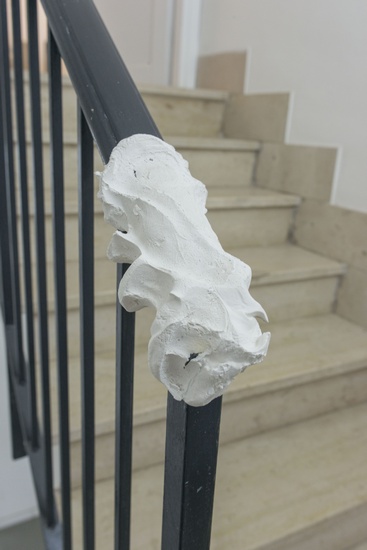
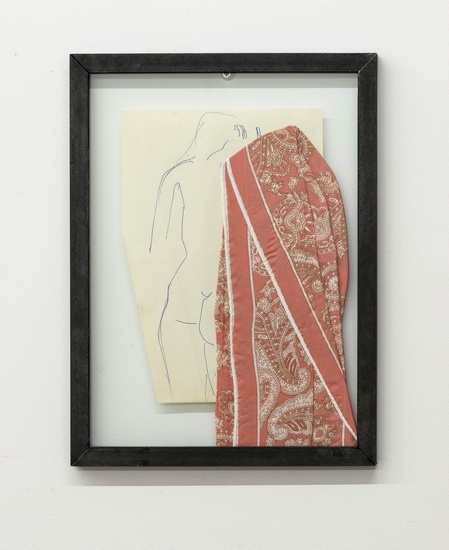
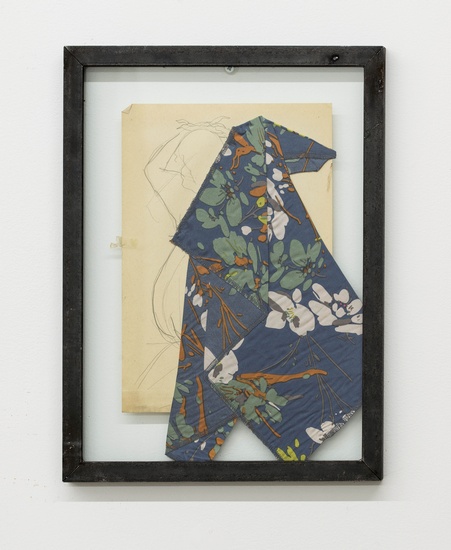
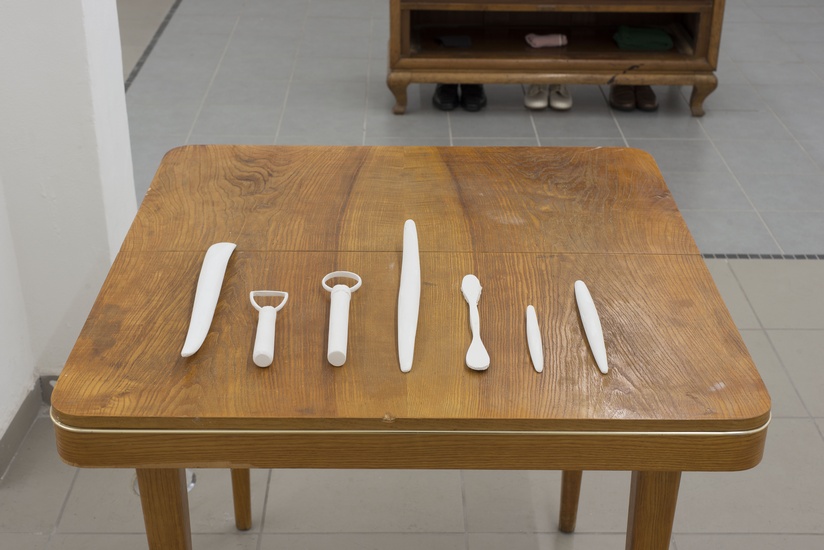
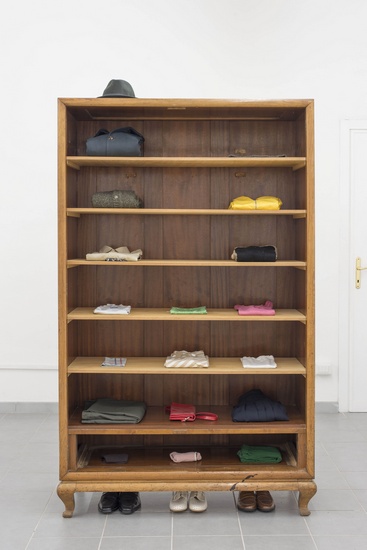
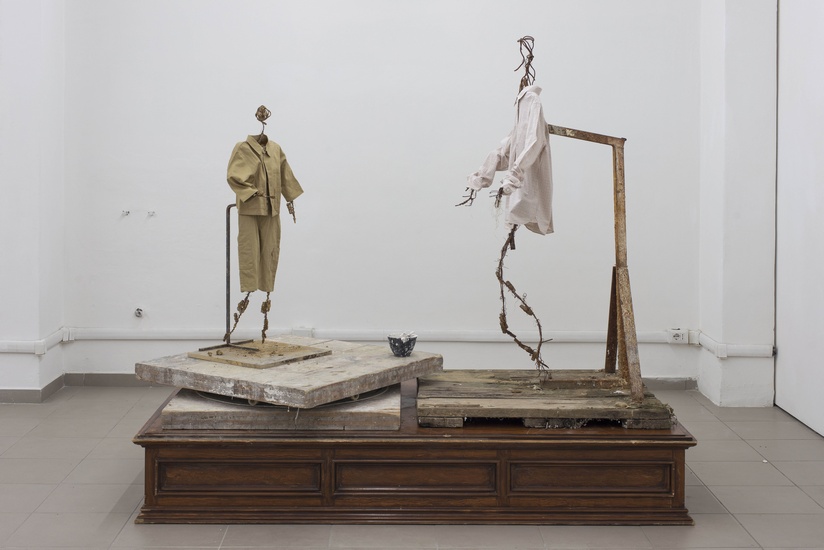
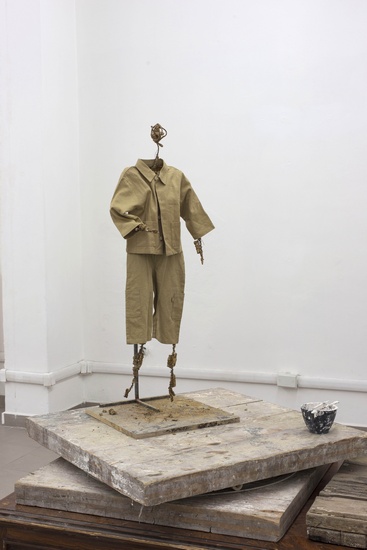
While the small figures inhabiting a shelf and entitled Study of a pre-determined movement show one figure being reconfigured, changing its pose, gestures that allow her to dress or take off the clothes, the work Reconstruction translates a small sculptural model of a man-painter on a ladder into an actual situation in the gallery space in which the only indicators pointing back from the reality to the world of sculptural models and artifacts is a bucket and brush made of plaster, tools that become their sculptural representation. The same happens to sculptor’s tools made of plaster and laid on a table desk. Other figures are represented through clothes and their arrangement in concrete spaces-the wardrobe or a column. A walk down the stairs is emphasized by the imprints of a hand touching the plaster on the banister. The author acts as a choreographer of figures in the space, as a sculptor or a surgeon that gives the sculpted figures a different shape as well as a performer himself when he, in a moment prior to the start of the exhibition, takes off his clothes and walks through the gallery naked as if a change of roles was needed-the author becoming a model.
Naked Figures, Dressed Figurines
 is therefore an aesthetic experience and at the same time it is a keen re-evaluation of the humane figure, whether it is real or sculpted, whether it is an original or a copy, whether it comes from the artist or from his father. Lang urges the viewer not to perceive the works individually as a series of static figures, but rather as artworks that provoke a physical sensation and create an interplay between the viewer and the sculpture, in a sort of a continuous movement of the figures through the exhibition space.

A project supported by Czech Centre Milan.

The Gallery Apart è orgogliosa di presentare la seconda personale in galleria di Dominik Lang, artista che ormai due anni e mezzo fa inaugurò gli attuali spazi dell’Ostiense con un’opera monumentale che mirabilmente introdusse ed esaltò l’architettura e le geometrie interne della galleria, grazie ad un linguaggio e ad una ricerca votate all’interpretazione dello spazio e del tempo attraverso lavori sempre fisicamente contestualizzati ed evocativi di esperienze e personalità artistiche del passato.
Giunto allora a Roma sull’onda emozionale ancora forte e presente di The Sleeping City, la sua straordinaria rivisitazione del Padiglione ceco e slovacco alla 54a Biennale di Venezia, nel periodo intercorso tra le due mostre romane Lang ha collezionato una eccezionale sequenza di mostre in importanti istituzioni pubbliche e private in tutto il mondo, tra cui le personali presso la Galleria Nazionale di Praga, il MUMA di Melbourne, la Galleria Lago del Centro INHOTIM di Belo Horizonte, la galleria del Czech Center di New York, la Kunsthaus di Dresda.
Naked figures, dressed figurines
, il titolo della mostra, già suggerisce un nuovo leggero ma significativo spostamento del baricentro dell’interesse dell’artista. La figura umana costituisce da sempre l’elemento attorno a cui Lang fa ruotare il contesto. Il rapporto tra uomo e spazio circostante, costruito o evocato attraverso modifiche architettoniche spiazzanti, e il rapporto tra uomo e tempo, attraverso il riferimento ideale e a volte persino fattuale alle opere di artisti suoi predecessori, trovano nuova linfa in un’indagine che questa volta irrompe nel rapporto tra uomo, nel senso di figura scolpita, e artista stesso. Il campo di indagine, così universale ma anche così intimo, spinge Lang a nuovamente considerare e ancora una volta utilizzare le sculture del padre Jirí Lang (1927–1996), con un approccio alla figura scolpita che sottolinea il tema principale della mostra, vale a dire la relazione tra modello e sua rappresentazione, tra scultura e spazio, tra il processo di creazione dell’opera e l’artista che la sta realizzando.
Dominik Lang esaurisce il tema ponendo le sculture in correlazione tra loro, lavorando sull’idea di copia e giocando con le rappresentazioni in scala, manipolando la figura umana mediante interventi di segmentazione e frammentazione, proponendo alla percezione dello spettatore nuove coordinate e inedite composizioni, presentando sculture corrispondenti a diverse fasi del processo di creazione. L’obiettivo dell’artista è di generare e mostrare un’intera gamma di figure che muovano dal modello vivo, reale da cui il processo creativo è iniziato fino all’ammasso informe e astratto di creta, passando per una serie di forme di figure scolpite che arrivino fino a ridiventare quasi la figura reale di partenza.
Mentre alcune piccole figure posizionate su un lungo scaffale, un lavoro intitolato Studio di un movimento predeterminato, mostrano una figura progressivamente riconfigurata, che modifica la sua postura, mediante gesti che le permettono di vestirsi o svestirsi, l’opera Reconstruction traduce una piccola scultura raffigurante un pittore su una scala in una situazione reale nello spazio della galleria in cui gli unici indicatori che riportano indietro dalla realtà al mondo dei modelli scultorei e dei manufatti sono un secchio e pennello in gesso, strumenti che diventano la rappresentazione scultorea di se stessi. Lo stesso accade per gli strumenti dell’artista, scolpiti in gesso e lasciati giacere su un tavolo. Altre figure sono rappresentate attraverso i vestiti e la loro disposizione in spazi concreti, come un armadio o una colonna. Una passeggiata lungo le scale è sottolineata dalle impronte di una mano che tocca del gesso sulla ringhiera. L’autore agisce come coreografo delle figure nello spazio, come uno scultore o un chirurgo che conferisce alle figure scolpite una forma diversa e nel contempo come un performer quando, a mostra non ancora inaugurata, si è spogliato ed ha effettuato nudo una passeggiata attraverso la galleria, come in uno scambio di ruoli in cui l’autore diventa il modello.
Naked figures, dressed figurines
 si propone dunque come un’esperienza estetica ma nel contempo anche di riappropriazione di una forte consapevolezza della figura umana, sia essa reale o scolpita, sia essa originale o copia, sia essa dell’artista o di suo padre. Lang spinge lo spettatore a non percepire le opere individualmente come una serie di figure statiche, ma come opere con cui entrare in relazione corporalmente in una sorta di circolazione movimentata delle figure nello spazio.

Il progetto è stato realizzato con il supporto del Centro Ceco di Milano.

Missing Parts

Dominik Lang

curated by Lýdia Pribišová

15.03.2013 – 27.07.2013

Exhibition Views

Works

The Gallery Apart is pleased to announce the opening of its new exhibition spaces located in via Francesco Negri 43, which coincides with the presentation of Missing Parts, the first solo show by Czech artist Dominik Lang to be hosted by an Italian art gallery and curated by Lýdia Pribišová.
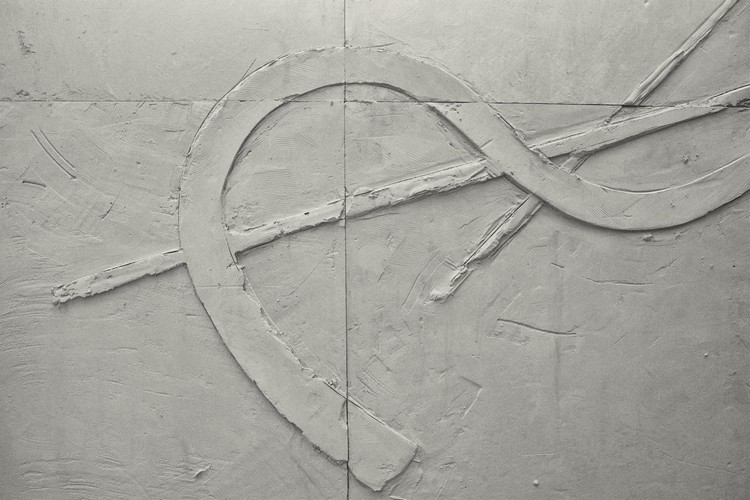
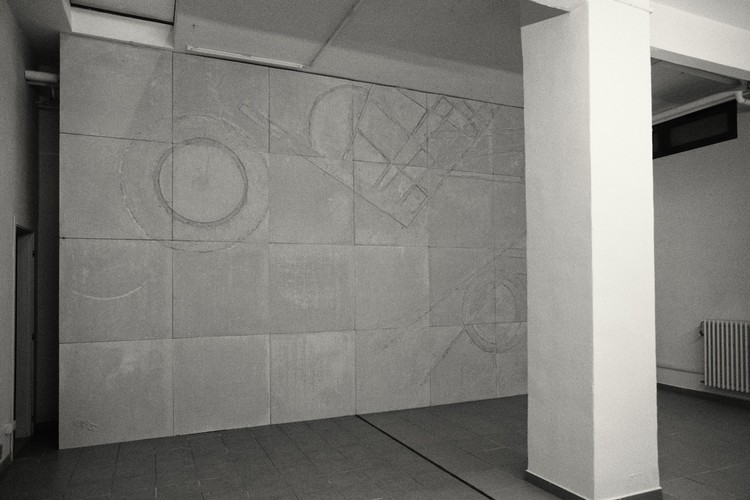
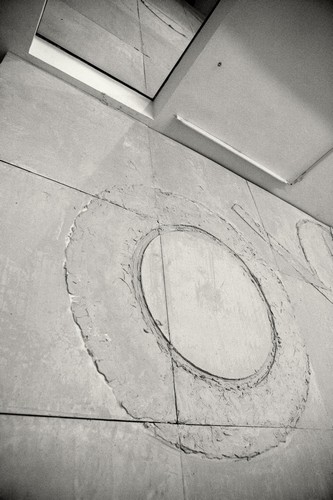
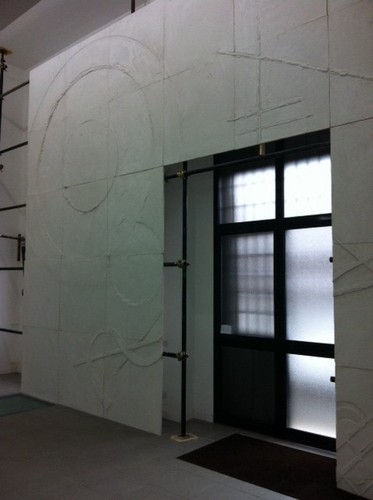
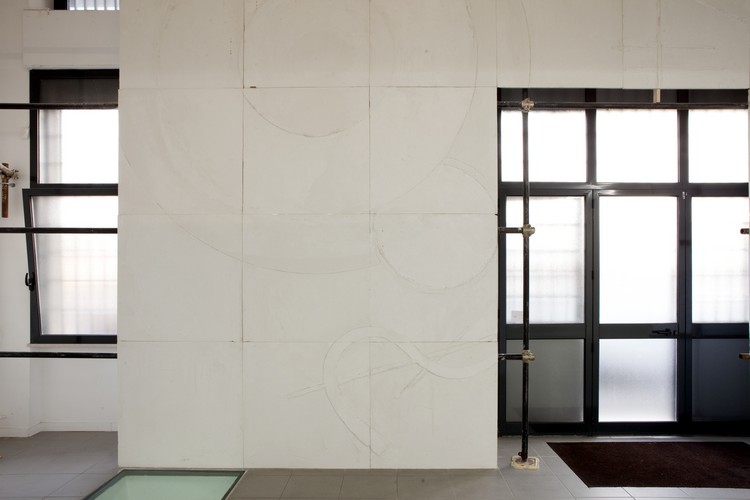
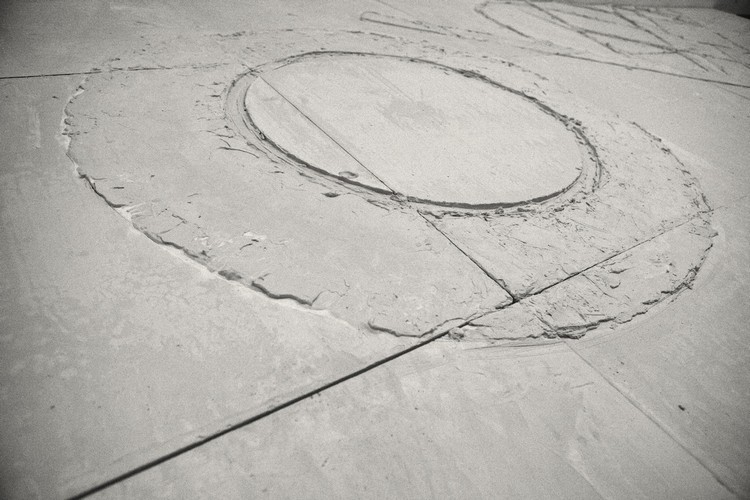
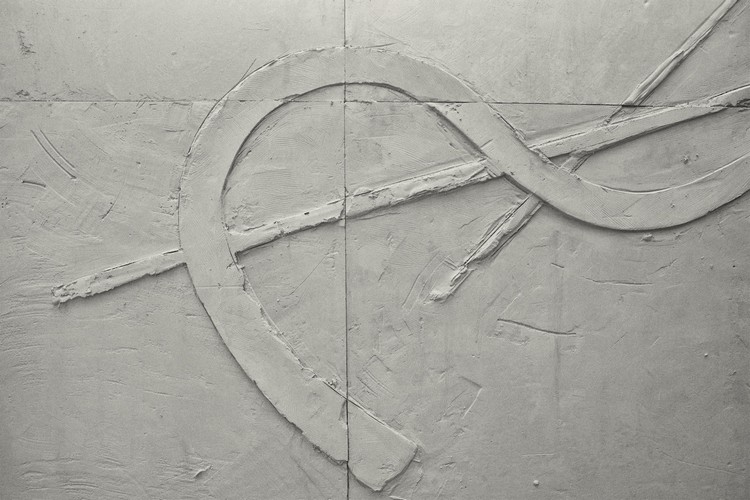
For the inaugural exhibition Dominik Lang has conceived a site-specific installation which interacts with the new distinctive gallery spaces. Lang systematically investigates the environment that surrounds him, transforming it through his architectural interventions. For the Missing Parts exhibition the artist has created a monumental relief artwork that connects the three gallery’s exhibition floors. In the design and creation of his artwork, the artist has followed two different streams of meaning. A first starting point is the mapping of the space taking also into consideration the atmosphere around the gallery, according to a process developed by Lang by attributing to his sculptural piece the role of a physical reaction to the place layout, where space is made twice the size as it is reflected on the relief panels. By placing the work in a way that, as visitors enter the gallery, they will immediately catch sight of  its inner support – which usually remains invisible – , Lang deconstructs the space by overshadowing the viewer’s first sight of the work itself. The artwork blends seamlessly into the gallery space, thus establishing a mimetic mechanism. Moreover, due to its outstanding size, the artwork covers the gallery’s windows, blocking out the light and therefore making its visual perception even more challenging.
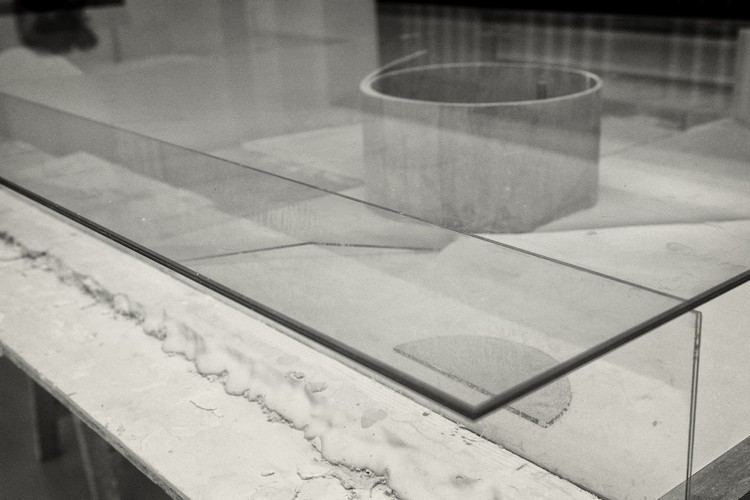
Hence, the second stream of meaning intervenes, which involves the deconstruction of the function as well as the reconsideration of the role, of the resulting expectations and of the relevance of the private gallery. Dominik Lang here reprises and refers to the major themes of the conceptual artist Michael Asher. Similarly to the American artist, Lang tries not to adopt a radical or aggressive approach in his criticism of art institutions, rather the artist, just like Asher, musters the encouragement to improve and “care” for the limiting organizational contexts within the exhibition spaces. Moreover, in this operation, Lang also raises the question of the public commissioning of the works of art for the architecture field. Lang also introduces spatio-temporal dynamics, as the massive sculpted piece is made from 63 modular units that are exactly the same size and that can also be disassembled. The relief segments are therefore decomposable to be then reassembled in the next space, but in a different way. Finally, Lang presents a sculpture-worktable that represents a sketch of composition of the outstanding relief piece, to which it is meant to be some sort of epilogue. Although in the past Dominik Lang drew on inspiration from the artistic production of the second postwar period, for the Roman exhibition he has identified the formal archetype of reference in an iconic modernist work. The gallery space might be conceived as the temporary studio of the artist; Dominik Lang in fact brings out a relic of the past, a formal and ideal groundwork, in order to interpret  and use in an original way the artwork.
We can interpret the relief’s missing parts as the missing spaces in History, which, in order to be added, require the archeological research. The parts that are temporarily missing from the mosaic provide the space with a new configuration and development. As Lang metaphorically draws on the formal exercises devised by the Bauhaus, he offers a game of shapes, of lines and of volumes, which find their application in the physical space as well as in the man’s real life through city planning  projects, as if they were silhouettes of parks, gardens and avenues designed inside triangles, circles and curves.
The relief, therefore, has not just brought about the ruine of modernism, but it represents the mental pattern that can be formally exploited in our everyday life, in our environment and in our thought.

The Gallery Apart è orgogliosa di inaugurare i suoi nuovi spazi di via Francesco Negri 43 con la mostra Missing Parts, la prima personale in una galleria italiana dell’artista ceco Dominik Lang, curata da Lýdia Pribišová.
Per l’occasione Dominik Lang ha progettato una installazione site specific che interagisce con i nuovi caratteristici spazi della galleria. Lang indaga sistematicamente l’ambiente che lo circonda, modificandolo con i suoi interventi architettonici. Per la mostra Missing Parts crea una monumentale opera a rilievo che collega i tre piani in cui è suddiviso lo spazio della galleria. Nel concepire e realizzare l’opera, l’artista assume due diverse linee di significato. Un primo punto di partenza è la mappatura dello spazio e la considerazione dell’atmosfera della galleria, secondo un processo che Lang sviluppa assegnando all’intervento scultoreo il senso di una reazione fisica alla disposizione del luogo che si raddoppia riflettendosi nelle lastre a rilievo. Posizionando l’opera in modo tale che il visitatore, entrando in galleria, ne intercetti prima il supporto interno, normalmente invisibile, Lang decostruisce lo spazio nascondendo l’opera al primo sguardo dello spettatore. L’opera si fonde con lo spazio e impone un meccanismo di mimesi. Inoltre, con il suo volume l’opera copre le finestre della galleria, impedendo la penetrazione della luce e dunque rendendo più complessa la percezione visiva.
A questo punto interviene la seconda linea di significato che attiene alla decostruzione della funzione e alla riconsiderazione del ruolo, delle aspettative generate e dell’utilità della galleria privata. Qui Dominik Lang si riallaccia ai temi cari all’artista concettuale Michael Asher; come l’artista americano, Lang assume un atteggiamento non radicale né aggressivo di critica alle istituzioni artistiche, privilegiando piuttosto l’incitamento al miglioramento e alla “cura” delle situazioni limitanti nell’ambito degli spazi espositivi. In più, nella sua operazione coinvolge anche la tematica della commissione pubblica di opere d’arte in architettura. Lang introduce una dinamica spazio-temporale realizzando la grande opera a rilievo attraverso 63 moduli di eguale dimensione che recano in sé la possibilità di una loro scomposizione. I segmenti di rilievo sono quindi divisibili e componibili in un altro spazio in modo diverso. Lang propone infine una scultura-tavolo di lavoro che rappresenta una maquette compositiva del grande rilievo, di cui costituisce una sorta di epilogo. Se in passato Dominik Lang ha tratto ispirazione dalla produzione artistica del secondo dopoguerra, per la mostra romana ha individuato in un’opera iconica del modernismo l’archetipo formale di riferimento. Lo spazio della galleria potrebbe essere concepito come lo studio temporaneo dell’artista; Dominik Lang, infatti, propone una reliquia del passato, una base formale ed ideale per interpretare e usare in modo nuovo l’opera d’arte.
Le parti mancanti del rilievo si possono concepire come gli spazi mancanti nella storia, per aggiungere i quali c’è bisogno della ricerca archeologica. Le parti che sono provvisoriamente mancanti dal mosaico, offrono allo spazio una nuova configurazione e un nuovo sviluppo. Prendendo come esempio gli esercizi formali del Bauhaus, Lang offre un gioco di forme, di linee e di volumi che trovano applicazione nello spazio fisico e nella vita reale dell’uomo attraverso l’urbanistica come se fossero impronte di parchi, di giardini e di viali che hanno trovato forma nei triangoli, nei cerchi e nelle curve.
Il rilievo quindi non è soltanto la rovina del modernismo, ma il modello mentale che può essere utilizzato formalmente nel nostro quotidiano, nel nostro ambiente e nel nostro pensiero.